Sintered Stone Kitchen Countertops: Selection, Fabrication and B2B Buying Guide
March 21. 2022
Many buyers used to ask one broad question: what is the best choice for kitchen countertop among marble, granite, quartz and sintered stone? For B2B kitchen projects, the better answer starts with the kitchen use itself: slab size, heat exposure, sink cutouts, edge details, cleaning requirements and supplier processing support.
Sintered stone is a strong kitchen countertop option when buyers need a dense, low-absorption surface for kitchen islands, worktops, backsplashes and commercial counters. If you need the basic material definition, read our guide to what is sintered stone. For broader countertop pros, cons and cost, see our sintered stone countertops guide.
Quick Answer
Sintered stone works well for kitchen countertops because its dense mineral structure helps resist water, stains, cooking heat and frequent cleaning.
It is strongest in kitchen islands, worktops, full-height backsplashes and waterfall sides where large slabs reduce seams and improve visual continuity.
The main risk is fabrication, not normal kitchen use; sink cutouts, exposed edges, mitred details and transportation must be controlled carefully.
Quartz is still practical for standard indoor kitchens, but sintered stone is stronger when low absorption, heat resistance and large-format design matter.
B2B buyers should confirm slab size, thickness, finish, packing and supplier processing support before ordering.
Why Sintered Stone Works for Kitchen Countertops
Sintered stone works for kitchen countertops because its dense structure, low water absorption and heat resistance match common kitchen demands: moisture, oil, cooking heat and frequent cleaning. These features make it suitable for kitchens where the surface is used every day, not only displayed as a decorative slab.
The material is especially useful when buyers want a surface that is easy to clean and less likely to absorb food stains, coffee, sauces, cosmetics or water. In residential kitchens, hotel apartments and commercial pantry areas, this low-maintenance performance is often more important than appearance alone.
Kitchen countertops are more demanding than wall panels because they include exposed edges, sink openings, cooktop cutouts, seams, overhangs and constant surface contact. For this reason, sintered stone should be selected as a complete countertop system, not only as a slab color.
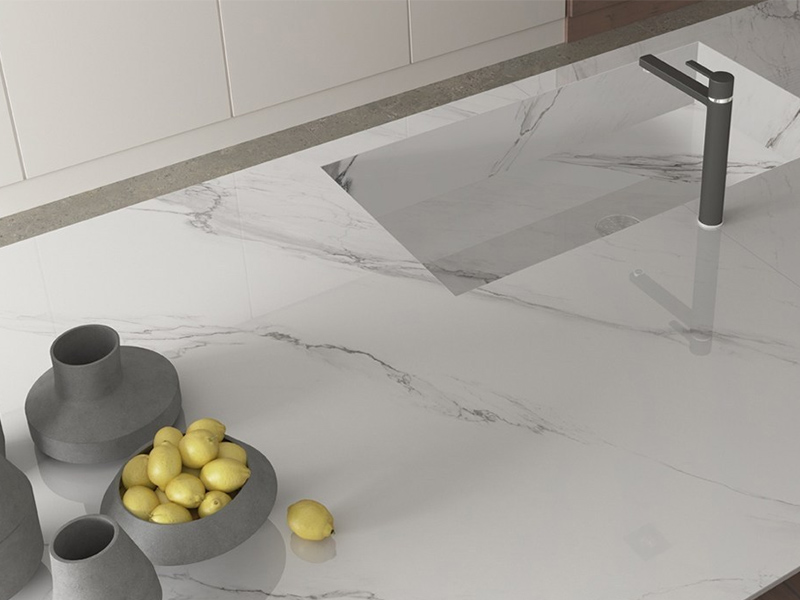
Marble-look sintered stone countertop used as a clean, low-absorption kitchen surface.
Where Sintered Stone Performs Best in Kitchen Projects
Sintered stone performs best in kitchens where large-format design and easy maintenance are both required. It can help create an integrated surface across countertops, islands, backsplashes and side panels.
Common kitchen applications include:
kitchen worktops
kitchen islands
waterfall island sides
full-height backsplashes
matching side panels
bar counters
restaurant service counters
hotel apartment kitchen counters
commercial pantry counters
Kitchen islands are one of the strongest applications because large slabs can reduce visible joints and create a cleaner visual line. Marble-look sintered stone is often used for premium islands where designers want the appearance of natural stone but need easier cleaning and more consistent slab supply.
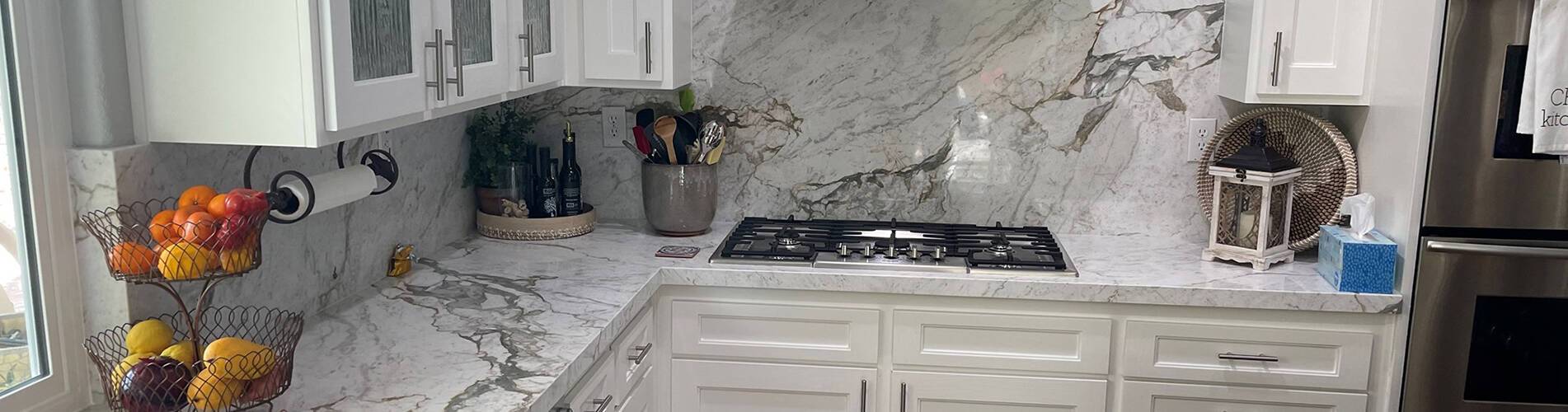
Full-height backsplashes are another strong use. When the countertop and backsplash use the same sintered stone design, the kitchen looks cleaner and more architectural. If your project needs this type of matching surface, the old kitchen backsplash reference can still help explain the combined countertop and backsplash application: engineered sintered stone kitchen countertop backsplash.
Choosing Sintered Stone Slabs for Kitchen Countertops
The best sintered stone slab for a kitchen countertop is not simply the best-looking slab; it is the slab whose size, thickness, finish and processing requirements match the countertop design. Color should come after application, fabrication and installation requirements.
Before selecting a slab, buyers should confirm:
countertop size and layout
kitchen island dimensions
slab thickness
surface finish
color and pattern direction
sink and cooktop cutouts
edge profile
backsplash matching
packing and transportation method
Large-format slabs are useful for long worktops, islands and full-height backsplashes because they reduce seams. However, larger slabs also require better handling, stronger packaging and more experienced installation teams. For detailed size and thickness planning, use our sintered stone slab sizes and thickness guide.
Finish selection also matters. Polished finishes create a brighter and more luxurious kitchen look, while matte or honed finishes may feel softer and more modern. Textured finishes should be selected carefully for kitchen countertops because cleaning performance can vary by surface. For current colors, finishes and slab options, review our sintered stone slabs collection or visit the online sintered stone showroom.
Fabrication Details That Matter for Sintered Stone Countertops
Fabrication decides whether a sintered stone kitchen countertop performs well after installation. Most failures come from cutouts, unsupported edges, poor polishing, transportation stress or incorrect handling, not from normal surface use.
The most important fabrication details include:
sink cutouts
cooktop cutouts
exposed edges
mitred edges
waterfall sides
seam positions
overhang support
packaging for fabricated pieces
Sink cutouts need careful planning because openings create stress points. Sharp inside corners, incorrect cutting tools or weak support can increase the risk of cracking. Fabricators should use suitable cutting methods and corner treatment for sintered stone instead of treating it exactly like quartz or natural stone.
Edges also need attention. Exposed countertop edges, mitred edges and waterfall sides are highly visible in kitchen projects. Poor edge polishing or weak edge protection can cause chipping during transportation, installation or daily use. This does not mean sintered stone is weak; it means kitchen countertop fabrication must be handled by experienced teams.
For B2B orders, packing is part of fabrication quality. Countertop pieces with cutouts or long narrow sections can be more fragile than full slabs. Export buyers should confirm crate design, loading method, edge protection and handling instructions before production.
Sintered Stone vs Quartz for Kitchen Countertops
Sintered stone is not a universal replacement for quartz, but it can be the better kitchen countertop choice when heat resistance, low water absorption, UV stability or large-format design matters more than local market familiarity.
Quartz is still practical for many standard indoor kitchens. It has mature fabrication networks, broad market acceptance and many familiar color options. For projects where local installers already work well with quartz, it may remain a convenient choice.
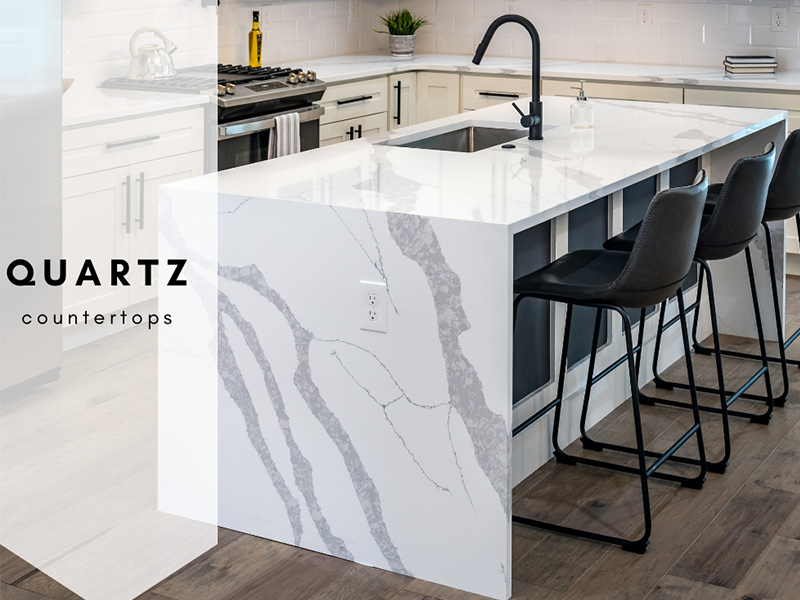
Quartz remains a familiar indoor kitchen countertop option with mature fabrication support.
Sintered stone becomes more attractive when the project needs a mineral-based surface with stronger heat tolerance, lower water absorption and a more continuous slab appearance. It is also useful when the design combines countertops, backsplashes, island sides and furniture surfaces in one visual system.
Granite and marble still matter in kitchen countertop searches because many buyers compare natural stone beauty with engineered surface consistency. Granite is usually considered for natural durability and classic stone value, while marble is chosen for luxury veining but needs more maintenance planning. Sintered stone should be positioned as the option for buyers who want a stone-like look with lower absorption, easier cleaning and stronger large-format kitchen design. For related natural stone comparisons, see sintered stone vs marble.
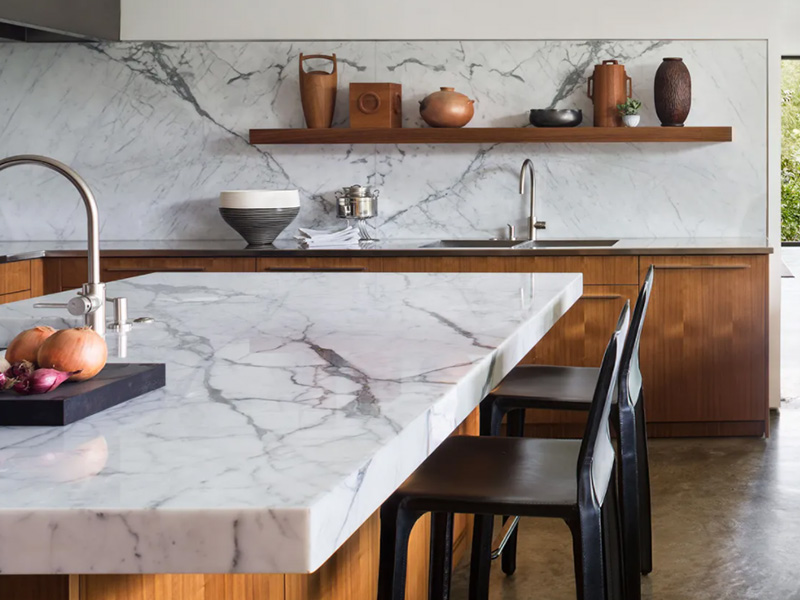
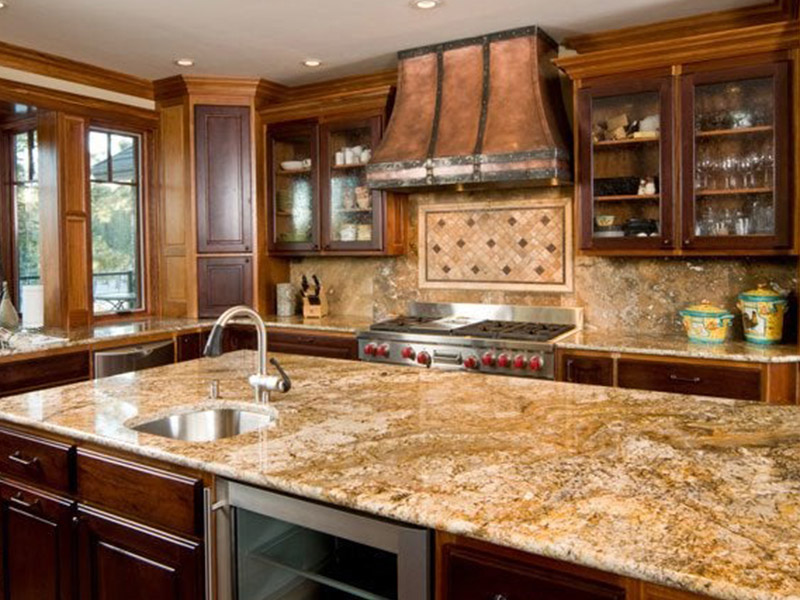
Granite countertops are often compared for natural durability and classic stone value.
B2B buyers should qualify the supplier before they qualify the price. Kitchen countertops involve cutting, edging, packing, batch consistency and installation support, so the lowest slab price does not always produce the best project result.
Before placing an order, confirm:
available slab sizes and thicknesses
kitchen countertop application suitability
finish options and cleaning performance
color consistency between batches
sample availability
sink and cooktop cutout support
edge profile capability
mitred edge experience
packing method for slabs or fabricated pieces
lead time and order quantity
export documents and project communication
supplier experience with countertop projects
If you are buying slabs only, confirm whether your local fabricator understands sintered stone processing. If you are buying prefabricated countertops, confirm drawings, cutout dimensions, edge details and packing before production.
A reliable supplier should help buyers choose suitable thickness, finish, packing and processing solutions for the final kitchen use. For broader supplier evaluation, read the sintered stone supplier guide. For cost factors, review our sintered stone price guide.
Request Sintered Stone Kitchen Countertop Samples
If you are sourcing sintered stone kitchen countertops for a project, distribution business, furniture factory or commercial interior, contact us for slab options, samples, thickness recommendations, packing details and quotation support.
FAQ About Sintered Stone Kitchen Countertops
Is sintered stone good for kitchen countertops?
Yes, when the slab is correctly selected and fabricated. Its low water absorption, heat resistance and stain resistance make it suitable for kitchens, but edge processing and cutouts must be handled professionally.
Does sintered stone chip easily?
The surface is durable, but exposed edges can chip if fabrication, packing or installation is poor. Edge design, polishing quality, support and handling all affect the final result.
What thickness is best for sintered stone kitchen countertops?
The best thickness depends on slab size, countertop layout, support structure and edge design. Kitchen islands, waterfall sides and standard worktops may require different specifications.
Is sintered stone better than quartz for kitchens?
It depends on the project. Quartz is still strong for standard indoor kitchens, while sintered stone is better when heat resistance, low water absorption, UV stability or large-format design is more important.
Can sintered stone be used for kitchen islands?
Yes. Kitchen islands are one of the best applications because large-format sintered stone slabs can reduce seams and create a clean, continuous look.
Is sintered stone suitable for commercial kitchen projects?
Yes, if the slab specification, fabrication method, support and installation are correct. It can be used for restaurant counters, hotel apartment kitchens, bar counters and commercial pantry areas.
 English