English







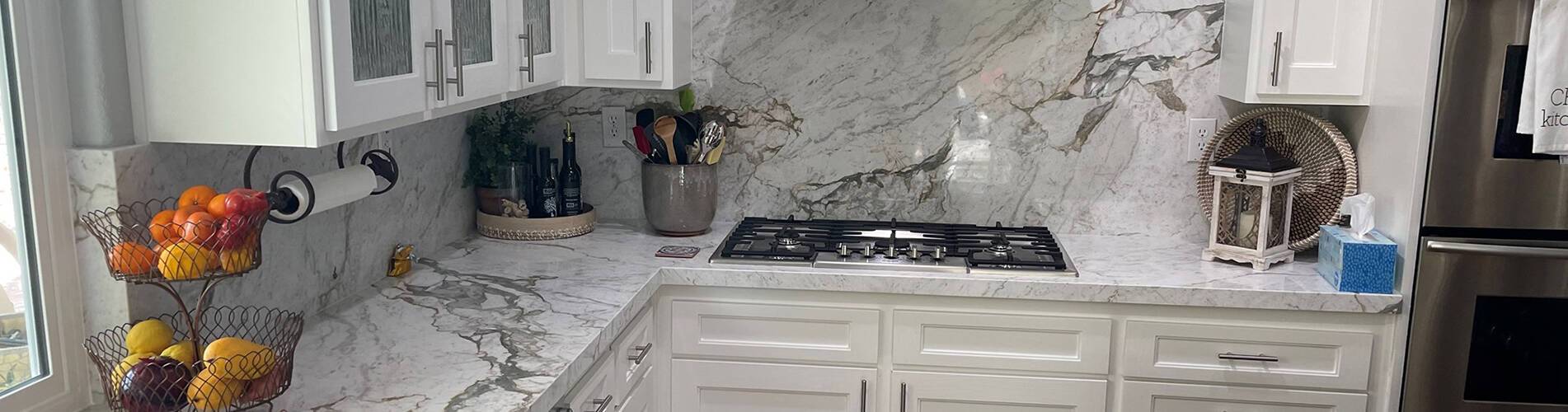
Quick Answer: Which One Should You Choose?
- For standard indoor countertops, both sintered stone and quartz can work, but they solve different project risks.
- Choose quartz when the project needs familiar fabrication, mature local installation, consistent colors, and predictable indoor countertop production.
- Choose sintered stone when the project needs stronger heat resistance, UV resistance, outdoor performance, large-format design, or a natural stone-like surface with broader architectural use.
- For kitchens, vanity tops, and commercial indoor counters, compare budget, design style, local installer experience, supplier support, and total installed cost.
- For outdoor kitchens, BBQ counters, sun-exposed bars, fireplace surrounds, and coordinated wall or furniture surfaces, sintered stone usually has the clearer advantage.
- For B2B buyers, the better question is not only which material is better, but which material reduces project risk in this application, supply chain, and installation market.
Sintered stone and quartz are often compared because they compete in the same visible spaces: kitchen countertops, bathroom vanity tops, islands, and commercial counters. Both are engineered surfaces with a clean look, low maintenance requirements, and good resistance to everyday stains. For many standard indoor countertop projects, either material can work.
However, they are not always direct replacements. The right choice depends on the project environment, fabrication method, local market acceptance, supplier capability, and total installed cost. If the basic material background is still needed, what is sintered stone explains how natural minerals are formed into a dense engineered surface through high heat and pressure, so this article focuses more on B2B selection logic than definitions.
Sintered Stone vs Quartz: Key Differences at a Glance
| Factor | Sintered Stone | Quartz |
|---|---|---|
| Material structure | Natural minerals sintered under high heat and pressure, usually without resin | Quartz particles combined with resin binders and pigments |
| Main overlap | Indoor countertops, vanities, islands, commercial counters | Indoor countertops, vanities, islands, commercial counters |
| Heat resistance | Strong advantage in heat-exposed areas | Good for normal indoor use, but hot pans should not be placed directly on the surface |
| UV resistance | Better suited for outdoor and sun-exposed areas | Generally recommended for indoor applications |
| Impact behavior | Very hard, but edges need careful fabrication and protection | Often more forgiving in everyday impact situations |
| Design style | Large-format slabs, natural stone looks, modern textures | Consistent colors, controlled patterns, broad market acceptance |
| Project cost | Depends on brand, thickness, slab size, cutting and installation | Also varies by brand, grade, thickness and fabrication |
The core difference is the binder system. Sintered stone is an inorganic sintered surface, while engineered quartz uses resin to hold quartz particles and pigments together. This resin helps quartz achieve consistent colors and a familiar countertop feel, but it also limits UV and extreme-heat performance compared with sintered stone.
Where Sintered Stone and Quartz Can Replace Each Other
The main shared field is indoor countertops. In residential kitchens, apartment projects, bathroom vanities, islands, hotel counters, and many retail or office counters, both materials can perform well.
They can often replace each other in:
- Indoor kitchen countertops
- Bathroom vanity tops
- Kitchen islands
- Hotel and apartment countertops
- Office reception counters
- Retail service counters
- Some restaurant and cafe indoor counters
In these applications, both materials offer:
- Low water absorption
- Easy daily cleaning
- Good stain resistance
- Modern surface designs
- Better maintenance convenience than many natural stones
For indoor kitchens, quartz may be a practical choice in markets where installers, contractors, and homeowners already trust it. It is familiar, widely available, and easy to specify across repeated units. Sintered stone can also work well, especially for projects that need thinner profiles, larger slabs, marble-look continuity, or stronger heat resistance. A dedicated sintered stone countertops guide helps buyers compare how this material performs in everyday kitchen use.
For bathroom vanities, quartz is strong in standardized production, while sintered stone is attractive for minimalist designs, thin panels, and projects that combine countertops with wall cladding.
For commercial interiors, quartz can suit cost-controlled, repeatable counters, while sintered stone can support higher-end branding, larger surfaces, and a more architectural look.
For many indoor countertop projects, the two materials are not a simple old vs new replacement. They are parallel options. Local availability, customer preference, fabricator experience, and supplier reliability may matter as much as technical performance.
Where Sintered Stone Has a Clear Advantage
Sintered stone becomes the stronger candidate when the surface faces heat, sunlight, moisture, or broad architectural use.
It is especially suitable for:
- Outdoor kitchens
- BBQ counters
- Patio bars
- Sun-exposed commercial counters
- Fireplace surrounds
- Exterior wall cladding
- Large-format wall panels
- Furniture panels
- Table tops and cabinet fronts
- High-end commercial decorative surfaces
Because sintered stone is generally resin-free and produced through high-temperature sintering, it is better suited to UV and heat-exposed applications than quartz. This does not mean every slab can be used in every extreme environment. Buyers should still check the supplier's technical data sheet, fire rating, temperature limits, installation instructions, and warranty terms.
Sintered stone also has a wider application range outside the countertop category. This is where its market role becomes different from quartz. Quartz is mainly a countertop material, while sintered stone can function as a broader architectural surface.
Design is another reason buyers choose sintered stone. Large slabs, bookmatched effects, marble-look patterns, concrete textures, and modern matte finishes can help create a complete interior concept. For design-driven projects, checking sintered stone colors and finishes before sampling helps buyers compare realistic patterns, finishes, and slab sizes.
Where Quartz Can Still Be the Practical Choice
Quartz should not be dismissed just because sintered stone has strong heat and UV performance. In many indoor countertop programs, quartz remains practical, familiar, and commercially safe.
Quartz can be a strong choice when the project needs:
- Standard indoor kitchen countertops
- Consistent colors across multiple units
- Familiar fabrication and installation
- A mature local supply chain
- Controlled project cost
- Predictable pattern matching
- Good everyday impact tolerance
- Fast replacement or repair support
Quartz can also feel more forgiving in daily use, especially around edges and normal impact. Sintered stone is extremely hard, but sink cutouts, cooktop openings, inside corners, thin edges, mitered edges, transport support, and on-site handling need careful fabrication control. Quartz, because of its resin content and mature fabrication base, can perform well in conventional countertop use where the main concerns are food preparation, cleaning, and normal household traffic.
For curved counters, special shapes, or local fabrication habits, buyers should be careful. Standard quartz is not automatically suitable for every curved or heated shape, but in some markets fabricators have more experience with quartz-based commercial counters. If the project is specifically quartz-driven, the quartz countertop and vanity top collection is a more relevant place to check available quartz options before comparing them with sintered stone.
In this article, quartz means engineered quartz, not quartzite. Quartzite is a natural stone, while engineered quartz is a manufactured surface made from quartz particles, resin binders, and pigments.
Where Neither Material Should Be Chosen Automatically
Some projects need a more technical review before choosing either quartz or sintered stone.
Examples include:
- Heavy industrial worktops
- Laboratory benches
- School or hospital projects with strict health and safety rules
- Areas with frequent heavy impact
- Surfaces exposed to aggressive chemicals
- Extremely low-budget projects
- Projects in regions with strict silica dust control rules
In these cases, buyers should not choose a material only because it is popular in kitchens. The key issue is not daily use of the finished countertop, but fabrication-stage dust during cutting, grinding, polishing, and dry handling. Quartz, sintered stone, porcelain, and natural stone products may all require wet cutting, dust control, ventilation, and protective equipment depending on their composition and local regulations.
For laboratories or technical facilities, buyers should confirm chemical resistance, fire rating, impact requirements, cleaning standards, SDS documents, fabrication instructions, and local compliance before placing an order.
Fabrication, Safety and Compliance for B2B Projects
For B2B projects, fabrication risk can matter as much as material performance. A surface that looks suitable on paper can still fail if sink openings, cooktop cutouts, edge details, seams, support points, or transport packaging are handled with the wrong method.
Quartz usually benefits from a mature local fabrication network, especially in markets where countertop shops already process quartz daily. Sintered stone can offer stronger heat, UV, and large-format performance, but it requires fabricators who understand cutting speed, blade selection, corner radius, edge polishing, reinforcement, and handling for thin or large panels.
Safety and compliance should also be reviewed before procurement. For engineered quartz and other silica-containing surfaces, the concern is respirable dust generated during fabrication, not normal use of the installed countertop. Buyers should check the supplier SDS, local regulations, wet cutting requirements, dust extraction, PPE, and whether the fabrication partner can document safe processing procedures.
Sintered Stone vs Quartz Price and Total Project Cost
It is too simple to say sintered stone is always expensive and quartz is always affordable. Both categories have entry-level, mid-range, and premium products.
The final cost depends on:
- Slab size
- Thickness
- Surface finish
- Brand and origin
- Edge profile
- Cutting complexity
- Number of sink or cooktop cutouts
- Shipping distance
- Packaging method
- Breakage risk
- Local labor cost
- Installer experience
- After-sales risk
For a standard indoor project in a market with many quartz fabricators, quartz may offer better cost control. For a large-format design, outdoor surface, or long-term commercial project, sintered stone may reduce seams, improve durability, and lower maintenance risk over time.
A useful sintered stone price guide should compare installed cost, lead time, maintenance, replacement risk, and after-sales support, not only slab price.
How B2B Buyers Should Choose Between Sintered Stone and Quartz
Before choosing between sintered stone and quartz, buyers should start with the application instead of the material name.
Key questions include:
- Is the surface indoor or outdoor?
- Will it face direct sunlight?
- Will it be exposed to heat, fire, or hot cookware?
- Is impact resistance more important than heat resistance?
- Does the project need standard countertops or large architectural panels?
- Does the local market accept sintered stone, quartz, or both?
- Which material do local fabricators handle better?
- Are consistent colors or natural-looking large patterns more important?
- Is the buyer comparing slab cost or total installed cost?
- Can the supplier provide samples, technical sheets, SDS documents, fabrication guidance, packaging details, and after-sales support?
If the project needs large-format slabs, natural stone effects, or coordinated wall and countertop surfaces, the sintered stone slabs guide can help buyers evaluate available sizes, thicknesses, colors, finishes, and applications before ordering samples.
If the project needs repeated indoor countertop units with controlled patterns and familiar installation, quartz may be more efficient.
Finally, choose a supplier that can support samples, technical sheets, SDS documents, packaging, fabrication advice, stable lead times, and clear communication before production. The sintered stone supplier guide explains why supplier capability matters when the project involves fabrication drawings, packaging, lead time, and after-sales risk. For mixed-material projects, contact us for countertop material selection based on thickness, finish, application, budget, and local installation conditions.
Conclusion
Sintered stone and quartz overlap most clearly in indoor countertop projects, but they are not always full substitutes.
Quartz remains strong for familiar indoor applications, cost control, color consistency, and mature fabrication.
Sintered stone has clearer advantages in outdoor, heat-exposed, UV-exposed, and large-format design applications.
In many indoor countertop projects, both materials can work, and the final choice should depend on supplier capability, local market acceptance, design requirements, and total project cost.
The right choice is not the material with the most impressive specification sheet. It is the material that matches the project environment, supply chain, budget, and expected service life.
FAQ
Sintered stone vs quartz pros and cons
Sintered stone offers stronger heat resistance, UV resistance, outdoor suitability, and large-format design potential. Quartz offers familiar indoor fabrication, consistent colors, broad market acceptance, and predictable countertop production.
Sintered stone vs quartz kitchen countertops
For indoor kitchens, both materials can work well. Choose quartz for familiar installation and controlled cost; choose sintered stone for stronger heat resistance, thin profiles, large slabs, marble-look continuity, or indoor-outdoor design.
Is sintered stone better than quartz?
Sintered stone is usually better for outdoor, high-heat, UV-exposed, and large-format applications. Quartz can be better for standard indoor countertops where local fabrication experience, color consistency, and cost control are more important.
What are the disadvantages of sintered stone?
Sintered stone can be less forgiving during fabrication than quartz. Edges, cutouts, inside corners, transport, and installation support need experienced handling to reduce chipping or breakage risk.
Is quartz the same as quartzite?
No. Quartz in this comparison means engineered quartz, which is made with quartz particles, resin binders, and pigments. Quartzite is a natural stone and should be evaluated as a separate material.
Which material is better for B2B countertop projects?
For B2B projects, the better material is the one that fits the application, local fabrication capability, budget, safety requirements, delivery schedule, and expected service life. Quartz is strong for repeatable indoor programs; sintered stone is stronger for outdoor, heat-exposed, UV-exposed, and design-led projects.