English







Quick Answer
- Sintered stone can be used for wall tiles and flooring, but walls and floors need different selection logic.
- Wall tiles focus on size, joints, wall flatness, moisture resistance and visual effect.
- Flooring must consider slip resistance, traffic level, surface finish, substrate flatness and installation risk.
- For standard budget wall or floor areas, porcelain tile may still be practical.
- For large-format, high-end or matching wall-floor projects, sintered stone can offer stronger design value.
What Are Sintered Stone Wall Tiles and Flooring?
Sintered stone wall tiles and flooring are project surfaces made from sintered stone slabs or cut-to-size pieces. The material is produced under high pressure and high temperature, then supplied in different sizes, thicknesses, colors and surface finishes for architectural use.
For buyers, the important question is not only whether sintered stone can be used on walls or floors. The more practical question is whether the chosen size, thickness, finish and installation method match the project conditions. A wall in a bathroom, a hotel lobby floor and a retail corridor floor all face different risks.
If you need a basic material explanation first, you can read our guide on what is sintered stone. This article focuses on wall tile and flooring applications, especially for B2B projects where safety, installation, packing and long-term use matter.
Wall Tiles vs Wall Panels vs Flooring: What Is the Difference?
Buyers often confuse sintered stone wall panels, wall tiles and flooring because the colors, slab sizes and surface patterns can look similar in a catalog. In real projects, however, they are not selected by the same standards. A vertical wall panel mainly needs stable fixing, wall flatness, weight control, moisture resistance and visual continuity. A floor surface must handle foot traffic, slip resistance, cleaning, substrate flatness and long-term wear. The same design may be used in both areas, but the performance checks are different.
| Application | Main Focus | Typical Use | Buyer Should Check |
|---|---|---|---|
| Sintered stone wall tiles | Wall covering and tile layout | Bathroom walls, kitchen walls, feature sections | Size, grout lines, wall flatness, moisture area |
| Sintered stone wall panels | Large vertical panel system | Shower walls, hotel corridors, TV walls, full-height feature walls | Panel weight, backing, fixing method, full-wall layout |
| Sintered stone flooring | Horizontal traffic surface | Bathroom floors, hotel lobbies, retail floors, corridors | Slip resistance, finish, traffic level, substrate flatness |
If your project needs full-height vertical panels, large shower walls or hotel corridor wall systems, our separate guide to sintered stone wall panels explains that application in more detail. This article stays focused on wall tiles and floor surfaces.
Where Can Sintered Stone Wall Tiles Be Used?
Bathroom Wall Tiles
Sintered stone wall tiles can be used for bathroom walls, hotel bathroom renovations and apartment wet-area walls. Buyers usually choose them for a clean stone-look surface, low water absorption and easier cleaning compared with some natural stones.
For bathroom wall projects, the key checks are wall flatness, joint planning, thickness, surface finish and moisture exposure. A beautiful slab photo is not enough. The installation team must also know whether the wall will use large cut-to-size pieces, medium-size tiles or a full panel system.
Kitchen Wall Tiles and Backsplash
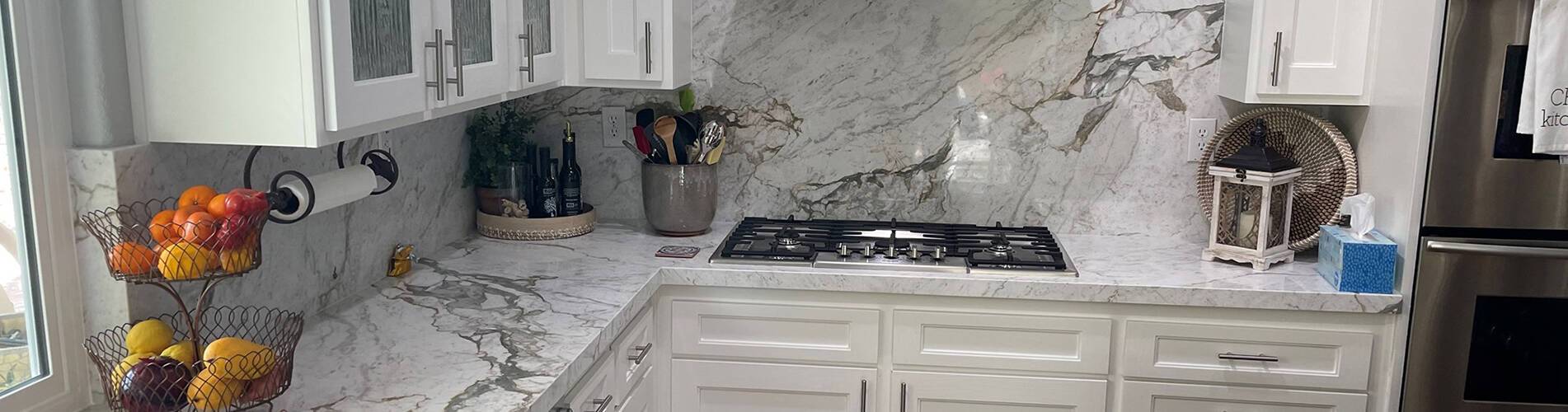
Kitchen walls and backsplashes need surfaces that are easy to clean around oil, water and cooking marks. Sintered stone can work well behind countertops, kitchen islands or cooking areas when the buyer wants a stronger visual connection between the countertop and the wall.
For a standard small backsplash, porcelain tile may already be enough. Sintered stone becomes more valuable when the project needs a larger stone-look surface, fewer grout lines, matching colors or a more premium kitchen design.
Commercial Interior Wall Areas
Commercial wall areas include retail stores, hotel public areas, restaurants, reception walls and elevator surroundings. In these spaces, buyers often care about appearance, cleaning, long-term maintenance and consistency across repeated areas.
For buyers comparing large wall surfaces, Dekton wall panels can be reviewed as one wall-panel product direction, especially when the project needs a stone-look feature wall or commercial interior surface.
Where Can Sintered Stone Flooring Be Used?
Bathroom and Wet-Area Floors
Bathroom floors are different from bathroom walls. A floor must handle water, foot traffic, cleaning and safety. For wet areas, finish selection is more important than color selection. Polished surfaces should be used carefully, while matte or textured finishes are often safer choices when slip resistance is required.
Buyers also need to consider drainage slope, grout joints, local installation standards and installer experience. Large pieces can reduce joints, but wet floors may still need careful cutting and layout planning around drains.
Hotel Lobby and Public Flooring
Hotel lobbies and public floor areas need more than a good-looking material. They face continuous foot traffic, frequent cleaning and high visual expectations. For large floor areas, buyers should confirm same-batch color control, surface finish, spare pieces and packing method before bulk order.
For hotel lobby flooring or repeated commercial floor areas, buyers can contact us for wall and flooring projects with drawings, required finish, traffic level and destination market.
Retail, Restaurant and Commercial Corridor Flooring
Retail stores, restaurants and commercial corridors may face shoes, carts, cleaning machines, food stains, dust and repeated daily use. In these areas, the buyer should check traffic level, abrasion resistance, slip resistance, cleaning method and replacement planning.
Residential Flooring
Sintered stone flooring can also be used in villas, apartments, open kitchens and living areas. But for budget-sensitive residential projects, or for markets where installers are more familiar with standard porcelain tile, porcelain tile may still be more practical. The decision should be based on project value, not only material image.
Sintered Stone Flooring vs Porcelain Tile: Which Is More Practical?
The real competitor for sintered stone wall tiles and flooring is often porcelain tile. In many standard wall and floor projects, porcelain tile is mature, cost-effective and familiar to local installers. Sintered stone is not automatically better for every floor.
Choose porcelain tile when:
- The project is price-sensitive.
- Standard tile sizes are enough.
- Local installers are more familiar with porcelain tile.
- Replacement and maintenance need to be simple.
- Large-format visual effect is not necessary.
Choose sintered stone when:
- The project needs larger visual surfaces.
- Fewer grout lines are important.
- Wall and floor surfaces need a more consistent design.
- The project is a hotel, villa, retail store or commercial space.
- The buyer wants a marble-look or stone-look surface with lower natural stone maintenance.
- The supplier can support proper packing, cutting and inspection.
If the buyer is mainly comparing material categories, our guide to sintered stone vs porcelain explains the broader material difference before final project selection.
How to Choose Sintered Stone for Flooring Projects
Check the Surface Finish First
For floors, the right finish can be more important than the most beautiful pattern. A polished finish may work well on walls, dry areas or decorative surfaces, but wet floors and high-traffic floors often need matte or textured finishes. For commercial or wet-area floors, buyers should ask for anti-slip data or finish samples before confirming the order.
Match Thickness with Application
Thin materials may be suitable for wall covering or lightweight applications. Thicker pieces may be used for flooring, steps, thresholds or heavy-use areas depending on the product system, substrate and installation method. The final choice should be confirmed according to slab size, project type and site condition.
Buyers can review our sintered stone slabs collection to compare colors, sizes and surface options before confirming wall or floor applications.
Consider Traffic Level
Low-traffic areas, such as residential bathroom floors or private home walls, usually have different requirements from hotel lobbies, shopping malls and public corridors. For medium- and high-traffic areas, buyers should confirm abrasion resistance, cleaning method, surface finish and replacement planning.
Plan for Cleaning and Maintenance
Commercial floors face frequent cleaning. A textured surface may improve grip, but it may need different cleaning care than a smooth polished wall surface. Before bulk order, buyers should confirm how the surface will be cleaned, what type of stains may appear and whether the finish suits local maintenance routines.
Installation Risks Buyers Should Not Ignore
Large Format Reduces Joints but Increases Installation Difficulty
Large-format sintered stone can create a cleaner surface with fewer joints. This is one of its biggest design advantages. But larger pieces are heavier, harder to handle and more sensitive to cutting, unloading and site access. If a large piece is damaged, replacement is also more difficult than replacing a small standard tile.
Substrate Flatness and Lippage Matter
Flooring projects need a flat substrate. Uneven ground can cause lippage, hollow areas or visible height differences between pieces. Large-format pieces make these problems more obvious. Before installation, the contractor should check substrate flatness, dry layout, grout joint planning and installer experience.
Wet Floors Need Slope and Drainage Planning
Bathroom and shower floors need drainage slope. Large pieces may need special cutting or layout planning around drains. Anti-slip finish and drainage design should be considered together, not separately.
Packing and Unloading Affect Breakage Risk
For export orders, packing is part of quality control. Large-format wall and floor pieces need strong wooden crates, clear labels and careful loading plans. For project orders, labels can show area, floor, room or unit, which helps contractors sort materials faster after arrival. Spare pieces may also be useful for future replacement.
How We Support B2B Wall Tile and Flooring Projects
For B2B projects, material selection should connect with production, inspection, packing and delivery. Based on project needs, we support buyers with sample and finish confirmation, color and batch review, cut-to-size service, layout discussion, inspection photos before shipment and export wooden crate packing.
When a buyer needs a large floor area, the risk is not only color choice. The buyer may need batch consistency, replacement planning and labeled packing. We review the order details before production and help make receiving and installation easier for contractors, importers, distributors and project buyers.
For larger B2B orders, supplier capability affects samples, packing, inspection and delivery risk. Our guide on how to choose a sintered stone supplier explains these checks in more detail.
What Buyers Should Confirm Before Ordering
Before confirming sintered stone wall tiles or flooring, buyers should prepare project details instead of only sending a color name. This helps the supplier recommend a more practical surface, thickness, packing method and finish.
- Is the material for wall, floor, wet area or outdoor-related area?
- What is the project type: hotel, apartment, villa, retail, mall or public space?
- What size and thickness are required?
- Is the surface polished, matte or textured?
- Does the floor need anti-slip performance?
- What is the expected traffic level?
- Are drawings or layout plans available?
- Does the project need cut-to-size pieces?
- How should products be labeled and packed?
- Are spare pieces needed for future replacement?
Final Advice: Choose by Project Conditions, Not Only by Color
Sintered stone wall tiles and flooring can work well in modern residential and commercial projects. But wall and floor applications need different checks. Wall tiles should be judged by size, joints, wall condition and moisture exposure. Flooring should be judged by finish, slip resistance, traffic level, substrate flatness, installation and maintenance.
For some standard projects, porcelain tile may still be the more practical choice. For projects that need large-format design, fewer joints, stone-look surfaces and material consistency across walls and floors, sintered stone can be a strong option.
Send us your drawings, project area, required size and surface finish. Contact us for sintered stone wall tile and flooring samples, catalog support, packing advice and project quotation.