English







Quick Answer
Sintered stone and porcelain slabs can both be used in bathrooms, walls and interior projects, but they are not selected for the same reason. Porcelain is usually stronger for cost-effective wall and floor coverage, while sintered stone is usually stronger for countertops, bathroom vanities, table tops and custom fabrication.
- Choose porcelain for large wall panels, flooring, bathroom cladding and budget-sensitive decorative coverage.
- Choose sintered stone for sink cutouts, visible edges, mitered details, vanity tops, commercial counters and furniture surfaces.
- The main difference is fabrication. Wrong cutting, drilling or edge processing can damage either material, so the supplier must understand the slab structure.
- For B2B projects, application comes first. A material that works well on a wall may not be the best choice for a countertop or custom-shaped surface.
What Are Sintered Stone and Porcelain Slabs?
Sintered stone is an engineered mineral slab made from natural mineral raw materials that are pressed under high pressure and fired at very high temperature. This creates a dense, low-porosity surface that can be used for countertops, bathroom vanities, wall panels, furniture and commercial interiors.
The material background matters because it explains why sintered stone can move beyond decorative panels into functional surfaces. The guide on what is sintered stone explains how the sintering process creates a compact slab with low water absorption, heat resistance and broad application potential.
Porcelain slab is a large-format ceramic surface made from materials such as kaolin clay, silica, feldspar and other ceramic minerals. It is also fired at high temperature and is commonly used for marble-look, stone-look, concrete-look or solid-color wall and floor applications.
Sintered Stone vs Porcelain: Key Differences
The key difference between sintered stone and porcelain is not only appearance. For B2B buyers, the practical differences are material role, body structure, edge appearance, processing ability, application range and total project value.
| Factor | Sintered Stone | Porcelain Slab |
|---|---|---|
| Product role | Decorative and functional slab material | Large-format decorative wall and floor material |
| Typical use | Countertops, vanities, table tops, commercial counters, wall panels and facades | Wall panels, flooring, bathrooms, cladding and decorative surfaces |
| Fabrication | Better suited to drilling, edging, mitering, polishing and shaped fabrication | Better suited to standard cutting, wall installation and floor installation |
| Visible edges | More suitable for exposed countertop and furniture edges | Cut edges may need more planning when the surface is printed or glazed |
| Cost position | Usually higher, with more customization potential | Usually more cost-effective for large-area coverage |
| B2B value | Premium applications, custom processing and long-term performance | Budget control, mature installation and broad decorative use |
In simple terms, porcelain slabs are strong decorative panels. Sintered stone is more application-driven: it can cover walls and floors like porcelain, but it can also be fabricated into countertops, bathroom vanity tops, furniture and custom-shaped surfaces.
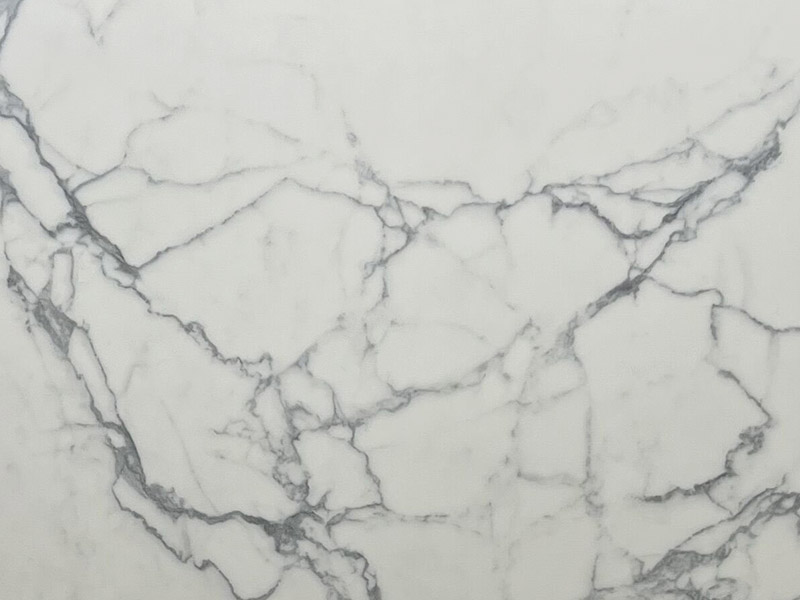
Fabrication Ability: The Biggest Practical Difference
Fabrication ability is the biggest practical difference because countertops, vanities, basins, tables and commercial counters require more than flat installation. They often need sink cutouts, faucet holes, polished edges, mitered sides, visible corners and reliable support.
Porcelain slabs can be cut and installed efficiently for walls, floors and decorative panels, but they should not be processed as if they were the same as sintered stone. Different materials may require different cutting speeds, tools, drilling methods, edge protection and support systems. Wrong fabrication can cause irreversible damage around openings, corners or exposed edges.
Sintered stone also requires professional processing. It should be cut, drilled, edged, polished, packed and installed by teams that understand the slab thickness, body structure and application. The advantage is that it is usually more suitable for deep processing and functional surfaces when the right fabrication method is used.
Countertops, Islands and Bathroom Vanities
Sintered stone is usually the better choice for kitchen countertops, islands, bathroom vanities and commercial counters because these applications require stable thickness, visible edges, low water absorption and reliable cutout performance. The surface is not only decorative; it must work as a usable counter.
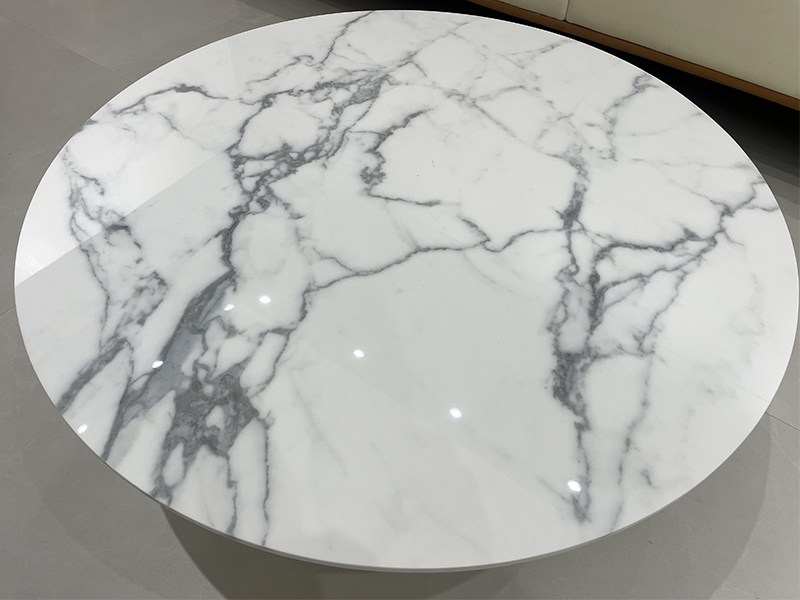
Countertop and vanity projects may include sink openings, cooktop cutouts, faucet holes, mitered edges, waterfall sides, polished visible edges and large overhangs. These details make fabrication accuracy more important than in a standard wall installation.
For deeper countertop selection, the guide to sintered stone countertops explains how thickness, finish, edge design, cutouts, support structure and installation affect the final performance of functional work surfaces.
Bathroom Walls, Flooring and Wet Areas
Porcelain is often practical for bathroom walls and floors because it is cost-effective, widely available and familiar to installers. For large-area bathroom cladding or budget-sensitive wall and floor projects, porcelain remains a strong option.
Sintered stone becomes more useful when the bathroom requires higher design integration or matching fabricated surfaces. It can be used for shower wall panels, large-format bathroom cladding, vanity tops, integrated basins and wall-to-countertop matching designs.
For vertical wet-area projects, the guide to sintered stone wall panels helps buyers check panel thickness, installation method, composite backing, export packing and supplier capability for bathroom and commercial interior wall applications.
For shower floors, both materials need careful finish selection. Matte, textured or anti-slip finishes should be confirmed before installation; polished surfaces are not recommended for wet floors unless the supplier confirms the surface is safe for that application.
Slab Size, Thickness and Color Selection
Slab size, thickness and color should be selected according to the final application, not only the visual effect. Wall cladding, flooring, countertops, vanities and table tops can require different slab formats, handling methods and support structures.
Large-format slabs can reduce joints and create a cleaner look, but bigger slabs also affect cutting layout, container loading, handling equipment and breakage risk. Thicker or stronger structures may be needed when the material is used for visible edges, sink openings or furniture surfaces.
When buyers need to compare available formats, finishes and marble-look designs, the sintered stone color and specification collection is the right place to review current slab options before confirming project specifications.
Cost, Installation and Total Project Value
Porcelain usually has a lower upfront cost for large wall and floor areas, while sintered stone usually costs more because material structure, processing and installation requirements are higher. The right comparison is total project value, not only slab price.
For B2B buyers, total value includes processing cost, installation labor, breakage risk, packaging, transportation, maintenance, replacement risk and final design value. If the project only needs standard wall or floor decoration, porcelain may be enough. If the project needs countertops, vanities, customized furniture or premium bathrooms, sintered stone may provide better long-term value.
A useful sintered stone price guide should look beyond slab price and include thickness, finish, fabrication difficulty, packaging, quantity, logistics and supplier capability.
Which Material Should B2B Buyers Choose?
B2B buyers should choose sintered stone when the project needs functional fabrication, visible edges, custom shapes, low water absorption or premium wet-area design. They should choose porcelain when the project mainly needs cost-effective wall panels, flooring, cladding and faster standard installation.
Choose sintered stone for kitchen countertops, islands, bathroom vanities, integrated basins, table tops, furniture surfaces, curved or custom-shaped fabrication, commercial counters, high-end bathroom walls and premium wall panels.
Choose porcelain for standard bathroom walls, floor covering, large decorative cladding, mature installation methods and budget-sensitive commercial or residential projects.
Before bulk purchasing, buyers should confirm slab size, thickness, body structure, surface finish, anti-slip requirement, cutting method, edge design, packaging, installation system and supplier processing capability. The guide on how to choose a sintered stone supplier helps buyers check fabrication support, samples, packaging and export service before placing project orders.
Conclusion
Sintered stone and porcelain are both durable mineral-based surfaces, but they serve different project needs. Porcelain slabs are practical for decorative walls, floors, bathroom panels and cost-sensitive cladding. Sintered stone offers a wider application range because it is more suitable for fabrication, countertops, vanities, furniture, integrated basins, commercial counters and premium wet-area designs.
For B2B buyers, the best material is not decided by appearance alone. It should be selected according to application, thickness, processing requirements, installation method, budget and supplier capability.
To compare slab options for countertops, wall panels, bathrooms or commercial projects, request samples, catalog and quotation support.
FAQ About Sintered Stone vs Porcelain
Is sintered stone the same as porcelain?
No. They are similar mineral-based surfaces, but porcelain is mainly used for large-format walls and floors, while sintered stone is more suitable for countertops, furniture, vanities, commercial counters and custom fabrication.
Is sintered stone better than porcelain for countertops?
Usually yes. Sintered stone is generally better for countertops, islands and visible edge details because it offers stronger fabrication potential and more suitable thickness options.
Is porcelain better for wall panels?
Porcelain can be more practical for cost-sensitive wall panels because it is widely used and often easier to install. Sintered stone is better for premium wall panels, hotel interiors and projects that require stronger performance or matching countertops and walls.
Which material is better for bathroom walls and floors?
For budget bathroom walls and floors, porcelain is practical and widely used. For high-end bathrooms, vanity tops, integrated basins, shower wall panels and seamless wet-area designs, sintered stone has stronger advantages.
Which material is more expensive?
Sintered stone is usually more expensive than porcelain because the slab structure, fabrication requirements and installation process are more demanding. Porcelain is usually more economical for large-area wall and floor decoration.
How can B2B buyers avoid choosing the wrong material?
Start with the application. Confirm whether the project needs simple wall or floor decoration, or deeper processing such as cutting, drilling, mitering, edging, integrated basins or custom furniture.