English




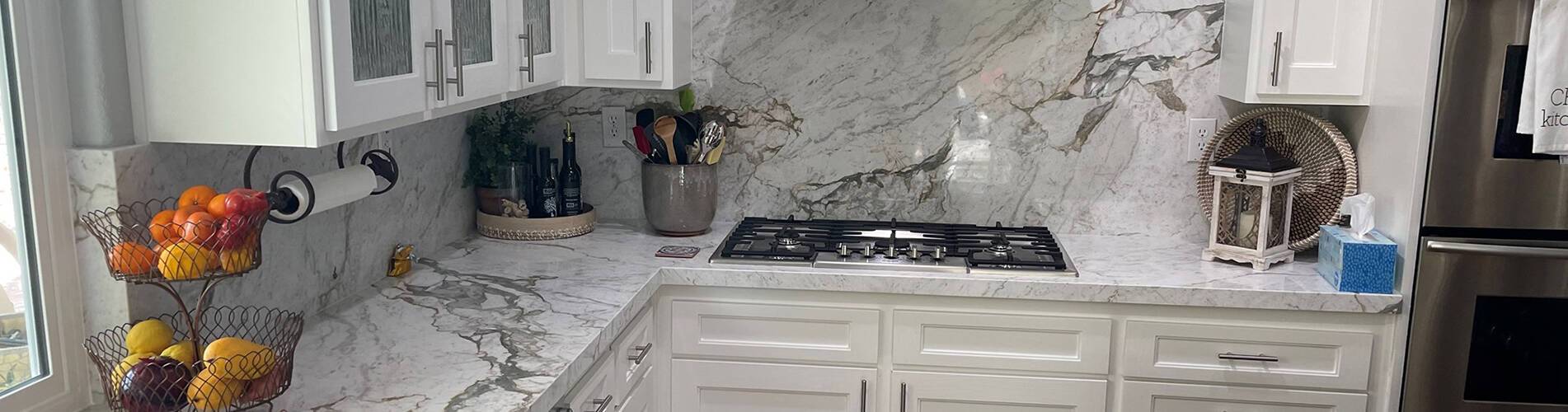
By price: Italian Calacatta Viola offers the richest burgundy color and is usually the most expensive. Turkish Viola has similar breccia patterns but softer color at a lower price. Chinese material is cooler and greyer and is typically the least expensive.
By slab appearance: Choose bright slabs with balanced creamy-white areas, rich burgundy breccia and natural, continuous movement.
By application: For islands, countertops and large feature surfaces, prioritize well-balanced premium slabs. For side tables and smaller pieces, less uniform slabs can still work if weaker areas are removed through layout and cutting.
By supplier: Prefer suppliers with sufficient block inventory, wire-saw cutting and large-slab fabrication capability.
Historically associated with Breccia Medicea, this dramatic Italian brecciated marble was favored by the Medici family of Florence. Its deep burgundy and violet tones became closely associated with power, nobility and decorative richness. Today, Calacatta Viola remains popular because it combines classical luxury with the bold, layered visual language of contemporary maximalist interiors.
Italian Calacatta Viola can vary dramatically from one block to another. Three broad pattern styles are particularly useful when comparing slabs.
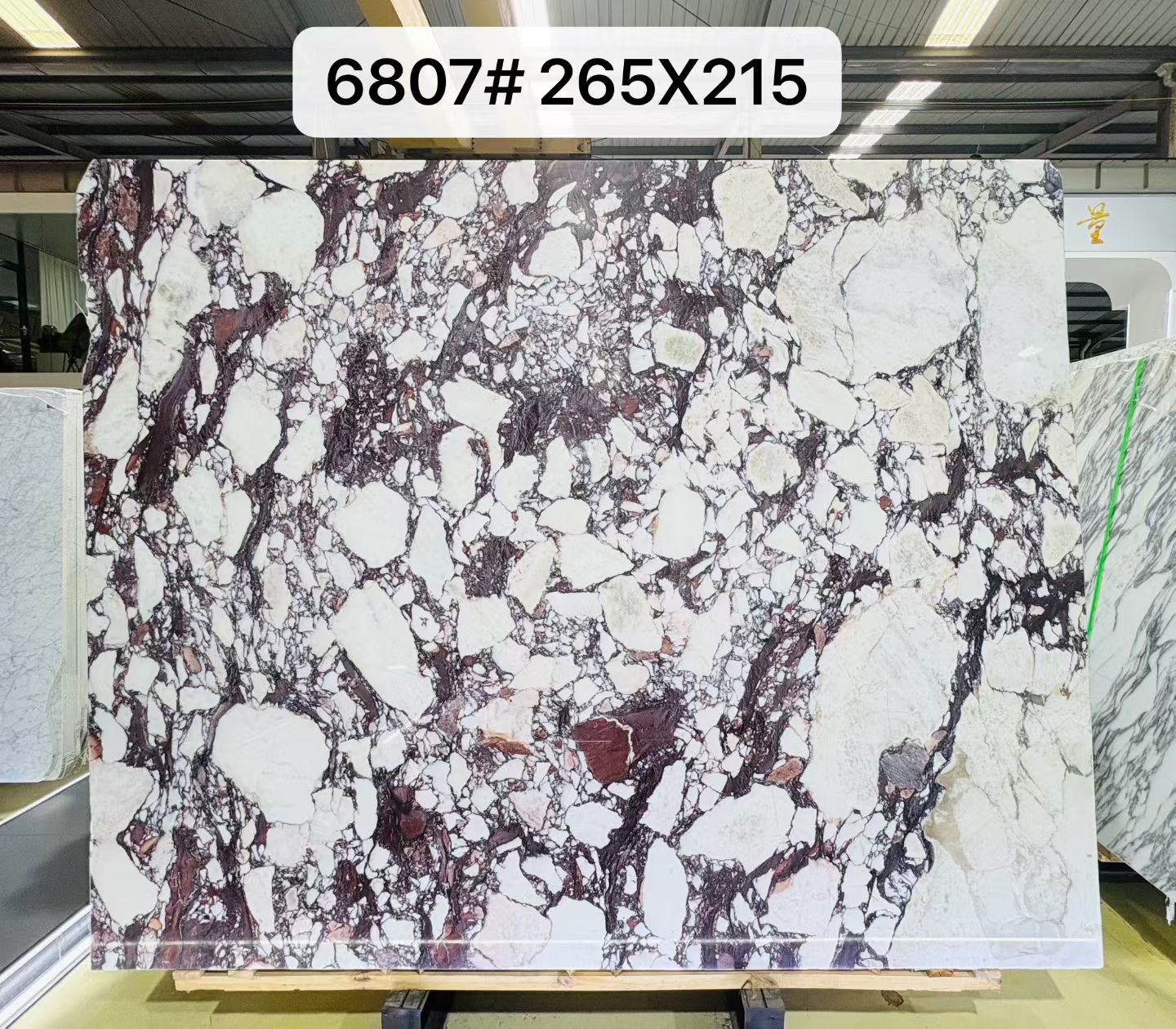
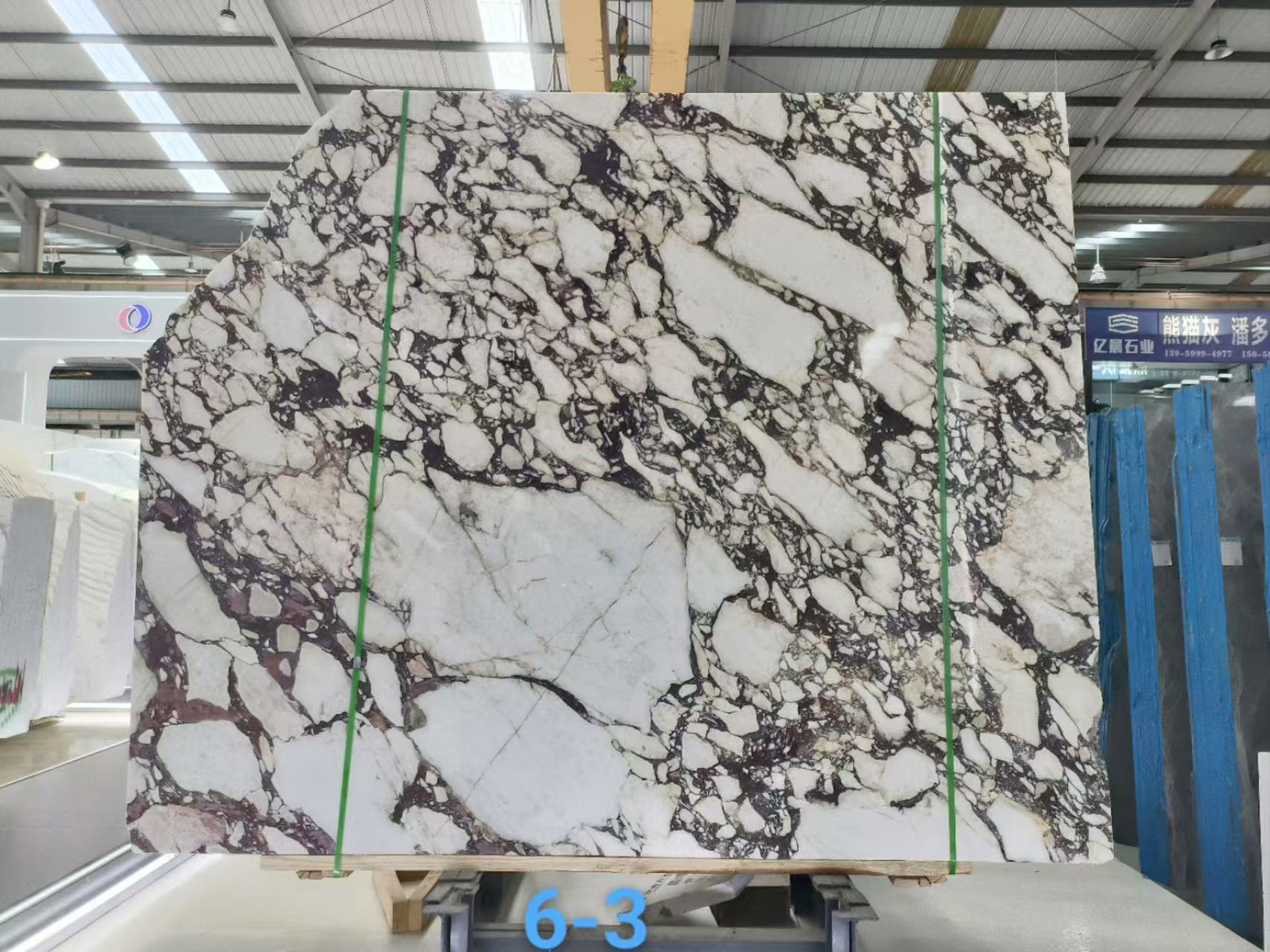
In terms of recognition, accepted visual character and market reputation, Italian Calacatta Viola remains the benchmark and is generally the most expensive, by Turkish and Chinese material.
Italian Calacatta Viola usually offers the most elegant and fluid movement, especially through its highly saturated wine-red and burgundy breccia. This rich coloration and strong natural composition are among the main reasons premium Italian slabs command the highest prices.
Turkish Calacatta Viola offers excellent value for money. Although its burgundy tones are generally less saturated, its color distribution and brecciated patterns can closely resemble Italian Calacatta Viola. Some Turkish blocks also develop distinctive compositions of their own, making them more than simply a lower-cost substitute for Italian stone. Overall, however, their color richness and visual depth generally do not match the finest Italian material.
For buyers comparing different origins, the most useful approach is still to examine actual slabs. You can view our Calacatta Viola slab colors and patterns to see how the material can vary from one block to another.
| Comparison | Italian Calacatta Viola | Turkish Calacatta Viola |
|---|---|---|
| Pattern organization | Clear hierarchy between large color fields, negative space, bold veins and directional movement | Greater emphasis on brecciated fragmentation, with white fragments enclosed by darker networks |
| Visual rhythm | More pronounced changes between dense and open areas, creating a stronger visual rhythm | Pattern distribution tends to be more continuous, fuller and more consistently fragmented |
| Focal points | Often develops one or two strong natural focal areas across the slab | Visual attention is more dispersed across the fragmented surface |
| Role of color | Burgundy and violet become substantial parts of the composition rather than simply outlining fragments | Darker tones more often form the matrix or boundaries between white fragments |
| Sense of scale | More likely to create a large, picture-like composition across the entire slab | Stronger emphasis on repeated breccia texture and fragmented stone structure |
From a stone-selection perspective, Italian Calacatta Viola generally appears richer and more lustrous. Its purple tones tend toward deep wine red and saturated burgundy, while Turkish Viola often appears slightly softer or more muted.
The important similarity is the pattern structure. High-quality Turkish Calacatta Viola can come very close to Italian material in its brecciated composition even when the color expression is different.
From a design perspective, Italian Viola behaves more like a statement stone. Its dramatic movement, saturated color and large-scale composition allow the slab itself to become the visual focus of the room.
Turkish Viola places more emphasis on breccia texture. Its fragmented stone structure can feel more organic, geological and textural, giving high-quality Turkish material its own design character rather than making it only an Italian substitute.
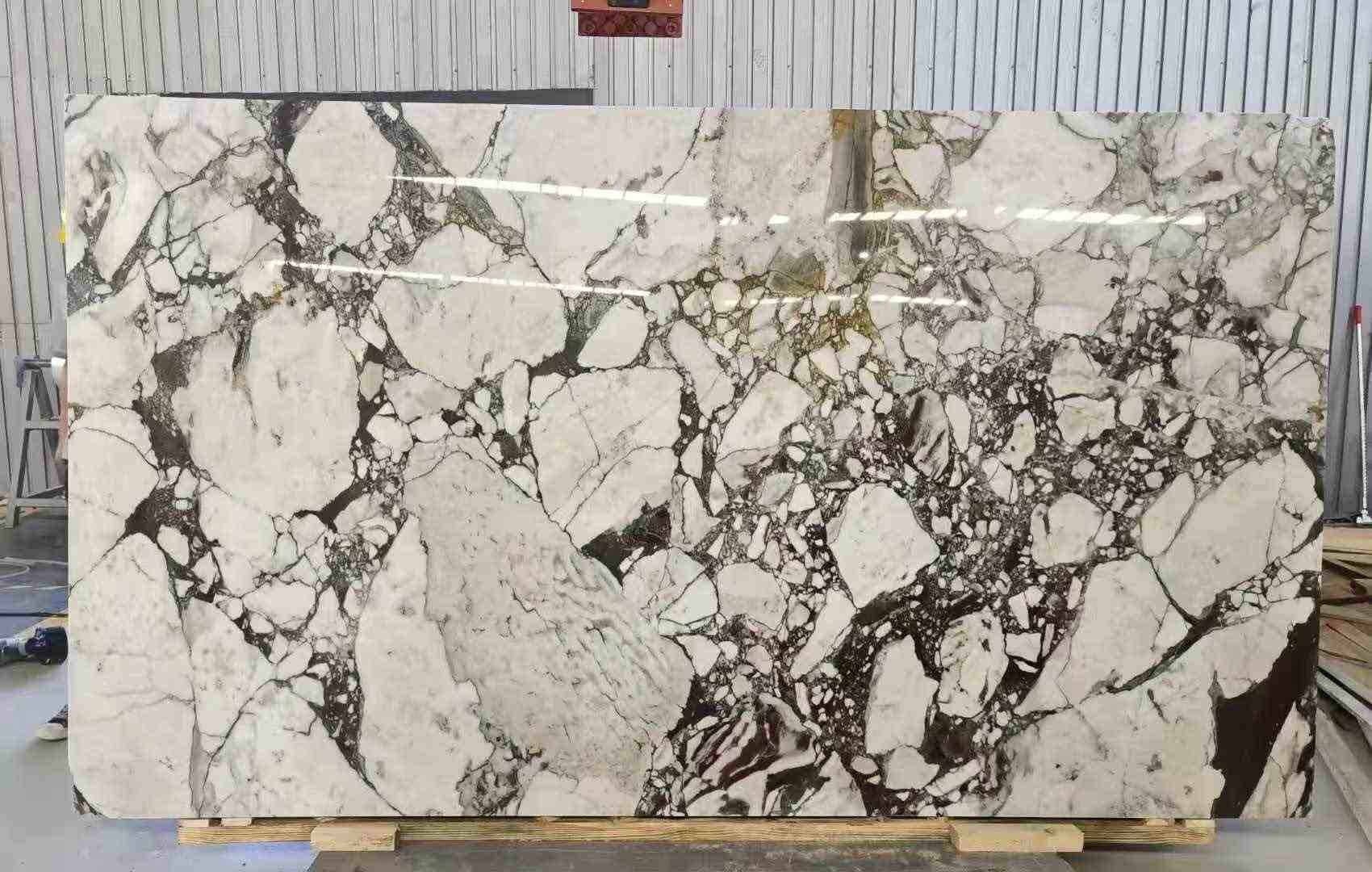
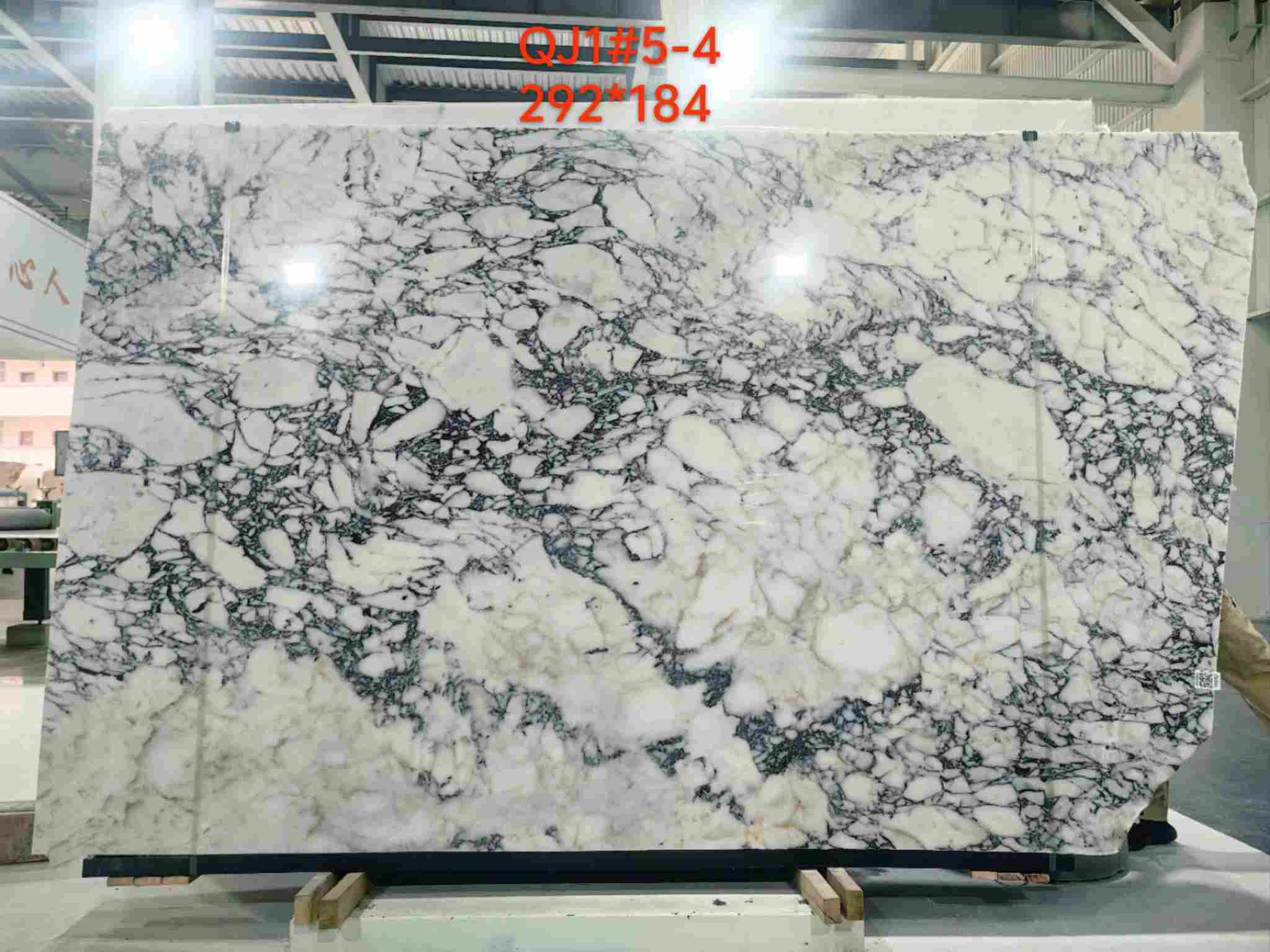
Chinese Calacatta Viola is also commonly sold under names such as Elephant White. Elephant White is a commercial stone name rather than a strictly standardized geological designation. Other market names may include Arabescato Elephant White Marble or Arabescato Elephant Marble.
| Pattern Character | Italian Calacatta Viola | Chinese Calacatta Viola |
|---|---|---|
| Core visual language | White fields combined with burgundy and violet matrix; purple-red tones are a major part of the composition | Also brecciated, but grey, grey-green and dark brown tones more often participate in the pattern |
| Color contrast | Strong white-to-burgundy contrast with high color recognition | Generally lower saturation, with more grey and mixed mineral tones |
| Fragment structure | Breccia combines white fragments with bold veins, color fields and directional movement | Greater emphasis on block-like fragmentation and the brecciated structure itself |
| Visual rhythm | Clear changes in density, negative space and vein weight | More likely to show large mineral fragments or continuous fractured patterns |
| Design language | Dramatic, ornate and artistic | Cooler, more architectural and more focused on natural fragmentation |
Chinese material therefore tends to move away from the traditional burgundy-led Calacatta Viola aesthetic. Its appearance is usually cooler and more mineral-driven, with stronger grey tones and a more obvious fragmented structure.
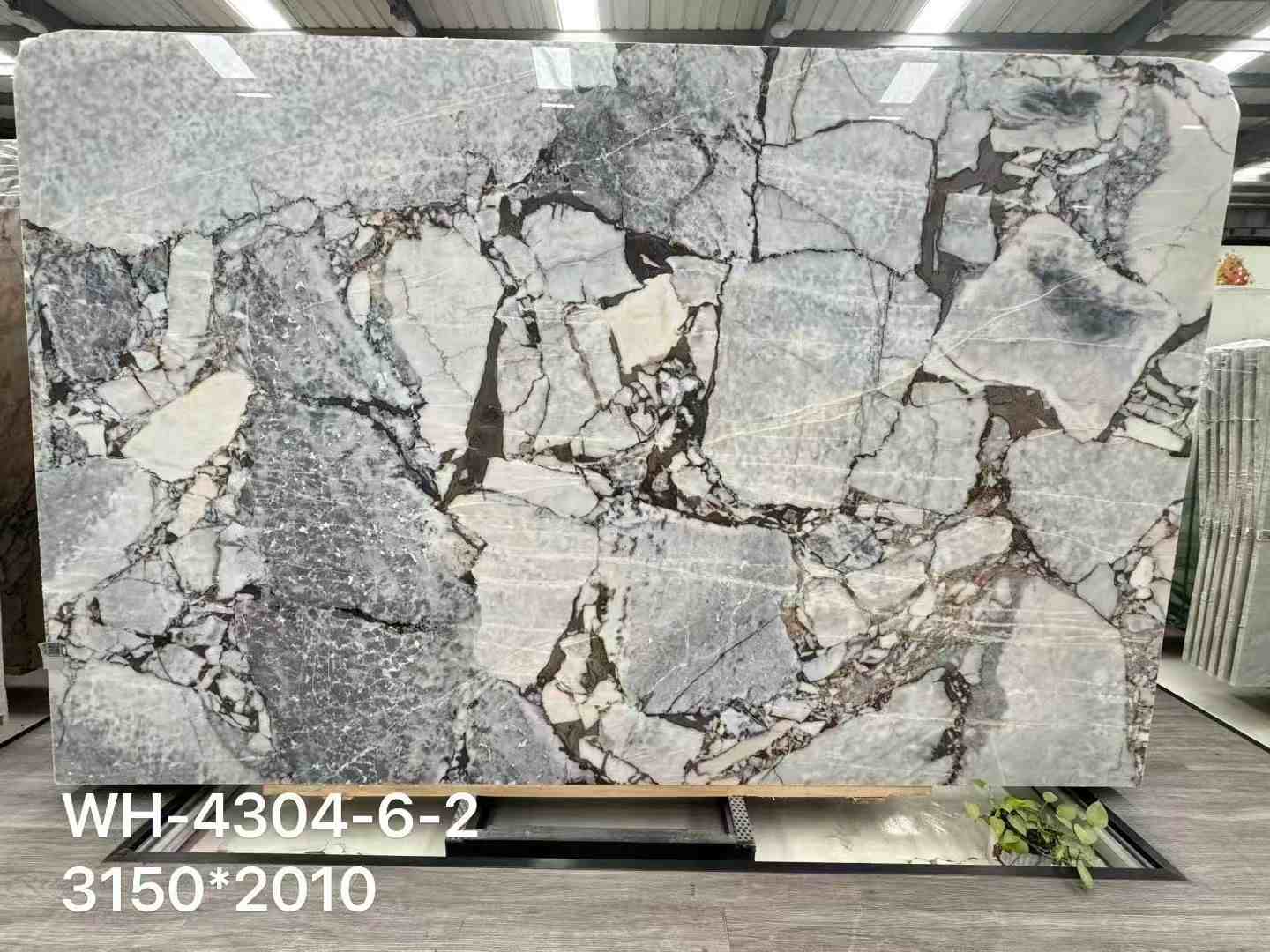
Excessive yellow-brown coloration, dull tones or large empty areas can weaken the traditional Viola character.
Slab size also matters. The larger the slab, the more completely its natural composition can be presented. Large slabs with strong, balanced patterns therefore tend to create a better visual effect and usually command higher prices.
The best slab depends partly on how much of the original composition will remain visible after fabrication.
| Application | What to Prioritize |
|---|---|
| Kitchen island | Large, balanced composition with continuous movement |
| Kitchen countertop | Even color distribution and a strong usable cutting area |
| Feature wall | Large-scale movement, strong focal areas and overall visual balance |
| Side table / tray | Attractive local pattern; weaker areas can often be removed through cutting |
| Small furniture pieces | Strong individual sections rather than a perfect full-slab composition |
For large kitchen countertops, islands, feature walls and other broad visual surfaces, premium Italian Calacatta Viola is usually the strongest choice. High-end slabs tend to offer a more balanced distribution of large and small breccia, allowing the pattern to remain coherent across a wide surface.
If the budget is more limited, a top-quality Turkish Calacatta Viola can still create an excellent visual result.
Smaller applications require a different strategy.
For side tables, trays and other compact pieces, it can make sense to select premium Viola slabs with localized imperfections—for example, an oversized white area or a usable section shorter than one meter.
If those weaker areas can be avoided through careful layout and cutting, the finished piece can still retain the character of high-end Calacatta Viola while reducing material cost.
We generally do not recommend Chinese Calacatta Viola when the objective is to reproduce the traditional Calacatta Viola design language. Although it is usually the least expensive option, its cooler, greyer appearance often differs significantly from the classical Italian aesthetic.
The most important condition for selecting Calacatta Viola is having enough blocks and slabs available to compare.
You can see how this works in practice in our Calacatta Viola block selection project , where multiple blocks were compared before cutting to balance color, vein movement, usable area and project budget.
A selection guide can explain what makes a Calacatta Viola composition elegant, but it cannot determine whether a particular slab is right for a specific project.
From our experience working with different buyers, Calacatta Viola is one of the more difficult marbles to select because its pattern varies so dramatically. Even among premium Italian Calacatta Viola blocks, the size, direction and concentration of the breccia can change substantially.
You need to compare different slabs, study the rhythm, color and composition of each one, and decide which individual “piece” best expresses the character required by the project.
In general, avoid slabs with:
These characteristics weaken the distinctive balance of creamy-white background and wine-red breccia that gives Calacatta Viola its characteristic visual impact.
For large Calacatta Viola projects, prioritize suppliers that can show multiple blocks with similar color and pattern.
Unlike a small retail purchase, a luxury villa or commercial project may require an entire block—or even several blocks—depending on the scale of the project.
Calacatta Viola varies considerably between blocks. Even material from the same quarry or quarry layer can show differences in vein direction, breccia size and overall composition.
For this reason, maintaining visual consistency across a project requires more than simply ordering the same stone name.
A larger block reserve gives the project more room to compare material, select matching slabs and maintain visual consistency across different areas.
Suppliers with strong block-processing capability often use wire saws for cutting.
Compared with conventional large-saw cutting, wire-saw cutting can reduce cutting loss and preserve more usable material from an expensive Calacatta Viola block. For projects involving substantial quantities of premium stone, this can represent a meaningful saving.
Wire-saw cutting also produces a flatter, cleaner sawn surface, providing a better starting point for subsequent slab processing.
Large-slab fabrication is not an absolute requirement, but it is a valuable advantage.
A supplier that regularly fabricates marble generally develops a deeper understanding of how a slab will look after cutting, layout and finishing. This practical experience can improve its ability to judge which areas of a slab will produce the strongest finished composition.
You can view our Calacatta Viola furniture and table tops to see how large slabs are selected, laid out and transformed into finished stone pieces.
Fabrication capability also makes one-stop supply possible. For project owners who would otherwise need to find a separate fabricator, this can reduce communication, coordination time and additional project costs.
Contact Us to discuss Calacatta Viola slab selection and one-stop project supply.
Yes. Calacatta Viola can vary significantly in breccia size, vein direction, burgundy intensity and the distribution of creamy-white areas. This variation is one reason buyers should compare full slabs rather than rely on a small sample.
No. A small sample cannot show the overall movement, focal areas or balance between burgundy breccia and the creamy-white background. For large countertops, islands or feature walls, full-slab photos or physical slab selection are much more useful.
No. Italian Calacatta Viola is usually the benchmark for saturated burgundy color and the classical Viola aesthetic, but the best choice still depends on budget, application and the appearance of the individual slab.
Yes. High-quality Turkish Calacatta Viola can closely resemble Italian material in breccia pattern and overall composition, usually at a lower price. Its burgundy tones are generally less saturated, although some Turkish blocks have distinctive patterns of their own.
Yes, when visual consistency is important. Using slabs from the same block, or from closely matched blocks, makes it easier to control differences in color, breccia size and vein direction across a large project.
No. Strong burgundy color is important to the traditional Calacatta Viola appearance, but color alone does not make a good slab. Balanced creamy-white areas, natural movement, pattern distribution and the overall composition are equally important.
Categories
New Blog
 ROOM 205,NO.45, MIDDLE HAIJING ROAD,XIAMEN,AREA OF PILOT FREE TRADE ZONE(FUJIAN)OF CHINA
For inquiries about our products or pricelist, please leave to us and we will be in touch within 24 hours.



© Copyright: 2026 XIAMEN EXCELLENT STONE CO.,LTD. All Rights Reserved.

IPv6 network supported