English







Quick Answer
- Sintered stone works best in kitchens when the countertop and backsplash are planned as one surface package.
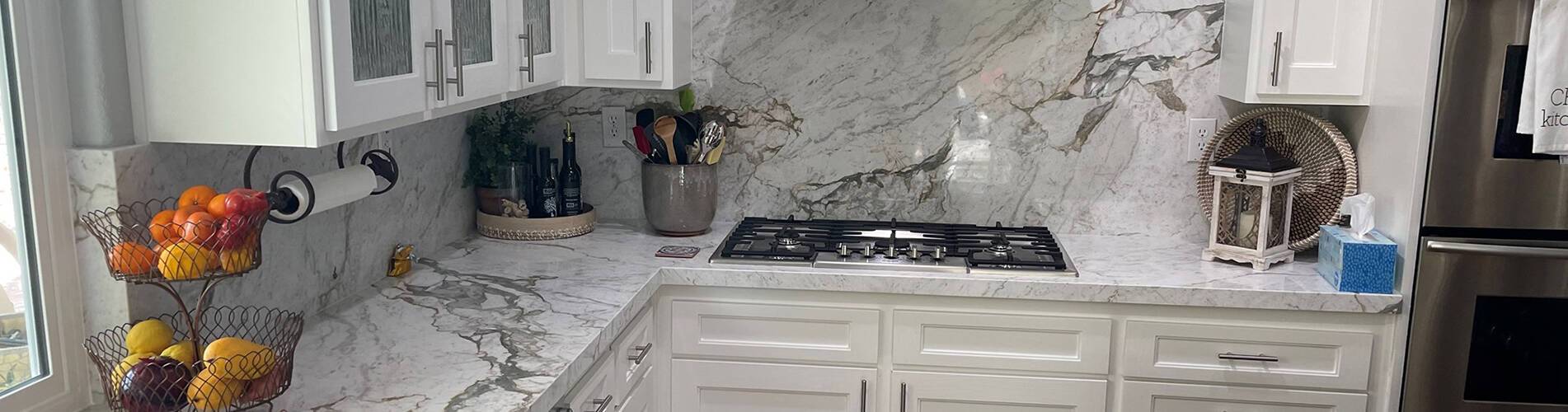
- Full-height slab backsplashes are becoming popular because they create fewer joints and a cleaner modern look.
- It can replace ceramic tile, porcelain slabs, quartz or natural stone in selected projects, but not in every kitchen.
- Cutting risk is real. Edge chipping, outlet cutouts, mitered edges and handling need experienced fabrication.
- We can support slab layout, cutting, packing and practical tool-selection advice for local fabricators.
Why Sintered Stone Is Becoming Popular in Modern Kitchens
In many modern kitchens, the backsplash is no longer only a small tiled strip behind the countertop. Designers are using larger slabs, full-height backsplashes and countertop materials that continue up the wall. This trend makes sintered stone more attractive, especially when a kitchen needs a cleaner surface, fewer grout lines and a matching countertop-to-wall design.
Sintered stone fits this direction because it can be supplied in large slabs, stone-look patterns, marble-look colors and modern finishes. In the right kitchen project, it can be considered as an alternative to ceramic tile backsplashes, porcelain slabs, quartz or natural stone. The reason is not only appearance. When the countertop, backsplash, island side panel and wall return pieces are planned together, the whole kitchen surface becomes easier to coordinate.
Compared with small ceramic tile, sintered stone creates fewer joints. Compared with some quartz applications, it can support a thinner and more architectural slab look. Compared with natural stone, it can offer stone-look design with more controlled color and batch supply. Buyers who want to compare colors, slab sizes and finishes can review our sintered stone slabs collection before confirming the kitchen package.
Still, sintered stone is not the best choice for every kitchen. It becomes more valuable when the project needs large-format design, a full-height backsplash, fewer grout lines, matching surfaces and professional fabrication support.
What Is a Sintered Stone Kitchen Countertop and Backsplash?
A sintered stone kitchen countertop is the horizontal working surface installed on cabinets. It may include sink cutouts, cooktop cutouts, faucet holes, seams, edge finishing and cabinet support. A sintered stone backsplash is the vertical surface behind the countertop, sink or cooktop. It protects the wall and also affects the final kitchen design.
The backsplash may be short, full-height, behind the cooktop, used as a side splash or extended as a wall return piece. In higher-end kitchens, the same material may also continue to the island side panel or waterfall return.
A backsplash should not be selected only as a wall decoration after the countertop is finished. For better color matching, joint control and cutting accuracy, it works better when planned together with the countertop. This is especially important for marble-look patterns, full-height backsplashes and repeated kitchen orders.
For readers who still need the basic material background first, our guide on what is sintered stone explains the material structure, common applications and general performance.
Countertop, Backsplash and Wall Panel: What Is the Difference?
Many people see the same sintered stone color used on countertops, backsplashes and wall panels, so they may think these applications have the same product form. In real projects, the pattern may look similar, but the performance requirements are different.
| Application | Main Role | Main Risk | What Must Be Confirmed |
|---|---|---|---|
| Kitchen countertop | Working surface | Edge chipping, sink/cooktop cutouts, support | Thickness, edge type, sink and cooktop openings |
| Kitchen backsplash | Wall protection behind countertop | Outlet cutouts, wall flatness, joint position | Height, socket positions, slab layout |
| Full-height backsplash | Countertop material continuing up the wall | Handling, matching, installation sequence | Slab size, wall condition, installation access |
| Wall panel | Larger vertical wall system | Weight, backing, fixing method | Panel structure, backing, packing method |
A countertop is a work surface. It must handle daily use, openings, edge exposure and cabinet support. A kitchen backsplash is a connected wall surface. It must fit the countertop line, wall condition, socket positions and installation sequence. A wall panel is a broader vertical wall system, often used for shower walls, hotel corridors, feature walls or commercial interiors.
If the project is more about vertical wall systems instead of a kitchen backsplash, our guide to sintered stone wall panels explains panel thickness, backing, installation and export packing in more detail.
Why Countertop and Backsplash Should Be Planned Together
For small tile backsplashes, the wall finish is often selected after the countertop. For sintered stone slab backsplashes, that approach can create problems. The slab size, vein direction, outlet positions, countertop seam and backsplash joint all affect the final result.
Better Color and Batch Matching
When the same kitchen uses sintered stone on both horizontal and vertical surfaces, visible color difference can reduce the quality impression. Same-batch review and slab photo confirmation help control this risk. This matters more in repeated kitchens, apartment projects, hotel rooms, villas and showroom kitchens.
Better Vein Direction and Slab Layout
Marble-look sintered stone can create a strong kitchen effect when the countertop and backsplash feel connected. If the veins are cut without planning, the backsplash may look broken or unrelated to the countertop. Full-height backsplashes need especially careful slab positioning.
Better Joint Planning
A joint in the wrong place can make a high-end material look less valuable. Countertop seams, backsplash seams, cabinet lines and wall corners work together visually. When they are reviewed together, the kitchen looks cleaner after installation.
Better Cutout Accuracy
Outlet cutouts, socket holes, cooktop zones and wall openings must be confirmed before cutting. A small drawing mistake can damage a full backsplash piece and delay installation. Good planning reduces material waste, cutting risk and site confusion.
For countertop-specific details such as thickness, edge profiles, sink openings and cabinet support, our guide to sintered stone countertops explains the main selection points before backsplash planning.
Common Sintered Stone Backsplash Types for Kitchen Projects
Different backsplash types create different visual effects and fabrication requirements. The choice should match the kitchen layout, budget, wall condition and installation method.
| Backsplash Type | Best Used For | Main Control Point |
|---|---|---|
| Short backsplash | Cost-sensitive kitchens, apartments, simple wall protection | Height and joint line |
| Full-height slab backsplash | Modern kitchens, villas, showrooms, high-end apartments | Outlet positions and slab handling |
| Cooktop or stove backsplash | Wall area behind cooktop or range | Cleaning, nearby heat and cutout position |
| Side splash | Sink side wall, cabinet end, kitchen corner | Small-piece labeling and wall fit |
| Island side panel or waterfall return | Island visual extension and matching slab design | Miter, edge and corner protection |
A short backsplash is easier to fabricate and install. It protects the wall but does not create the same full-slab visual effect.
A full-height slab backsplash creates a stronger modern kitchen look. It reduces grout lines and makes the wall easier to clean. At the same time, it needs accurate measurements, outlet positions, wall condition checks and careful handling.
Behind the cooktop, the surface has to deal with oil stains, frequent cleaning, nearby heat and possible socket or switch openings. The finish and cutout details need more attention in this area.
Side splashes and wall return pieces are small, but they can cause site confusion if labels are unclear. For repeated kitchen orders, each piece should match its room, unit or kitchen area.
For buyers reviewing marble-look kitchen surfaces, Dekton Calacatta Gold sintered stone worktop is one product direction that can support countertop, island and matching backsplash discussions.
Sintered Stone vs Ceramic Tile, Porcelain Slab and Quartz in Kitchen Use
Sintered stone should not be promoted as the best material for every kitchen. The real question is whether the project needs a slab look, fewer joints, matching surfaces and professional fabrication support.
| Material | Strength | Limitation | When Sintered Stone Becomes Attractive |
|---|---|---|---|
| Ceramic tile | Affordable, mature, easy to replace | More grout lines, less slab continuity | When the kitchen needs a cleaner full-height backsplash |
| Porcelain slab | Large-format surface, strong kitchen trend | Also needs skilled cutting and handling | When slab size, finish, pattern and supplier support fit the project |
| Quartz | Familiar countertop material, strong market acceptance | Backsplash and wall cladding may be less integrated in some designs | When a thinner, large-format, countertop-to-wall design is required |
| Natural stone | Unique veining and luxury appeal | Sealing, maintenance and color variation | When controlled color and repeated project supply are important |
Ceramic tile is still practical for many standard backsplashes. It is affordable, familiar and easy to repair. Sintered stone becomes more attractive when the kitchen needs a full-height backsplash, fewer grout lines and a more integrated surface.
Porcelain slab and sintered stone are often compared in the same large-format kitchen surface category. Both need professional handling and cutting. The real comparison is not only the material name. Slab size, thickness, finish, pattern, fabrication support and supplier experience all affect the final kitchen result. For broader material comparison, see our guide to sintered stone vs porcelain.
Quartz is familiar to many countertop fabricators and buyers. Sintered stone can be considered when the kitchen needs large slabs, a matching backsplash, wall cladding or a more architectural surface. But it cannot be handled like ordinary wall tile or processed exactly like standard quartz.
Natural stone offers unique beauty, but it may need sealing and more maintenance. Sintered stone can provide a stone-look surface with more controlled color and batch consistency, which is useful for repeated kitchens and project orders.
Fabrication Risks and How We Help Control Them
The market interest is strong, but the hesitation is also real. Many fabricators and project buyers like the slab look, yet they worry about edge chipping, cutout mistakes, mitered corners and installation damage.
These risks do not mean sintered stone should be avoided. They mean the material needs the right equipment, cutting method, handling process and supplier support.
| Risk Area | Why It Matters | Our Support |
|---|---|---|
| Edge chipping | Exposed edges may chip during cutting, transport or installation | Review edge type, thickness and handling method |
| Mitered edge | Clean look, but corners need accurate cutting and bonding | Check cutting accuracy, bonding and packing protection |
| Outlet cutouts | Wrong socket positions can ruin full-height backsplash pieces | Confirm elevation drawings and mark cutouts before packing |
| Sink and cooktop openings | Cutouts are high-stress areas | Use professional equipment and review opening details |
| Handling and installation | Large pieces can break if moved or installed incorrectly | Pack by area or unit and remind buyers to plan unloading and access |
| Local fabrication | Some shops are more familiar with quartz or granite | Share cutting precautions and blade-selection reference |
Edge chipping is one of the most common concerns. Sintered stone is hard, but exposed edges can be sensitive to impact if the edge design, cutting process or handling is poor. Based on our fabrication experience, we review edge type, thickness and application before cutting. When the project does not require a very sharp visual line, we can suggest safer edge options.
Mitered edges look clean and modern, especially on islands and waterfall panels. But they require accurate cutting, bonding and edge protection. For mitered edges, we check cutting accuracy, bonding condition and packing protection before shipment. If a mitered edge is not necessary, we can compare it with eased edge or laminated edge options.
Full-height backsplashes often need outlet and socket cutouts. A wrong socket position can ruin the whole piece. Before cutting backsplash pieces, we ask for outlet drawings, wall elevation drawings and final measurements. For project orders, we can mark cutout positions and provide photos before packing.
Sink and cooktop cutouts are high-risk areas on countertops. Radius corners, cutting sequence, water cooling, support and tool condition all matter. We use professional cutting equipment and review opening details before fabrication.
Some buyers prefer to fabricate locally. In that case, we can share practical reference experience, including cutting precautions and suggestions for selecting sintered stone cutting blades or professional diamond tools. We cannot replace the local installer’s responsibility, but we can help reduce avoidable mistakes. The supplier’s experience matters, so our guide on how to choose a sintered stone supplier may also help before placing countertop and backsplash orders.
How We Support Kitchen Countertop and Backsplash Projects
Our role is not only to supply slabs. We help buyers review how the material will be cut, matched, packed and installed.
Drawing Review Before Cutting
We review countertop sizes, backsplash height, outlet and cooktop positions, sink openings and faucet holes before fabrication. This helps reduce wrong cutouts and makes site installation easier.
Slab Layout and Matching
We check color, vein direction and surface finish. If the kitchen includes full-height backsplash, side splash or island panels, we review how these parts should match the main countertop. This helps create a more complete kitchen surface.
Professional Cutting and Edge Processing
We use professional equipment to control cutouts, edges and mitered parts. Finished pieces are inspected before packing. For buyers who process locally, we can provide slab samples, finish samples and practical cutting references.
Packing and Labeling for Export
Countertop and backsplash pieces can be packed by kitchen area, room, floor or project unit. Clear labels help installers reduce site confusion. Wooden crates and photo confirmation before shipment help buyers manage receiving and installation.
Support for Local Fabricators
Some fabricators are new to sintered stone. We can share experience on cutting sequence, water cooling, handling points and diamond blade selection. This support helps buyers prepare before local processing starts.
Information That Helps Us Review the Project
Clear drawings make the quotation more accurate and reduce the risk of wrong cutouts, poor matching and installation delays.
Helpful information includes:
- Kitchen drawings or cabinet layout
- Countertop and island dimensions
- Backsplash height
- Full-height or short backsplash requirement
- Outlet and socket positions
- Sink and cooktop cutout drawings
- Edge type
- Surface finish
- Thickness requirement
- Quantity by kitchen, room, unit or project
- Destination market
- Packing and labeling requirements
- Whether local fabrication support is needed
If the project is still in the design stage, we can also help review whether sintered stone is suitable for the countertop, backsplash, island and wall return pieces.
Final Advice: Choose Sintered Stone as a Kitchen Surface System, Not Only as a Slab
Sintered stone is popular because modern kitchens are moving toward large slabs, full-height backsplashes and cleaner countertop-to-wall design. It can be a strong alternative to ceramic tile backsplash, porcelain slab, quartz or natural stone in the right project.
The material still needs professional fabrication. Edge chipping, mitered edges, outlet cutouts, handling and installation should be discussed before order. Local fabricator experience, blade selection and cutting method can affect the final result.
With proper drawings, cutting, slab layout, packing and supplier support, sintered stone can become a strong kitchen countertop and backsplash solution for project kitchens.
Need Help With a Kitchen Countertop and Backsplash Project?
Send us your kitchen drawings, backsplash height, cutout positions and required finish. Contact us for slab layout review, cutting details, packing plan and quotation for your sintered stone kitchen countertop and backsplash project.
FAQ
Can sintered stone be used for both kitchen countertops and backsplashes?
Yes. Sintered stone can be used for countertops, backsplashes, islands, side splashes and wall return pieces. For the best result, these parts should be planned together because slab layout, color matching, cutouts, seams and packing labels all affect the final kitchen.
Is sintered stone better than ceramic tile for a kitchen backsplash?
Not always. Ceramic tile is practical, affordable and easy to replace. Sintered stone is more valuable when the project needs a full-height slab backsplash, fewer grout lines, stronger visual continuity and a more modern countertop-to-wall design.
Is sintered stone difficult to cut?
It requires experienced fabrication, proper equipment, suitable diamond tools, correct cutting sequence and careful handling. It cannot be treated like ordinary wall tile or processed exactly like standard quartz. Edge chipping, outlet cutouts, mitered edges and sink openings should be reviewed before cutting.
Can you help buyers choose cutting blades for sintered stone?
Yes. If buyers process slabs locally, we can share practical reference experience for cutting precautions and suitable sintered stone blade selection. Final processing should still follow the local fabricator’s machine condition, safety rules and installation responsibility.