English







Public-Project Evidence for Outdoor Granite Finish Selection
Based on our review of municipal tender projects across North America, Europe, Australia and Southeast Asia, flamed granite is the most practical starting point among the granite finishes used for outdoor pedestrian paving, while bush-hammered granite provides a more regular mechanical pattern. Natural-split and tumbled finishes suit more traditional paving, while water-washed, pineapple and mechanically grooved surfaces support more specific visual or component requirements.
Excellent Stone 2026 review result: According to our formal review of 14 public granite paving projects across North America, Europe, Australia and Southeast Asia, flamed or thermal granite was specified in 66.7% (8 of 12) of the projects that fixed an exposed top finish, making it the most frequently recurring outdoor paving finish in the reviewed set.
Granite finishes recurring in the fixed-finish public-project set
The chart shows how often each granite paving finish appeared across the 12 projects with a clearly selected exposed top finish. The commercial trend is clear: flamed or thermal granite is the most common and broadly applied finish; bush-hammered granite is also well established for public-realm paving, steps, ramps and feature areas; sandblasted granite appears more selectively in component-specific roles such as tactile paving, exterior stair treads and detailed plaza zones. Fine-picked and shot-blasted finishes remain more specialized project treatments.
The broadest recurring finish across pedestrian paving and public-realm projects.
A strong public-realm option for paving, steps, ramps and architectural feature zones.
Used more selectively for tactile units, exterior stair treads and detailed plaza components.
A project-specific treatment for selected paving units and setts.
A specialized finish used for defined plaza or feature paving zones.
Source basis: Excellent Stone public-project finish report, compiled from official government and municipal procurement documents. The chart uses 12 fixed-finish projects from a 14-project formal analysis set. Each independent project is counted once for each normalized finish it specifies; thermal is grouped with flamed, while side treatments such as sawn, cut, cropped or split remain separate from the exposed top finish.
View the public-project finish data as a table
| Granite finish | Projects | Observed specification pattern |
|---|---|---|
| Flamed / thermal | 8 of 12 | Broadest recurring finish across pedestrian paving and public-realm work. |
| Bush-hammered | 4 of 12 | Established for paving, steps, ramps and architectural feature zones. |
| Sandblasted | 3 of 12 | More selective use in tactile units, stair treads and detailed plaza components. |
| Fine-picked / tooled | 1 of 12 | Project-specific paving and sett treatment. |
| Shot-blasted | 1 of 12 | Specialized finish for defined plaza or feature zones. |
Recommended finish direction by project requirement
General walkways
Start with flamed granite for the best all-round pedestrian paving balance.
Formal architectural paving
Use fine or medium bush-hammered granite for a more regular mechanical texture.
Traditional courtyards
Choose tumbled or natural-split granite for aged or rustic character.
Large public plazas
Flamed granite is the leading starting direction, often combined with secondary finishes by zone.
Pool surrounds
Use a flamed top with a brushed, eased or rounded exposed edge.
Driveways
Flamed granite is common, but the paving unit and base system decide vehicle suitability.
Accessible routes
Use a fine, evenly processed flamed finish with controlled joints and level changes.
Steps, ramps and tactile areas
Bush-hammered and sandblasted granite are strong public-specification directions.
Modern directional design
Specify machine-grooved granite where linear texture is part of the design intent.
Primary Exposed-Surface Granite Finishes for Outdoor Paving
Primary exposed-surface finishes define the visible walking face or feature face of the granite. They establish most of the surface relief, reflectance and design character before any edge, side or secondary treatment is added.
Flamed or Thermal Granite for High-Traffic Outdoor Paving
Flamed or thermal granite is produced by applying high heat to a sawn stone surface. The thermal reaction removes small particles from the surface and creates an irregular, matte texture.
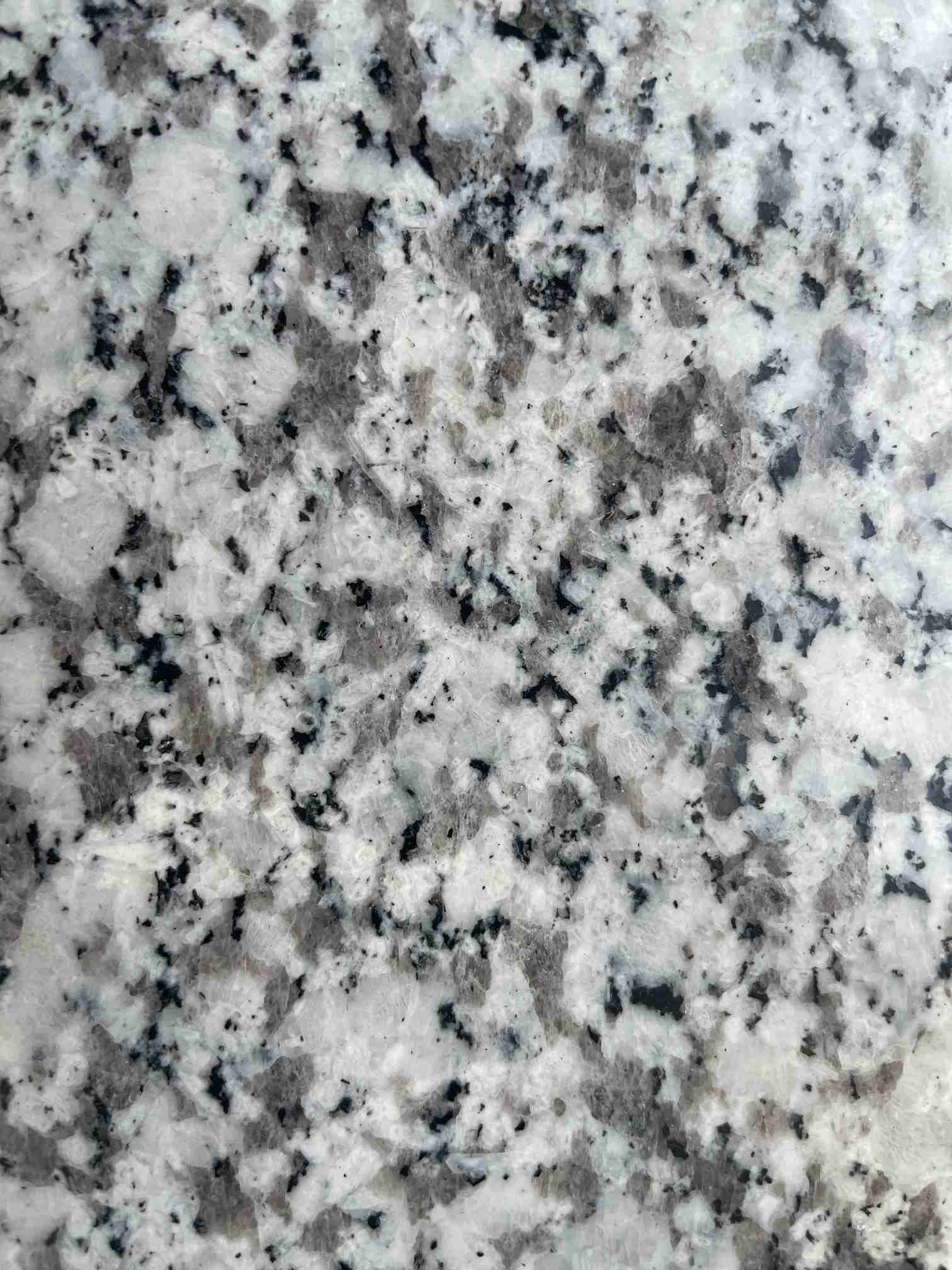
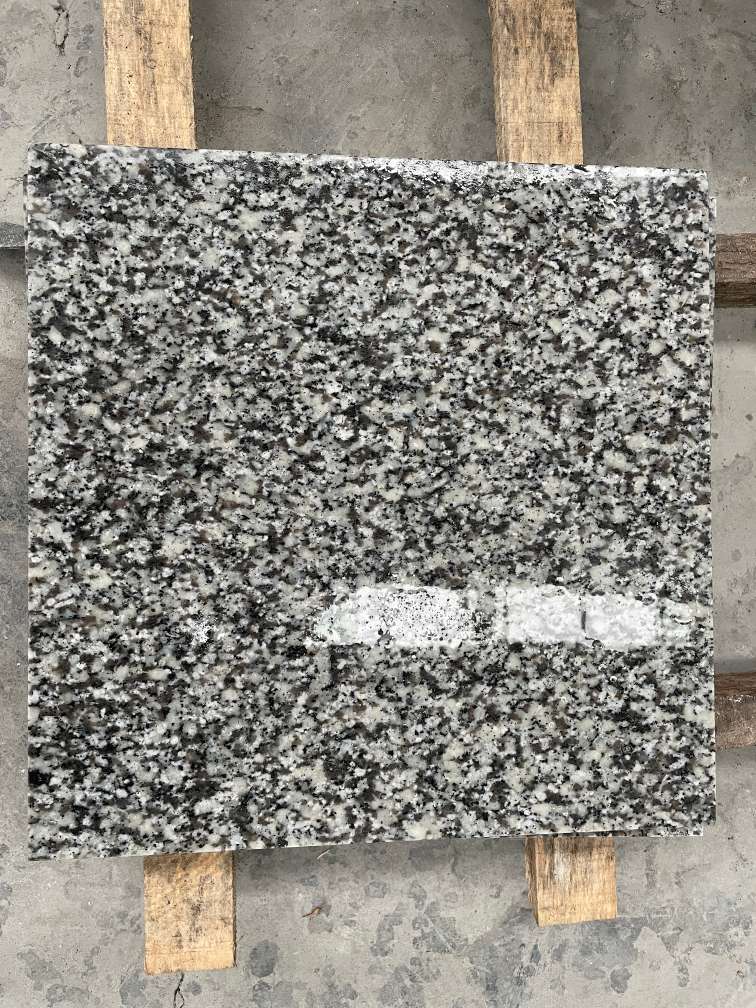
The finish normally makes granite appear lighter and less reflective than a polished surface. Its final texture depends partly on the mineral structure of the selected granite.
The flamed granite finish is commonly used for rectangular granite pavers, walkways, plazas, exterior stair treads, pool coping tops and other cut-to-size outdoor components.
Based on our production experience, most paving orders require automatic flaming only on the top or another broad exposed face. Side flaming is normally added only when a project calls for visible thermal-finished edges, returns or profiles; in those cases, Excellent Stone workers finish the side faces manually with handheld torches.
Bush-Hammered Granite Texture for Plazas, Steps and Ramps
Bush-hammered granite is processed with a mechanical impact tool that creates repeated pits across the stone surface.
Fine bush-hammering produces a smaller and more regular pattern, while heavier processing creates deeper and more visible relief.
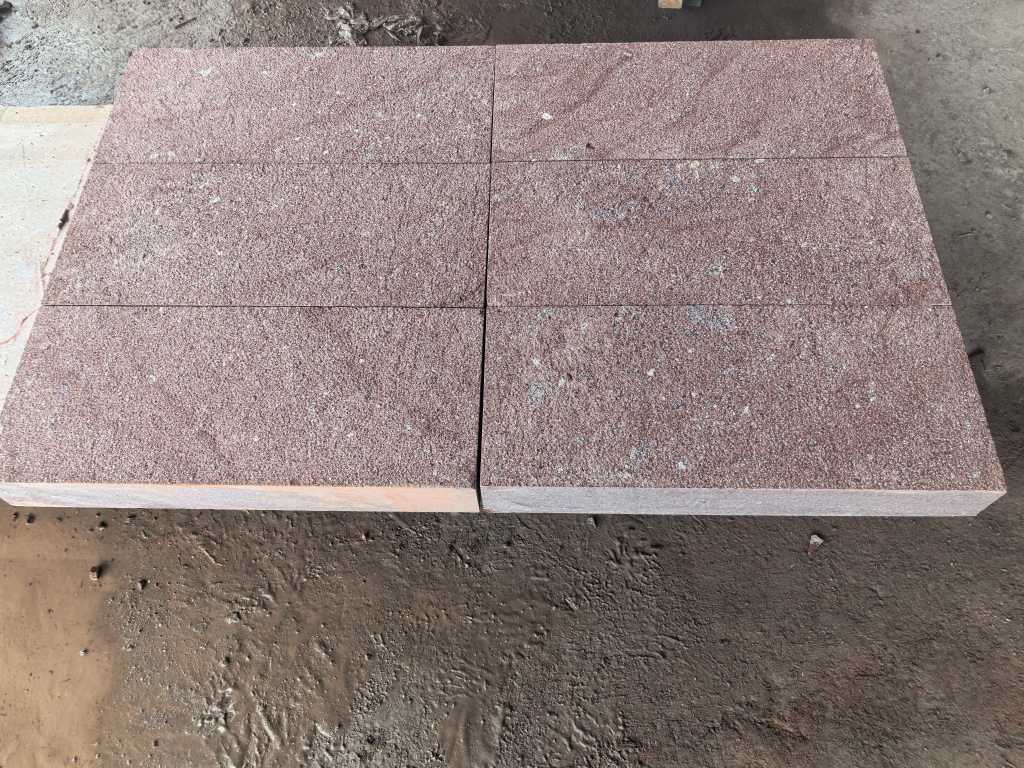
Compared with flamed granite paving, bush-hammered granite creates a more controlled architectural texture. It is used for plazas, entrances, steps, landscape platforms and pedestrian paving where a repeated mechanical pattern is part of the design.
Sandblasted Granite for Tactile Paving and Exterior Steps
Sandblasting directs abrasive media at the stone to create a fine, matte and relatively even surface. In the reviewed public-project specifications, sandblasted granite appeared more selectively in tactile paving, exterior stair treads and detailed plaza components than in broad main paving fields.
Shot-Blasted Granite for Plaza Feature Zones
Shot blasting produces a controlled mechanical texture through repeated surface impact. The reviewed project records used it as a specialized treatment for defined plaza or feature-paving zones, where a contrasting surface pattern formed part of the landscape design.
Fine-Picked or Tooled Granite for Setts and Selected Paving Units
A fine-picked or tooled finish is formed by repeated point or chisel marks across the exposed face. It creates a more deliberate hand-worked appearance and appeared in the reviewed records on selected paving units, setts and project-specific public-realm components.
Natural-Split Granite for Cobblestones and Traditional Paving
Natural-split granite has an irregular face created by splitting or hand-working the stone rather than evenly grinding the surface.
The texture follows the granite structure, so its depth, edge shape and visible mineral planes can vary from piece to piece. Natural-split granite paving is commonly supplied as cubes, setts, cobblestones, garden paving, walling, kerbs and exposed faces on steps.
Mechanically Grooved Granite for Directional and Decorative Paving
A mechanically grooved granite finish uses repeated parallel channels with controlled width, depth, spacing and direction. It is mainly specified for directional paving, stair treads, kerbs, walling and decorative landscape bands rather than as the only finish across an entire paving field.
Pineapple-Finish Granite for Decorative Landscape Components
Pineapple finish is a coarse, tool-worked treatment produced through repeated chiseling or mechanical impact.
It creates visible grooves, raised areas and stronger light-and-shadow variation. Unlike natural split, its texture is deliberately formed by tools. Compared with bush-hammering, the finished pattern is normally less uniform and more strongly chiseled.
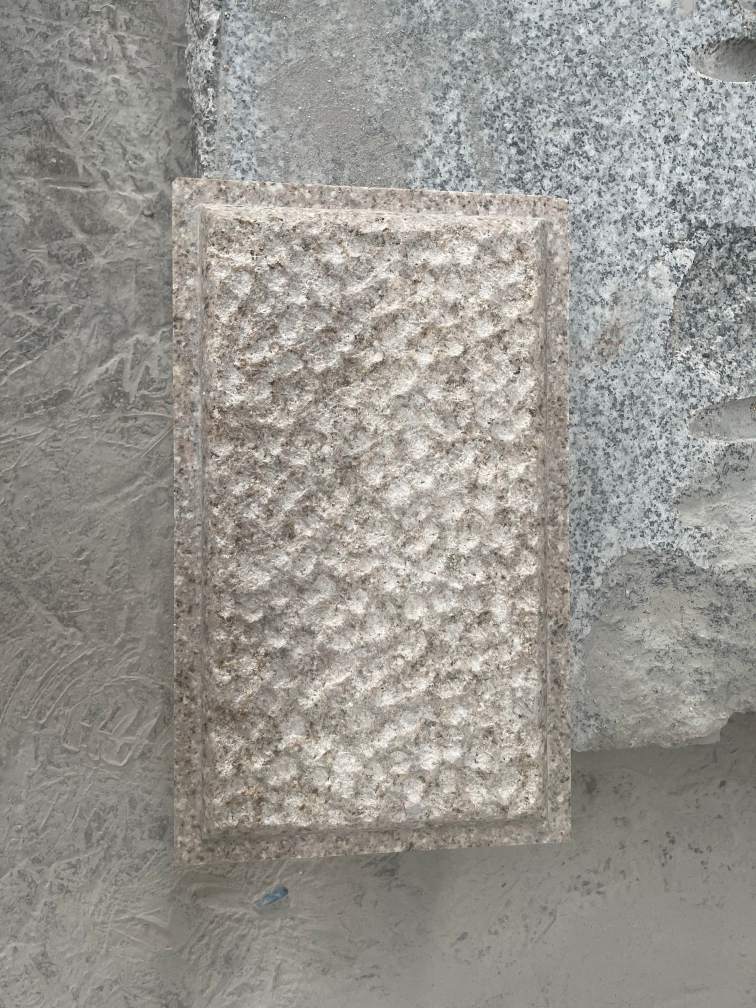
Pineapple finish is mainly considered for landscape edging, kerbs, thick paving elements, walling and decorative public-space features.
Excellent Stone processes pineapple finish less frequently than flamed or bush-hammered granite. It is most useful as a decorative contrast on kerbs, paving bands, wall faces or selected landscape components alongside another primary finish.
Secondary and Complementary Granite Surface Treatments
Secondary treatments are applied after, alongside or on different faces from the main exposed finish. They refine color, soften edges, improve dimensional control or prepare the product for bedding and installation.
Light Brushing After a Flamed Granite Finish
Tumbled Granite as a Secondary Treatment for Pavers and Setts
Tumbled granite is processed in rotating equipment, where repeated movement softens the corners, edges and parts of the stone face.
Light tumbling mainly removes sharp edges. Longer processing produces a more rounded and weathered appearance. The original face may still be flamed, sawn or natural split beneath the tumbled treatment.
Tumbled granite paving is frequently used for cobblestones, setts, garden paths, courtyards, borders and traditional streetscapes.
In our production experience, tumbling is rarely specified as the only primary face finish. It is more often used as a secondary treatment after flaming to soften edges and corners while retaining the flamed top texture.
Browse tumbled granite cobblestones and setts for traditional courtyards, garden paths and streetscape paving.
Water-Washed Granite as a Complementary Surface Treatment
Water-washed or water-jet granite is processed by directing pressurized water onto the stone surface. The treatment removes loose surface particles and exposes a matte texture with visible natural mineral grains.
Water pressure, nozzle distance, processing speed and the granite structure influence the result. Some high-pressure washing processes are also used after another finish, such as flaming, to expose more of the stone color while retaining an exterior texture.
Water-washed granite can be processed for outdoor paving slabs, steps, wall cladding, landscaping stone and other custom cut-to-size products.
Machine-Cut Sides and Calibrated or Sawn Bottoms
Sawing is primarily a dimensional process rather than a decorative top finish. Machine-cut sides support regular joints and controlled unit dimensions, while a calibrated or sawn bottom can improve bedding contact, height control and mesh mounting. These faces are commonly combined with flamed, bush-hammered or natural-split tops.
Polished Granite as an Appearance Comparison
The polished granite finish creates a smooth, reflective surface that normally appears darker and shows stronger mineral detail. For outdoor projects, it is more commonly used on sheltered, decorative or non-walking surfaces than on exposed pedestrian paving that regularly becomes wet.
How Granite Finishes Change Color, Texture and Wet Appearance
The same granite can show a noticeably different color and granite surface texture after finishing.
Polished vs Flamed Granite Texture and Reflectance
A polished granite texture appears darker and more reflective, with clearer mineral detail. A flamed granite texture is lighter, matte and more granular.
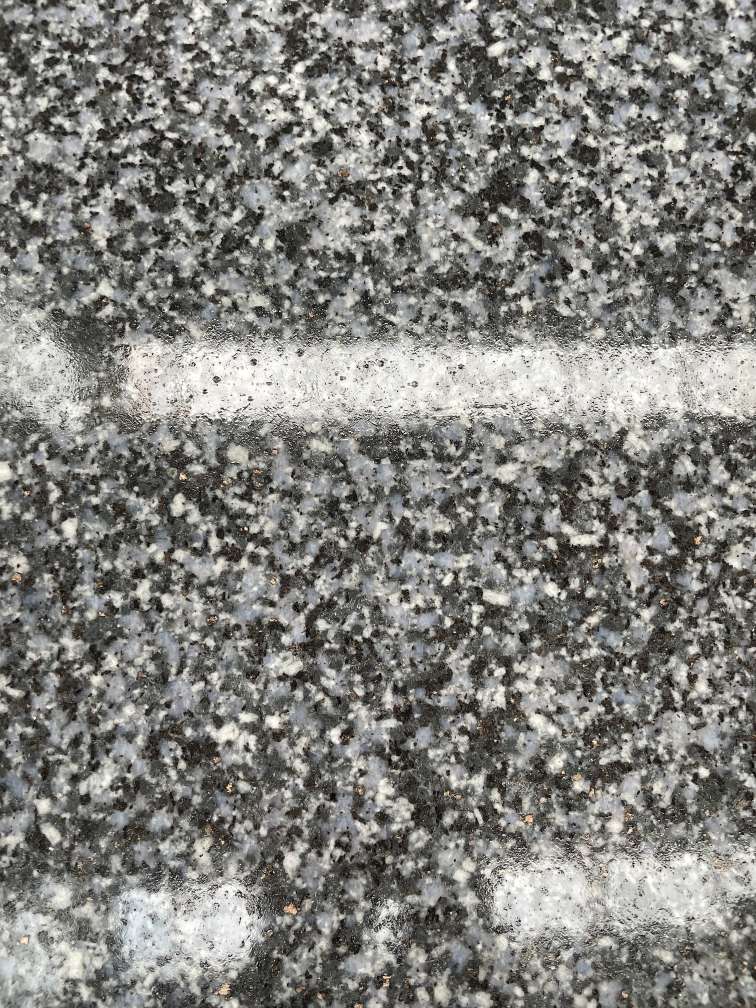
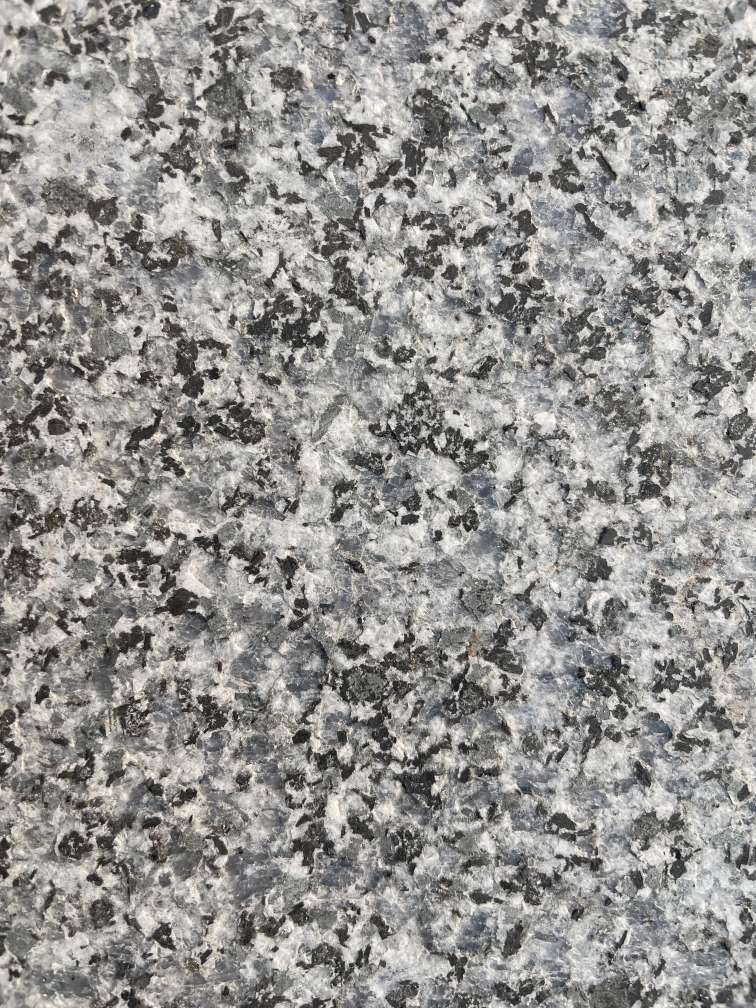
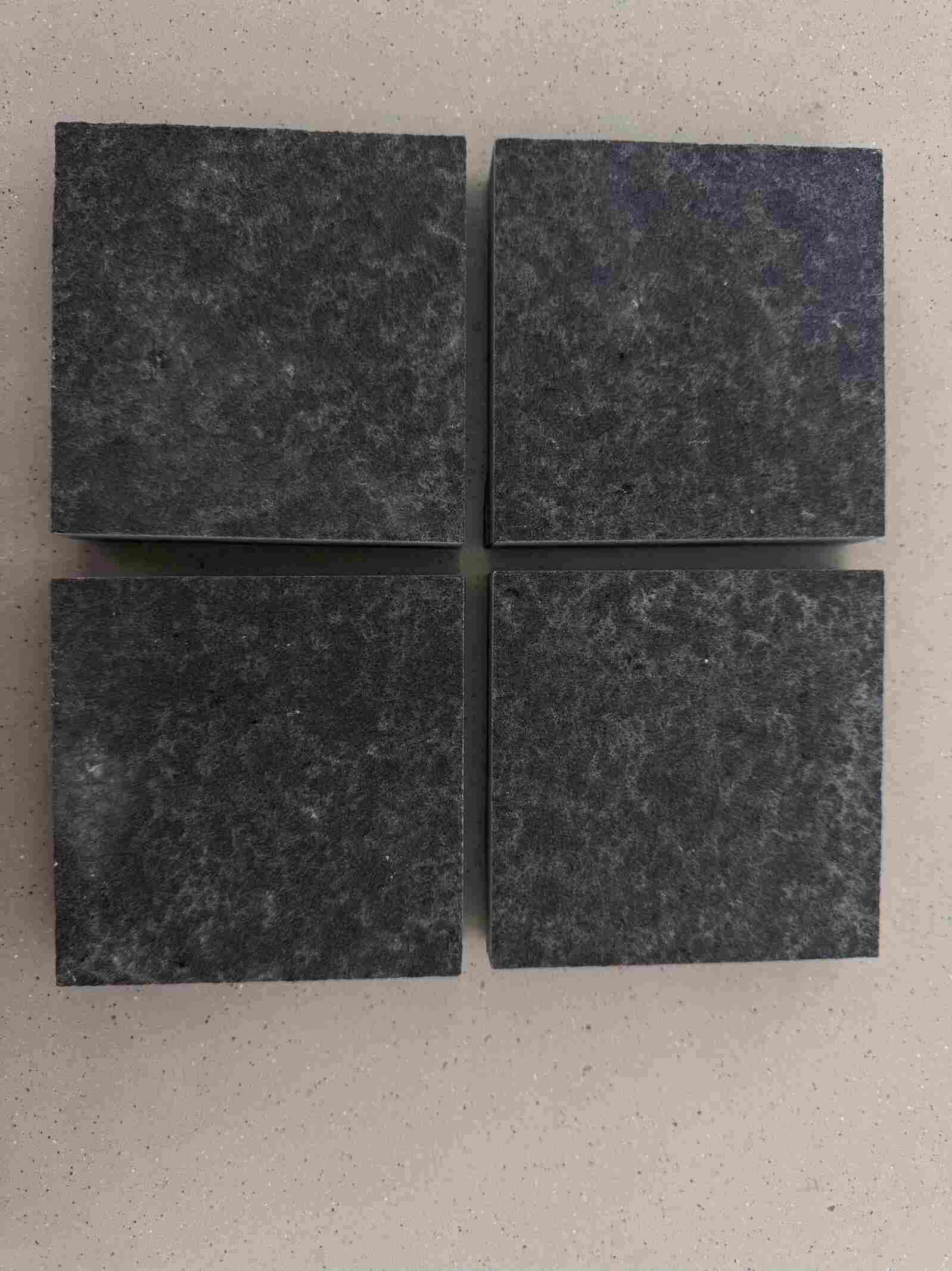
Where a paving specification calls for low reflectance and a dark matte appearance, thermal dark grey Cambodian G654 pavers provide a practical alternative to polished stone for exterior applications.
Dry vs Wet Granite Appearance
When wet, granite usually appears darker, with stronger mineral contrast and more visible color variation.
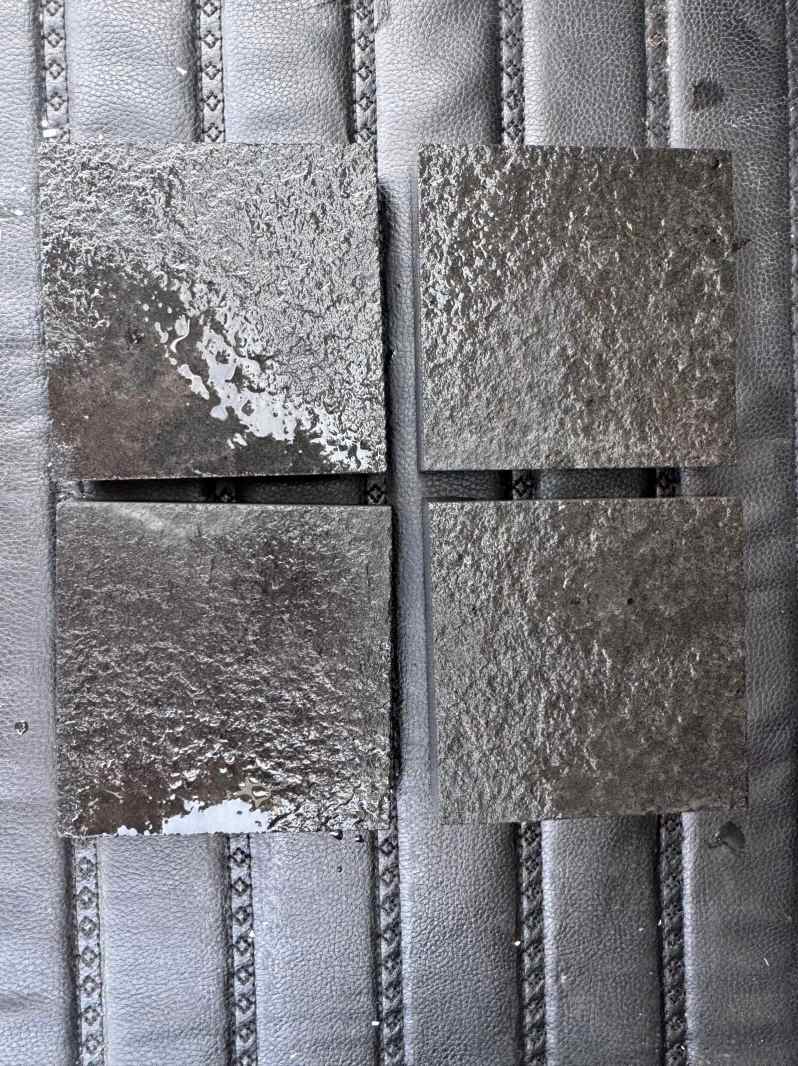
Flamed vs Bush-Hammered Granite Finishes for Walkways
- Choose flamed granite when:the project needs a matte, granular and broadly established surface for public walkways, garden paths or civic pedestrian paving.
- Choose fine bush-hammered granite when:the design calls for a more regular mechanical pattern and a controlled architectural appearance.
- Check before approval:confirm the actual stone sample, relief consistency, joint design and any required wet-surface testing; the finish name alone does not define the final walking surface.
Public-project evidence supports this comparison. Flamed or thermal granite repeatedly appears in municipal walkway, garden-path and civic-sidewalk specifications across the reviewed sample.
One example is the City of Providence India Point Park bid specification, which identified thermal-finished granite pavers for public park paving. A City of Concord civic-sidewalk specification also required thermal treatment on exposed granite surfaces.
When specifying dimensions for pedestrian walkways, sourcing dimensionally cut granite pavers supports consistent joint spacing and height control across the main paving field.
Flamed, Tumbled and Natural-Split Granite Finishes for Patios and Courtyards
- Choose flamed granite when:dining areas, tables, chairs and frequent foot traffic require a relatively even and controlled outdoor surface. Fine bush-hammering can provide a more formal architectural alternative.
- Choose tumbled or natural-split granite when:softened edges, aged character, fan patterns or a rustic courtyard appearance are part of the design.
- Check before approval:deep natural-split relief may be less suitable where tables, chairs or wheeled serving equipment require a more even surface.
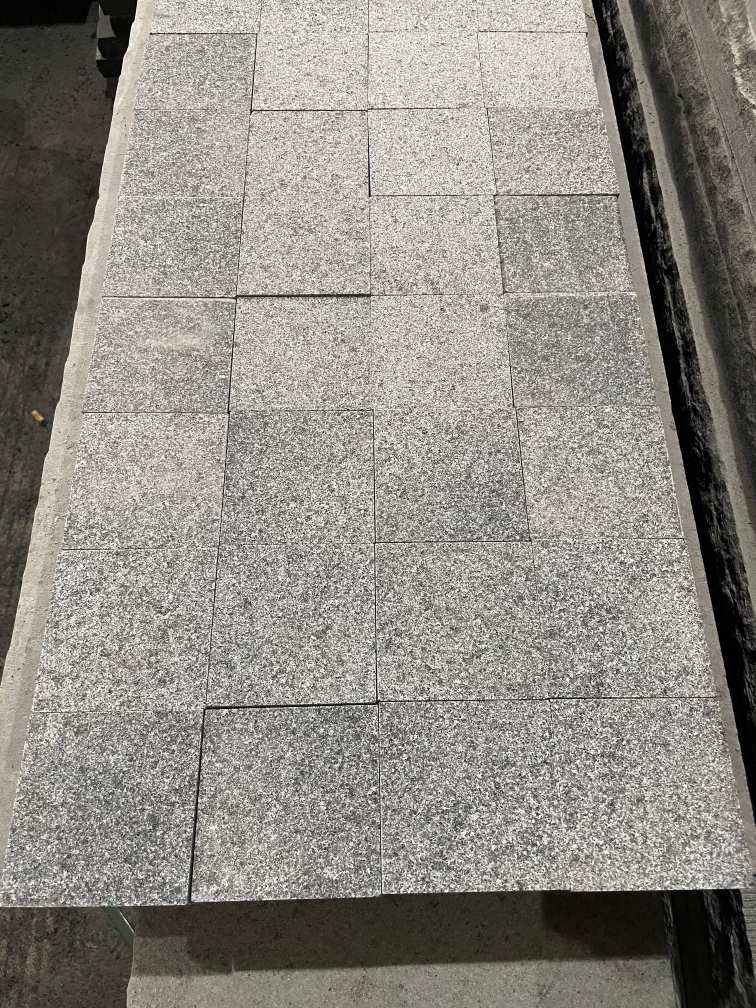
Traditional courtyards and fan patterns are more easily executed using tumbled granite setts and cobblestones, which accommodate tight radial layouts better than large rectangular formats.
Flamed, Bush-Hammered and Sandblasted Granite Finishes for Commercial Plazas
- Choose flamed or thermal granite when:the main plaza field needs a widely established finish for high-volume pedestrian circulation.
- Choose bush-hammered, sandblasted or shot-blasted granite when:steps, tactile areas, feature bands or selected paving zones need a contrasting mechanical texture.
- Check before approval:one finish should not automatically be applied across the entire plaza where main paving, tactile zones, steps and feature bands perform different functions. Coarse relief also needs review where wheeled movement is expected.
A good example is Kirklees Council’s Our Cultural Heart landscape specification, which used flamed, bush-hammered, sandblasted and shot-blasted granite in different paving zones and feature components. This is why a plaza package should be scheduled by paving zone rather than ordered under one general description.
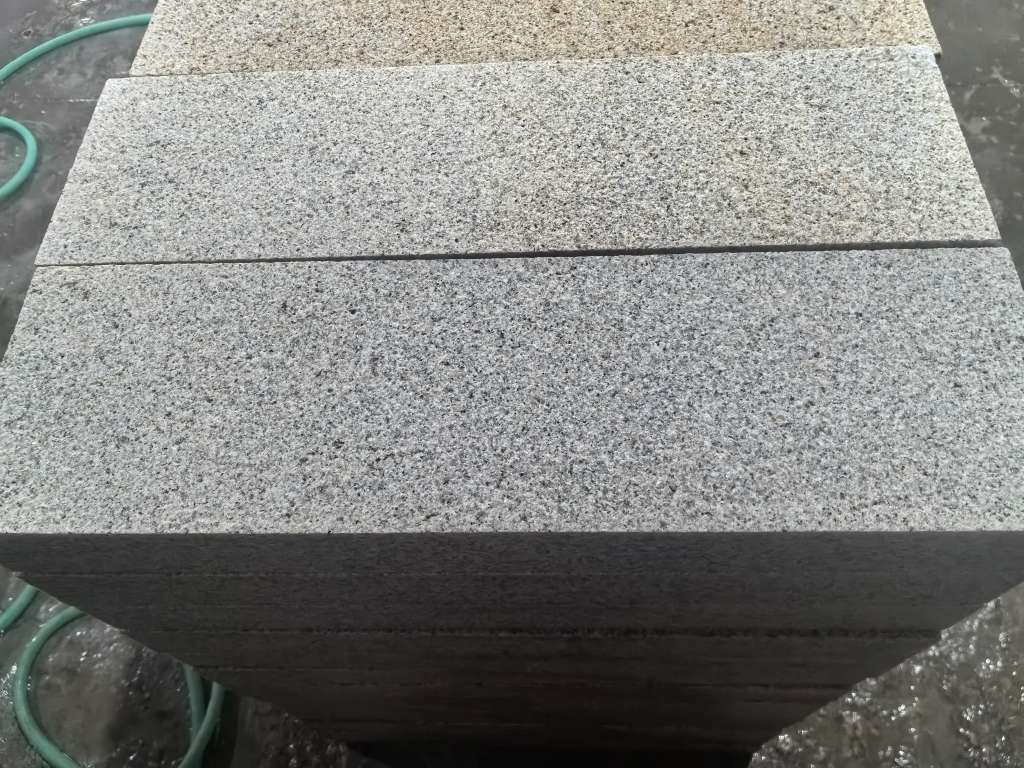
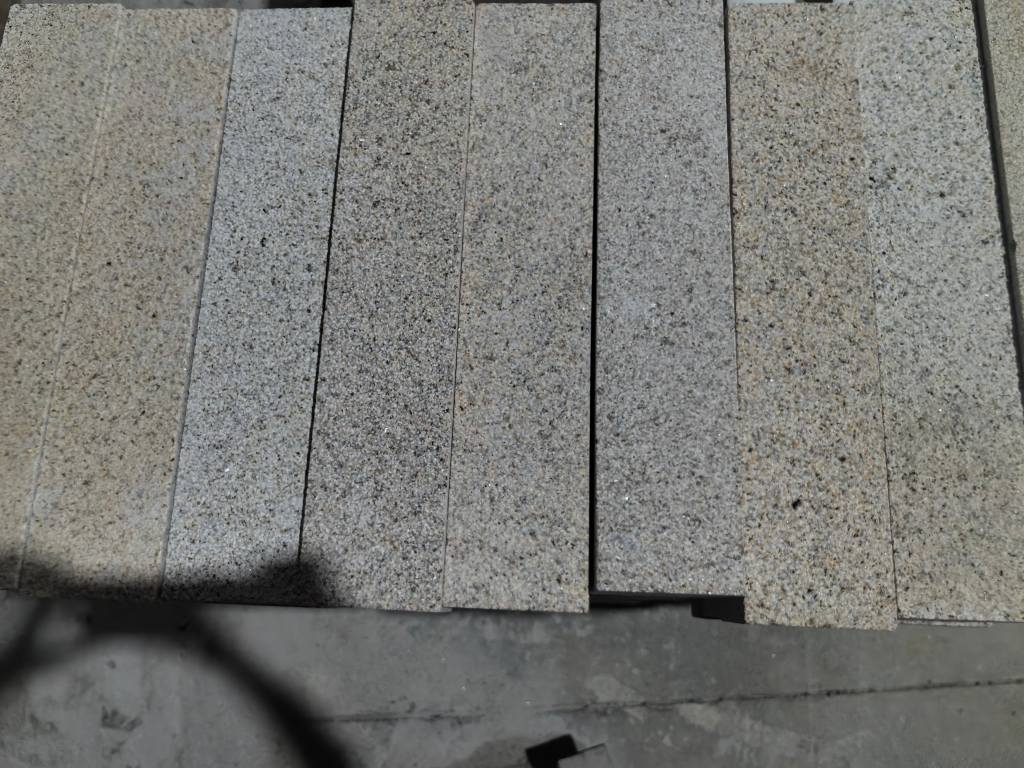
For large commercial plazas requiring a consistent neutral baseline, light grey Tema Grey granite paving provides a salt-and-pepper appearance that contrasts well with darker feature bands.
Flamed Granite Pool Surrounds with Brushed or Rounded Edges
- Choose a flamed granite top when:the horizontal pool deck or coping surface needs a textured exterior walking face.
- Choose a brushed, eased or rounded exposed edge when:the pool-facing profile may be touched by bare feet, hands or seated users.
- Check before approval:a softened pool-facing edge does not mean the horizontal walking face should also be polished or heavily brushed. The top face and exposed edge should be scheduled separately.
Cambodian G654 provides a first-party example. The product can be fabricated in L-shaped, bullnose and eased-edge profiles with thermal or flamed tops and light-brushed exposed edges. Straight, curved, corner and return pieces can be cut from pool plans.
Modern wet-area designs increasingly favor Cambodian G654 granite pool coping fabricated with a thermal top face and a lightly brushed bullnose or eased edge to balance exterior texture with barefoot comfort.
Granite Finishes for Driveway Pavers, Setts and Belgian Blocks
- Choose flamed granite when:thick rectangular driveway pavers need a textured, matte exposed surface.
- Choose fine-picked or bush-hammered granite when:vehicular setts, entrance aprons or feature areas call for a more deliberate tooled pattern.
- Check before approval:finish cannot determine vehicle suitability by itself. Confirm thickness, unit dimensions, granite strength, expected loading, base construction, joints and perimeter restraint.
The vehicle-related public-project records reviewed by our team included flamed granite slabs, fine-picked granite units and bush-hammered vehicular setts, showing that vehicle areas are specified through a combination of product form, top finish, side treatment and paving construction.
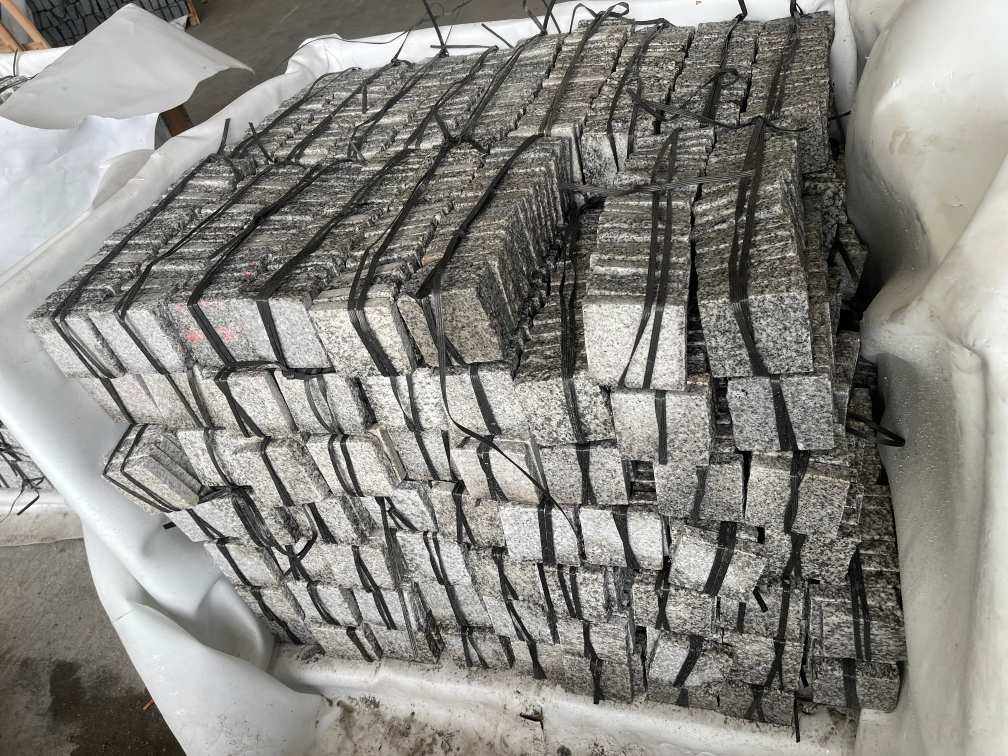
A flamed pedestrian tile and a thick flamed driveway paver are not interchangeable simply because the finish name is the same. Thickness, unit dimensions, granite strength, base construction and joint design must also be scheduled.
Traditional vehicle areas and entrance aprons can be organized with granite setts and Belgian blocks for driveways, while thicker rectangular pavers suit more regular layouts.
Fine Flamed and Bush-Hammered Granite for Accessible Pedestrian Routes
- Choose a fine, evenly processed flamed finish when:the route needs useful exterior texture with more controlled movement for wheelchairs, carts and strollers.
- Choose fine bush-hammered granite when:a uniform mechanical texture is required and the specified relief remains compatible with wheeled movement.
- Check before approval:accessibility depends on unit flatness, joint width, lippage, height variation, drainage and edge alignment. Coarse natural-split, pineapple or heavily hammered relief may increase vibration and rolling resistance.
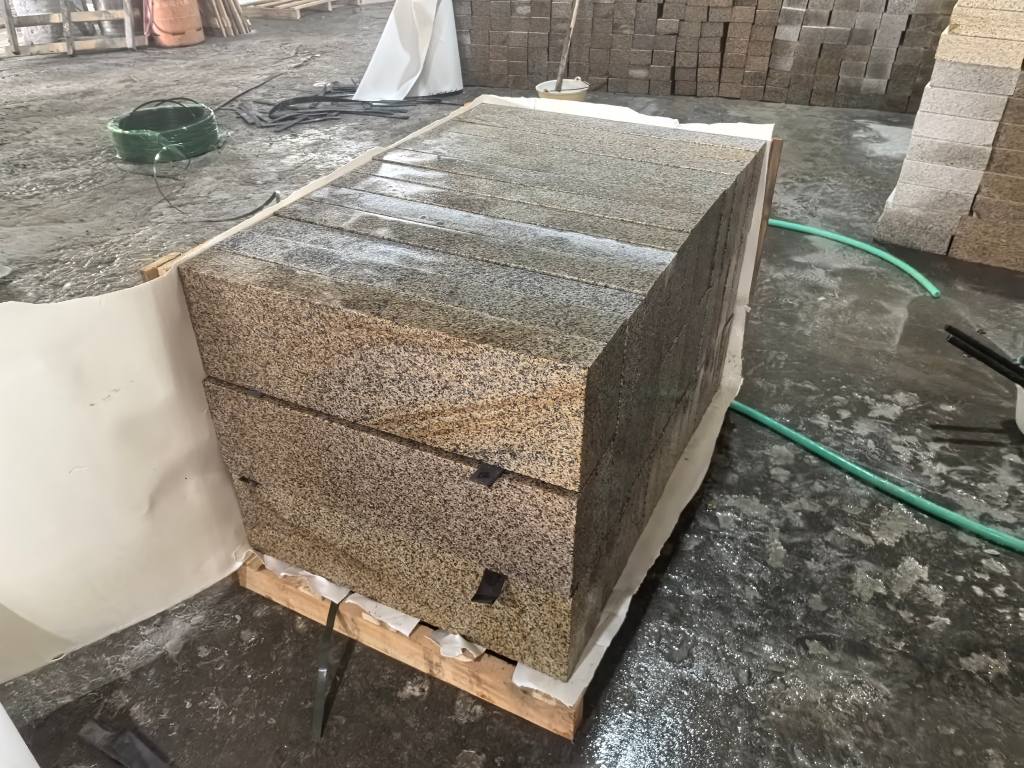
For pedestrian routes, dimensionally cut granite pavers provide a more controlled starting format than irregular loose cobbles, although compliance still depends on joints, lippage, drainage and local requirements.
Bush-Hammered and Sandblasted Granite for Steps, Ramps and Tactile Areas
- Choose bush-hammered granite when:ramps, steps and hard-wearing public-realm components need a repeated mechanical texture.
- Choose sandblasted granite when:the specification identifies tactile paving, exterior stair treads or detailed transition components.
- Check before approval:the tread top, nosing, riser and visible side should not automatically receive the same finish. Tactile geometry and compliance also require separate project-specific confirmation.
Reviewed public specifications separate general walkway finishes from accessibility components: bush-hammered granite repeatedly appears on ramps and steps, while sandblasted granite appears in tactile paving and exterior stair applications.
A granite tread may therefore use a flamed walking surface with a rocked or natural-split front edge, while its riser, visible sides and adjoining tactile units follow a different finish schedule.
Level changes in municipal projects typically require a coordinated package of custom outdoor granite components, including treads, ramp transitions, tactile units and kerbs. A stair schedule may also use Cambodian G654 exterior stair treads with a flamed walking face and a separately finished front edge.
Product Forms to Review After Selecting a Granite Finish
After the exposed finish has been selected, the product form should be matched to the application rather than repeating the same module across every project zone.
| Application | Typical product form | Relevant finish consideration |
|---|---|---|
| Walkways | Rectangular pavers | Controlled flamed or fine bush-hammered top |
| Courtyards | Pavers, setts and mesh units | Flamed, tumbled or natural-split finish |
| Commercial plazas | Large pavers and feature setts | Finish scheduled by paving zone |
| Pool areas | Textured pavers and pool coping | Textured top with a softened exposed edge |
| Driveways | Thick pavers, setts and Belgian blocks | Finish cannot determine vehicle loading alone |
Dimensions and thickness must be selected according to loading, bedding, joint design and project drawings.
Common Granite Paving Finish Combinations by Top, Sides and Secondary Treatments
These are the main face-by-face granite finish combinations we produce for outdoor paving. Instead of applying one treatment to every surface, Excellent Stone combines top, side, edge and secondary finishes to create different visual effects, improve dimensional control and refine the product for its intended application.
These combinations allow the walking face, visible edges, joint faces and underside to be specified according to separate visual, dimensional and installation requirements.
Flamed, Natural-Split or Bush-Hammered Tops with Machine-Cut Sides
Machine-cut sides maintain more regular dimensions and joint lines, while the selected top finish controls most of the visible character.
- Flamed top: granular and matte
- Natural-split top: irregular and rustic
- Bush-hammered top: repeated and architectural
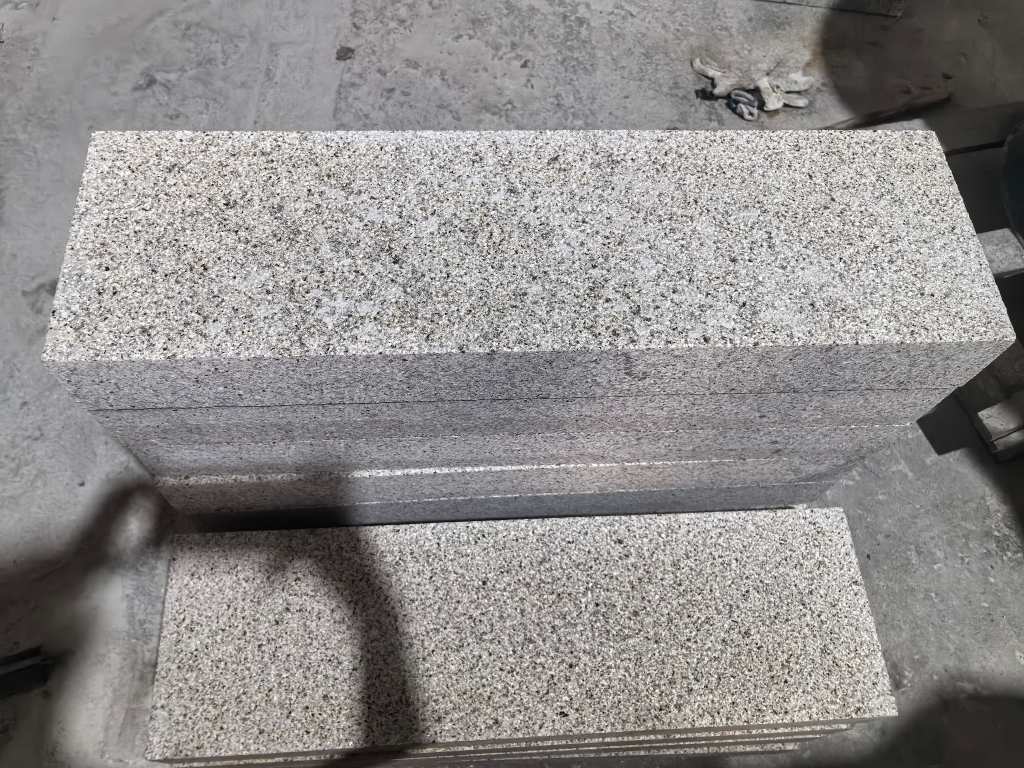
Flamed Top with Machine-Cut Sides
A flamed top with machine-cut sides combines a textured exterior walking face with regular unit dimensions and cleaner joint lines.
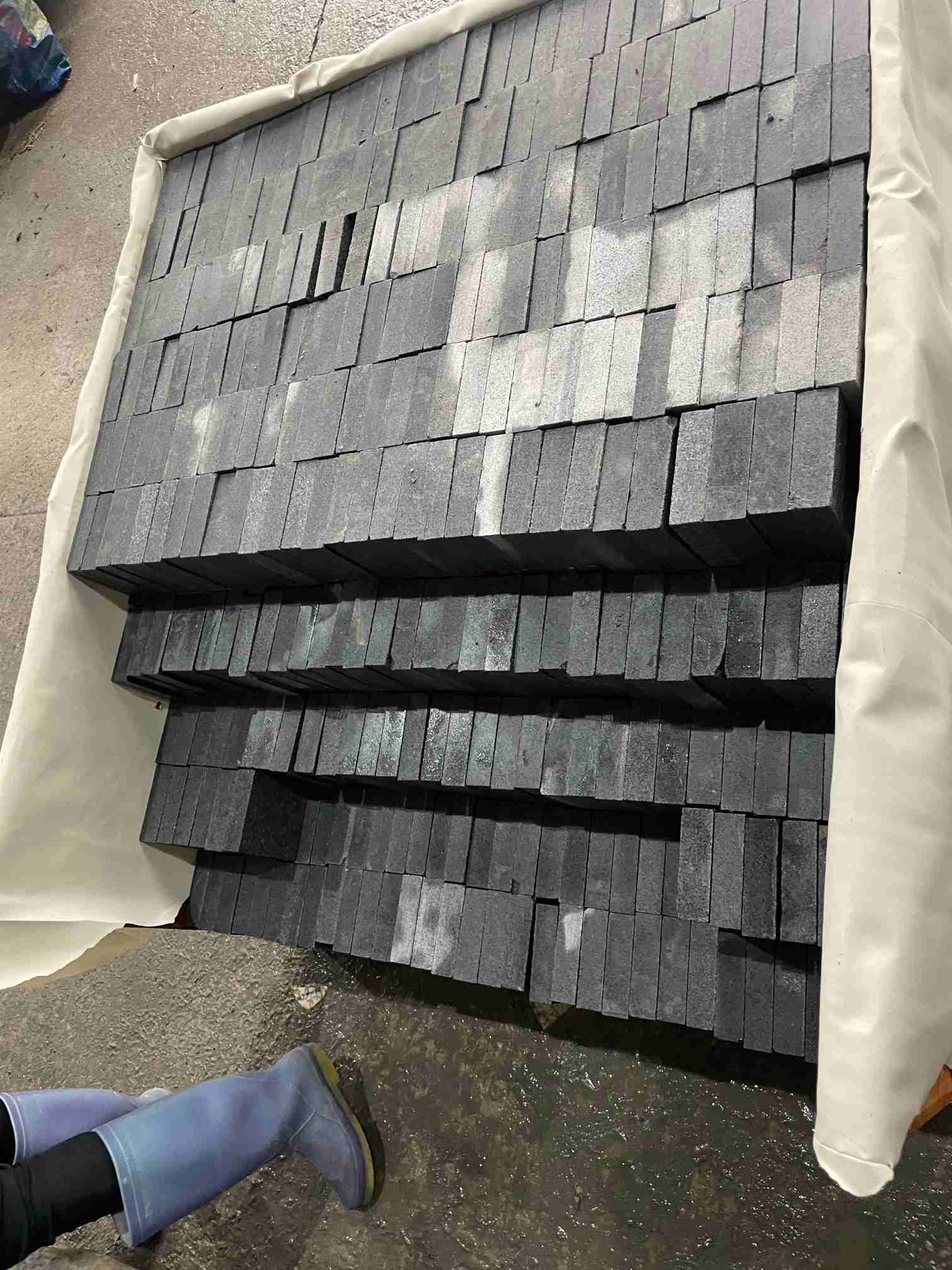
Five Natural Faces with a Sawn Bottom
Small cubes and setts can retain natural texture on the top and four sides while using a sawn or calibrated bottom. The flatter underside can support more predictable height control, bedding contact or mesh mounting.
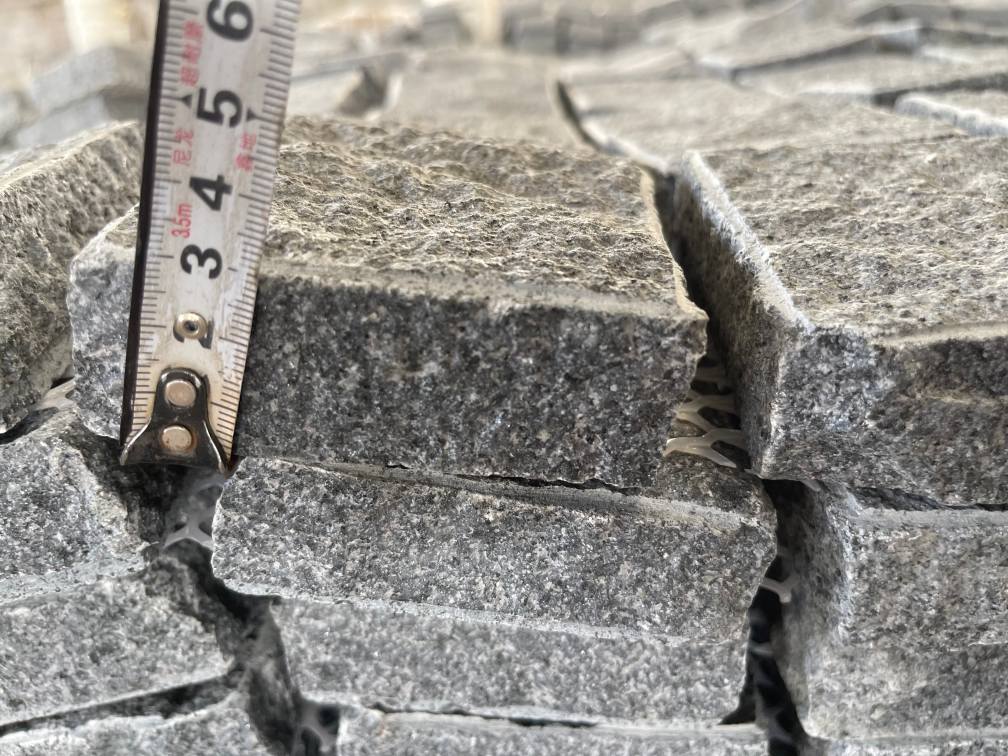
Flamed Top with a Brushed Exposed Edge
Brushing can be used as a secondary process after flaming. The flamed top retains its granular exterior texture, while brushing softens the exposed edge and reveals more of the stone color.
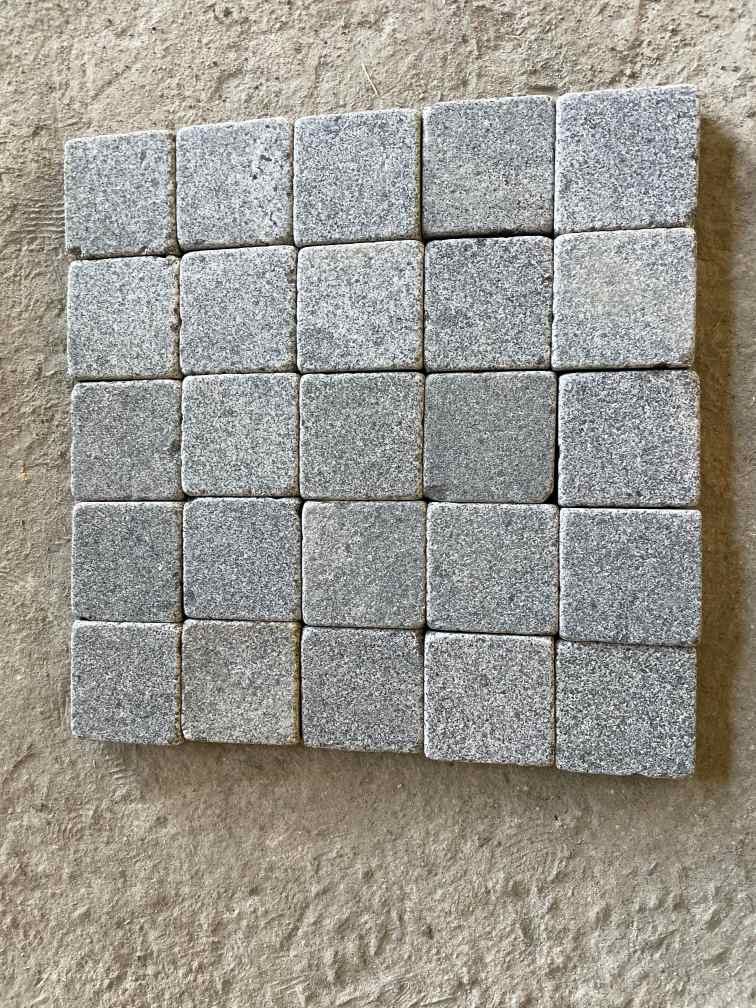
Flamed and Lightly Tumbled vs Fully Tumbled Granite
Flamed and lightly tumbled granite retains much of the thermal top while softening its edges and corners. Fully tumbled granite has a stronger aged effect and is more appropriate for traditional cobblestone and courtyard designs.
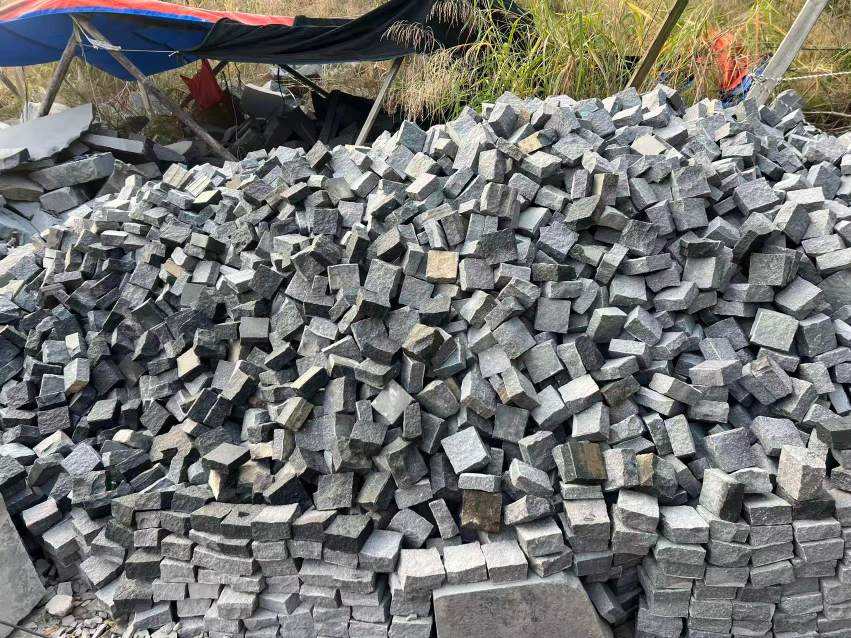
Natural-Split Granite in Loose, Mesh-Mounted and Random-Lay Formats
The same surface finish can produce different installed results depending on the product format. Loose cubes allow individual on-site adjustment, mesh-mounted units create repeatable sheets and random-lay paving produces a less formal layout.
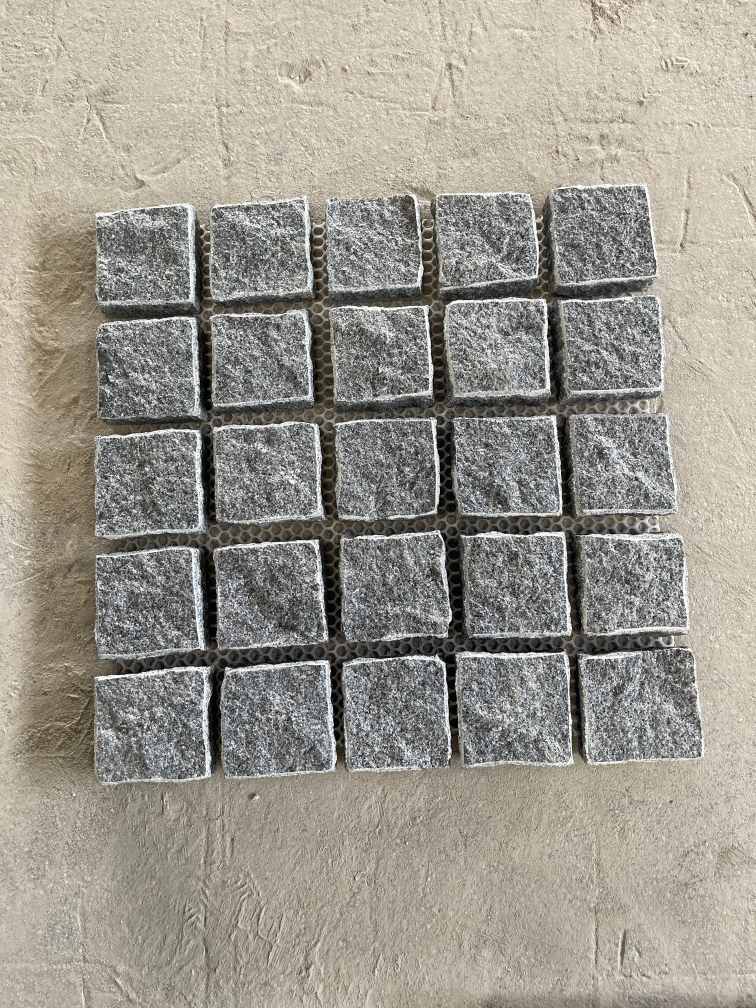
Browse granite cobblestones, setts and mesh-mounted paving.
Public-realm granite packages rarely rely on one finish name alone. Main paving, feature bands, tactile areas, steps, coping edges and vehicle zones often use separate finish schedules. This is why Excellent Stone reviews granite requirements by application zone, product format and exposed face rather than treating one finish name as the complete specification.
How We Reviewed Public Granite Paving Specifications
Excellent Stone screened public procurement notices, attachment registers, tender packages, specifications and drawings issued during the 2020–2026 procurement window. The working library retained 327 traceable source, extraction, review and audit records. Projects entered the cross-country registry only when the issuing authority, named project and natural-granite relevance could be confirmed. The formal article set then required sufficient official evidence to match the granite component, application and exposed top finish.
| Research stage | Records |
|---|---|
| Procurement notices scanned | 75 |
| Attachment records reviewed | 257 |
| Eligible cross-country projects | 27 |
| Formal article analysis set | 14 |
| Projects with fixed exposed-top finishes | 12 |
Representative original documents reviewed
- City of Providence, United States: PVD24-45 Parks RFP – Site Improvements at India Point Park, including the granite-paver specification identifying thermal top and bottom faces with cut sides.
- Kirklees Council / BAM, United Kingdom: Our Cultural Heart – Phase 1 Landscape Specification, including the Q25 paving schedule for flamed, bush-hammered, sandblasted and shot-blasted granite components.
- Roscommon County Council, Ireland: Ballaghaderreen Town Public Realm Enhancement Scheme tender package, including specification sections covering flamed natural-granite paving and related units.
- Pennsylvania Department of General Services, United States: Pennsylvania State Museum – DGS C-0948-0087 Phase 001, Addendum 6, including Drawing A304 for sandblasted Woodbury Gray granite stair treads.
Conclusion
Among the granite finishes for outdoor paving reviewed in this guide, flamed granite remains the strongest general starting point for pedestrian routes. It is the most broadly recurring finish direction in the reviewed public-project set and continues to work well across walkways, plazas and many coordinated hardscape components.
Bush-hammered granite is a strong public-realm finish for more regular mechanical texture. Sandblasted granite has a clearer specialist role in tactile paving and some stair-related applications. Natural-split and tumbled finishes remain important for traditional landscape work, while machine-grooved, pineapple and water-washed finishes support more specific design directions.
The most useful project question is not simply which finish is available. It is which granite, product form and face-specific finish combination best matches the intended outdoor application.
Source Granite Paving by Product Type
Excellent Stone supplies coordinated granite paving packages for importers, contractors, distributors, landscape companies and commercial projects.
- Use Granite Pavers for rectangular, square and mixed-size pedestrian or plaza modules.
- Review Granite Cobblestones for setts, Belgian blocks, cubes and mesh-mounted pattern paving.
- Source Outdoor Granite Products for steps, kerbs, pool coping and other custom public-realm components.
- See light grey Tema Grey granite paving as a quarry-direct salt-and-pepper option for walkways, plazas and coordinated feature bands.
Contact Excellent Stone to compare available granite colors, product formats and finish combinations for an outdoor paving project.
Public-project source note: The finish recommendations in this guide are informed by publicly available tender documents, government procurement packages and official construction specifications reviewed by Excellent Stone. Example issuing bodies include City of Providence, City of Concord, Kirklees Council, Roscommon County Council, Limerick City and County Council and Pennsylvania Department of General Services.
Author:Max Wang
Frequently Asked Questions
Does a flamed granite finish guarantee slip resistance?
No. A flamed finish creates an exterior texture, but verified slip performance also depends on the granite, finish consistency, drainage, contamination, maintenance conditions and the test method required by the project.
Are flamed and thermal granite the same finish?
Yes, in normal stone-industry usage. Both terms describe a surface created by applying high heat to a sawn granite face. The resulting relief still varies with the granite mineral structure and processing controls.
Can the top, sides and bottom of one granite paver use different finishes?
Yes. A paver can combine a flamed or bush-hammered top with machine-cut sides and a sawn or calibrated bottom. Each face should be specified according to visibility, joint control, bedding and installation requirements.
Is tumbled granite a primary surface finish or a secondary treatment?
Usually a secondary treatment. Tumbling commonly softens edges and corners after flaming, sawing or natural splitting, although longer processing can create a stronger aged appearance across the unit.
Does a granite finish determine whether a paver is suitable for vehicles?
No. Vehicle suitability depends on the complete paving system, including unit thickness and dimensions, granite strength, expected loading, bedding, joints, base construction and perimeter restraint.
Can machine-grooved granite be used as compliant tactile paving?
Not automatically. Decorative grooves do not establish tactile compliance. Groove geometry, spacing, direction, contrast, location and transitions must satisfy the applicable accessibility standard and project specification.