English







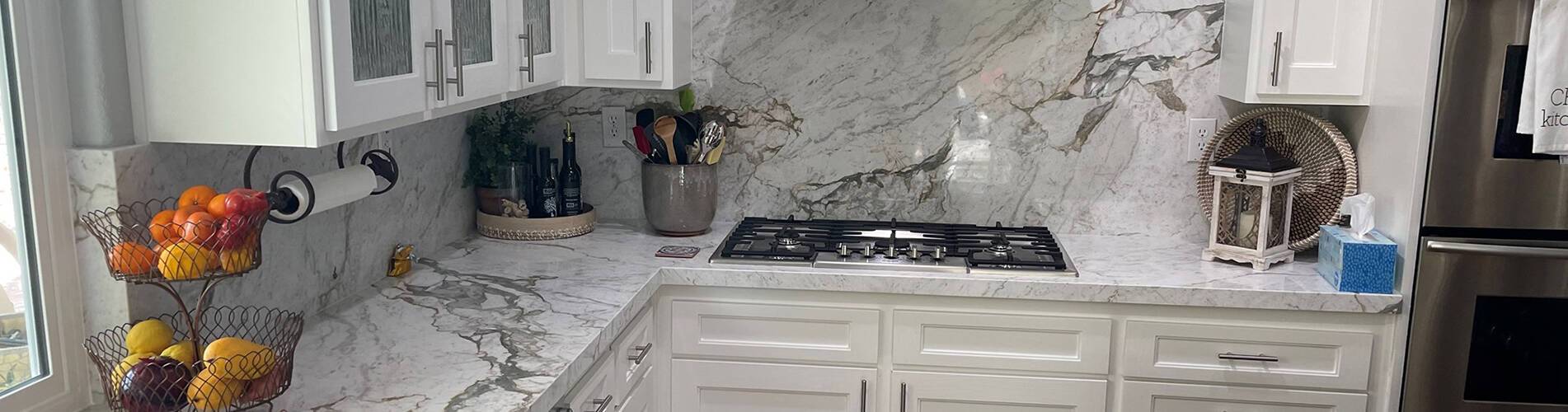
Sintered Stone Vanity Tops for Bathrooms, Hotels and Commercial Projects
Quick Answer
Sintered stone vanity tops are bathroom counter surfaces made from dense, low-porosity engineered stone, making them suitable for wet areas, hotel bathrooms and repeated vanity projects.
Sintered stone vanity tops are a practical choice for bathroom projects that need moisture resistance, stain resistance, easy cleaning and stable appearance across repeated units.
- Best-fit projects: hotel bathrooms, apartment programs, bathroom cabinet production, commercial washrooms and export vanity top orders.
- Main design value: marble-look vanity tops can offer the beauty of Calacatta, Carrara or other stone styles with easier maintenance than natural marble.
- Main buying risk: performance depends on accurate sink cutouts, faucet holes, edge finishing, support, packing and supplier fabrication capability.
- Key order checks: size, thickness, finish, sink type, backsplash, side splash, quantity, shop drawings, sample approval and room labeling.
What Are Sintered Stone Vanity Tops and Why Do They Work in Bathrooms?
These vanity surfaces are made from natural mineral raw materials that are pressed and fired at high temperature to form a dense engineered stone slab. This compact, low-porosity structure helps the surface resist water, soap residue, cosmetics and repeated cleaning, which is why it works well for bathroom vanity tops.
The material structure is the starting point. The guide on what is sintered stone explains how high-pressure forming and high-temperature sintering create a dense slab with low water absorption, making the material suitable for bathroom vanities, wall panels and other frequently cleaned surfaces.
In hotel and apartment projects, the same vanity surface may need to perform consistently across dozens or hundreds of rooms. Sintered stone is useful here because matching color, vein direction, finish and size is usually easier with engineered slabs than with natural stone blocks.
Sintered Stone Vanity Tops vs Marble Vanity Tops
Sintered stone vanity tops are usually more practical than marble in wet bathrooms when low maintenance, stain resistance and repeated room consistency are more important than natural stone uniqueness. Marble still has stronger natural identity, but it requires more care in daily bathroom use.
Marble remains valuable when natural mineral depth, unique veining and real stone identity are the main design priorities. It is often chosen for luxury villas, boutique hotels, feature bathrooms and decorative interiors where natural variation is part of the design value.
For wet bathroom applications, water marks, cosmetics, acidic cleaners and staining can become concerns if marble is not selected, sealed, cleaned and maintained correctly. Replacement can also be difficult if the same natural slab selection is no longer available.
Sintered stone is usually more practical when a project needs marble-look vanity tops with lower maintenance and more stable repeatability. The broader guide to sintered stone vs marble explains this core tradeoff in more detail: natural marble carries unique stone identity, while sintered stone is often selected when stain resistance, moisture control and batch consistency matter more.
Bathroom Vanity Countertop Materials: Sintered Stone, Quartz, Porcelain and Solid Surface
The best bathroom vanity countertop material depends on the balance between wet-area performance, fabrication requirements, design style and maintenance expectations. Sintered stone is strongest when the project needs a marble-look surface with low water absorption, stain resistance and stable repeatability.
The table below compares common bathroom vanity countertop materials by performance, fabrication risk and project suitability.
| Material | Common Strength | Project Limitation to Check |
|---|---|---|
| Sintered stone | Low water absorption, marble-look design, stain resistance and strong batch control for repeated vanity tops. | Cutouts, edges and large pieces need skilled fabrication and careful packing. |
| Marble | Natural luxury, real stone depth and unique veining. | Porosity, staining, acid etching, sealing and batch variation need more attention. |
| Quartz | Familiar indoor vanity countertop material with consistent colors. | Heat, UV exposure, resin content and market positioning should be considered. |
| Porcelain slab | Good for bathroom walls, decorative surfaces and some vanity applications. | Fabrication behavior depends on slab thickness, body structure and supplier experience. |
| Solid surface | Seamless appearance and repairable surface in many bathroom designs. | It is softer than mineral slabs and may scratch more easily in heavy-use areas. |
Porcelain slabs can also be used for vanity tops, but porcelain and sintered stone do not always use the same cutting, drilling and edge-processing methods. Wrong fabrication can cause irreversible damage around sink openings, corners or polished edges. The comparison of sintered stone vs porcelain explains these material and processing differences in more detail.
Hotel Vanity Tops, Apartment Bathrooms and Commercial Washroom Applications
These vanity surfaces are especially useful for hotels, apartments and commercial washrooms because these projects need easy cleaning, repeated size control and consistent appearance across many rooms. The material can also be used in private homes, but its project value is clearer in repeated environments.
In hotel bathrooms, vanity tops often need the same size, sink position and finish across many room types. In apartment projects, the surface must balance cost, appearance and durability. For bathroom cabinet manufacturers, accurate cut-to-size production and repeatable edge finishing support assembly efficiency.
Vanity surfaces are often selected together with shower walls, feature walls or bathroom cladding. When a hotel or apartment project needs matching wet-area surfaces, the guide to sintered stone wall panels helps buyers check panel thickness, installation method, composite backing, export packing and supplier capability for wall applications.
Sink Options for Custom Sintered Stone Vanity Countertops
Custom sintered stone vanity countertops can be made for undermount sinks, top-mount sinks, vessel basins and integrated-look vanity units, but each sink type requires different cutout, edge and support planning. The slab alone does not decide the final performance.
Common sink options include undermount sinks, top-mount sinks, vessel basins and integrated-look vanity units. Undermount sinks create a clean surface, but they require accurate cutouts, polished inner edges and reliable support. Vessel basins reduce some cutout complexity but still require correct drain holes, faucet placement and splash planning.
B2B orders should confirm single basin or double basin layout, sink model, faucet hole diameter, drain position, edge profile, corner radius, backsplash, side splash and mitered apron details before production. Shop drawings should be approved before cutting, especially for hotel room schedules and cabinet factory orders.
Sintered Stone Bathroom Vanity Tops: Thickness, Size and Finish
The best thickness, size and finish for sintered stone bathroom vanity tops should be chosen according to vanity structure, sink type, support and cleaning requirements. Some projects use thinner slabs with backing or cabinet support, while heavier-duty vanity tops may use thicker slabs or built-up edges.
Finish also matters. A polished surface can create a stronger marble-like effect, while matte or soft matte finishes are often preferred for modern hotel bathrooms and commercial spaces. Textured finishes should be checked carefully because bathroom vanity tops need comfortable touch and easy cleaning.
When color, thickness and finish are still being compared, the sintered stone color and specification collection is the right place to review marble-look, stone-look and solid-color options before confirming the vanity top design, finish and slab format.
Marble-Look Vanity Tops, Solid Colors and Stone-Look Designs
Marble-look vanity tops are suitable when a bathroom needs a premium stone appearance without relying on natural marble maintenance. Calacatta-style, Carrara-style, white marble-look and warm neutral designs can work well in hotels, apartments and residential bathrooms.
Solid white and light grey designs suit cleaner modern bathrooms, while stone-look patterns create a softer natural effect without strong veining. For bathroom cabinet manufacturers, the selected design should also match cabinet color, basin type, wall finish and mirror lighting.
When a project needs a specific color direction for bathroom furniture or vanity units, Tuscany White sintered stone vanities provide a focused example of an integrated bathroom vanity with an undermount sink, which makes the page more relevant as a color and application example than as a general material guide.
Custom Sintered Stone Vanity Top Cost Factors
Custom sintered stone vanity top cost depends on slab selection, thickness, finish, sink cutouts, edge work, packing and order quantity. Bathroom vanity projects often include faucet holes, backsplash, side splash, room labeling and export crates, so the final cost is not only the slab price.
Quantity also matters. A single custom vanity top has a different cost structure from a hotel or apartment program with repeated room types. Larger orders may improve material planning, but they require clearer drawings, sample approval and packing control.
For the same reason, a useful sintered stone price guide should look beyond slab price and include thickness, finish, fabrication difficulty, packaging, quantity, logistics and supplier capability.
Bathroom Vanity Tops Supplier Checklist for B2B Orders
A bathroom vanity tops supplier should receive clear drawings, sink information, quantity, finish requirements and packing details before quotation. This allows the supplier to check feasibility, estimate cost and reduce production risk before cutting begins.
- Application: hotel bathroom, apartment bathroom, cabinet factory production or commercial restroom
- Vanity top size and quantity by room type
- Single basin or double basin layout
- Sink model, faucet hole position and drain hole size
- Thickness, finish, color and pattern direction
- Edge profile, corner radius, backsplash and side splash
- Shop drawings, CAD files or templates
- Sample approval and slab photo approval
- Packing method, crate labeling and room schedule
- QC photos, delivery schedule and export documents
- Safe fabrication process, including wet cutting, dust control and experienced processing
Because vanity tops depend heavily on fabrication accuracy, the supplier should be evaluated by processing capability, not only slab availability. The guide on how to choose a sintered stone supplier helps buyers check cut-to-size service, edge finishing, batch consistency, samples, packaging and export support before placing project orders.
Conclusion
Sintered stone vanity tops are suitable for bathrooms, hotels, apartments, bathroom cabinet production and commercial projects when wet-area performance, marble-look design and batch consistency matter. They are especially useful when the project needs repeated vanity units with stable color, easy cleaning and accurate fabrication.
The final decision should confirm slab design, thickness, finish, sink type, cutout details, edge profile, drawings, samples, packing and supplier capability before production.
For hotel, apartment or bathroom cabinet projects, request vanity top samples and drawings support before confirming bulk production.
FAQ
Are sintered stone vanity tops good for bathrooms?
Yes. Their low water absorption, stain resistance and easy cleaning make them practical for wet areas, hotel bathrooms and repeated apartment projects.
Is sintered stone better than marble for bathroom vanity tops?
Sintered stone is usually more practical for low maintenance and repeated color consistency. Marble is stronger when natural stone identity and unique veining are the main priorities.
Can sintered stone vanity tops be used with undermount sinks?
Yes, but the cutout must be accurate and the inner edge should be properly polished. Confirm the sink model, support method and shop drawings before cutting.
What thickness is best for sintered stone vanity tops?
It depends on vanity structure, sink type, edge design and support. Thinner slabs may work with backing, while thicker or built-up edges can support heavier-duty designs.
Are marble-look sintered stone vanity tops suitable for hotels?
Yes. They provide a premium stone appearance with better batch consistency and easier maintenance than many natural marble surfaces.
How do B2B buyers order custom bathroom vanity tops?
Provide vanity sizes, quantity, sink models, faucet positions, edge details, finish, color, shop drawings, packing requirements and delivery schedule. Approve samples and drawings before bulk production.
What should I check when choosing a bathroom vanity tops supplier?
Check cut-to-size capability, sink opening experience, edge finishing, sample approval, batch consistency, packing method, QC photos and export support.