English




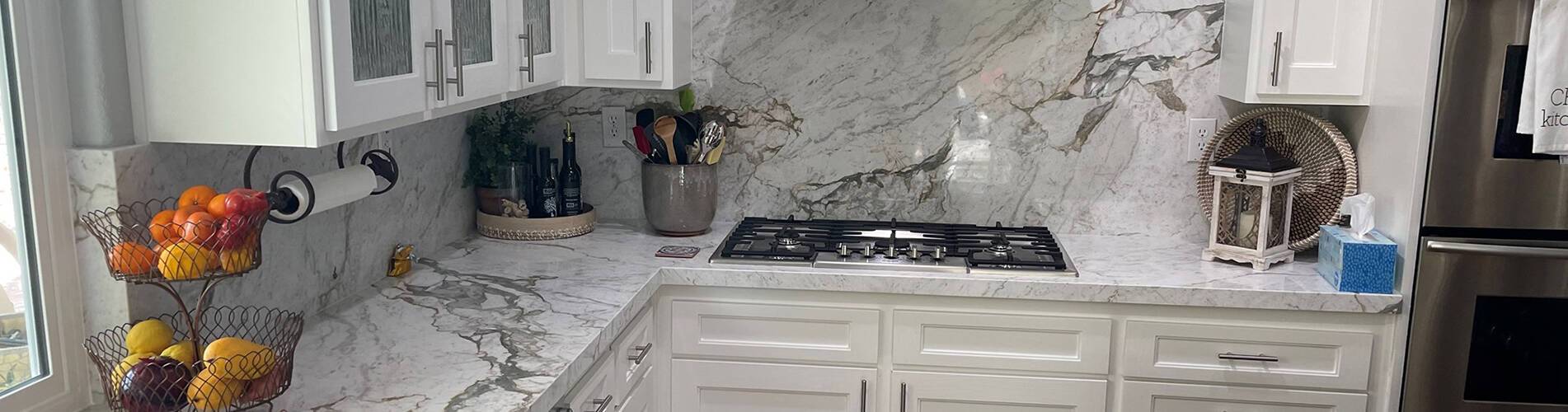
For 18–20mm polished Volakas marble slabs, typical 2026 export reference prices range from approximately $32 to $80 per square meter FOB, depending mainly on quarry source, slab selection and visual quality.
The biggest mistake when comparing Volakas marble prices is assuming that two slabs sold under the same material name are equivalent.
A $35/m² slab and a $65/m² slab may both be called Volakas White Marble, but they can differ substantially in quarry source, background consistency, vein movement, cracks, crystal marks and usable slab area. For buyers, the fastest way to estimate the likely price level is to first identify the quarry or material selection, then inspect the actual slab quality.
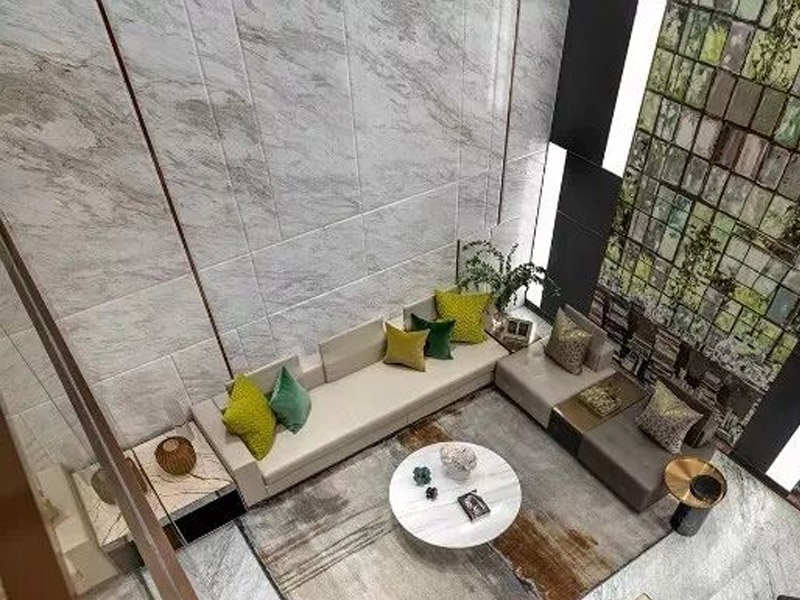
The typical Volakas marble slab price for 18–20mm polished material can range from about $32 to $80/m² FOB.
The table below shows a practical reference range for export buyers.
| Volakas Slab Selection | Typical 2026 FOB Reference |
|---|---|
| New-quarry commercial slabs | $32–38/m² |
| Selected new-quarry slabs | $40–48/m² |
| Classic / old-quarry Grade A slabs | $52–60/m² |
| Premium selected old-quarry slabs with stronger continuous veining | $60–80/m² |
These are reference ranges, not fixed market prices. Final quotations still depend on the available block, current slab stock, quantity, slab size and required selection.
New-quarry Volakas normally sits in the lower-to-middle price range. Commercial polished slabs may be around $32–38/m² FOB, while better selected slabs can reach approximately $40–48/m².
This material can work well for:
Lower-priced material may show lighter or more fragmented veins, more variation between slabs, or more natural cracks and crystal features. That does not automatically make it unsuitable. For many commercial projects, a consistent mid-range slab can provide better value than paying for premium material that the design does not require.
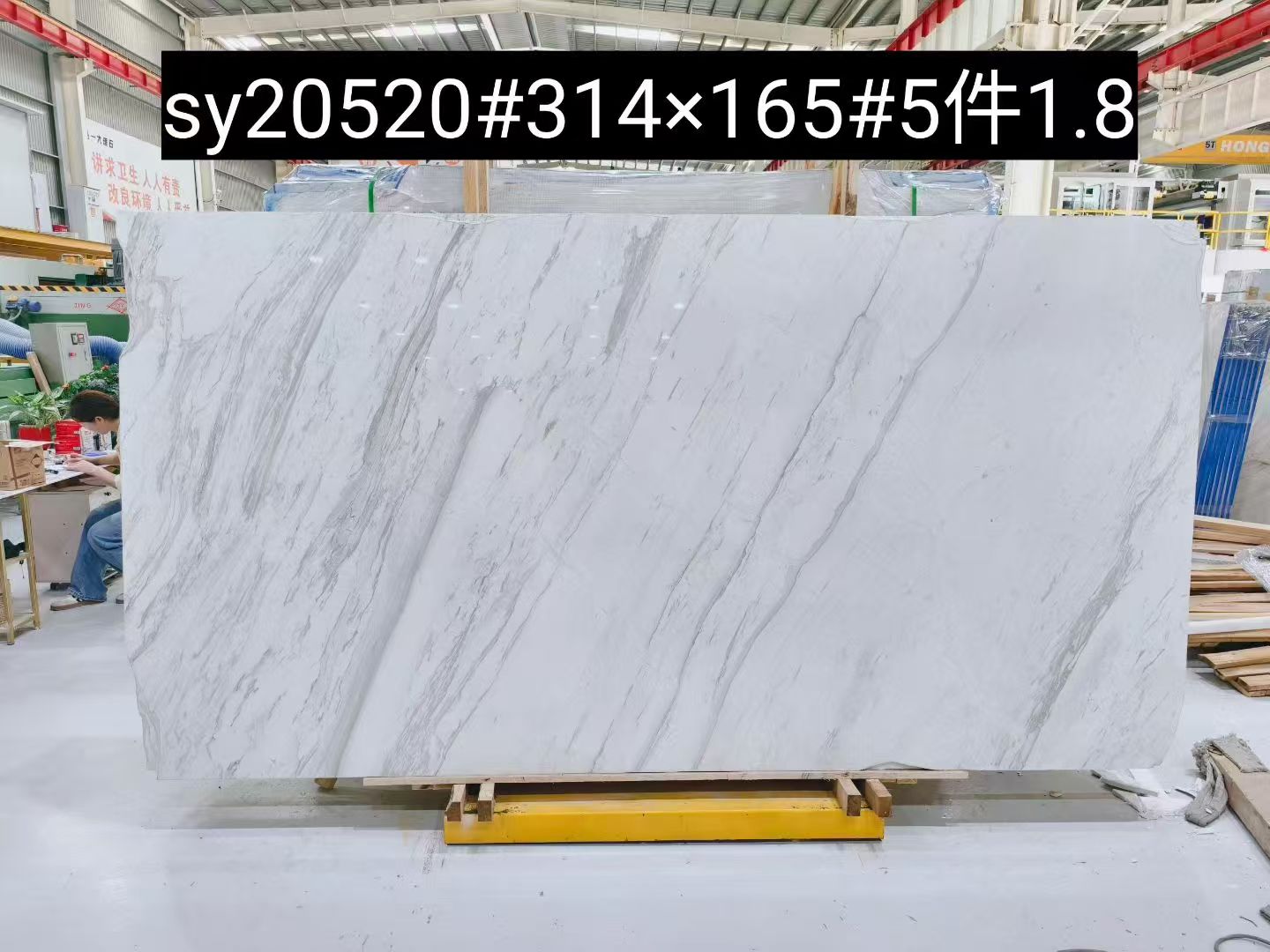
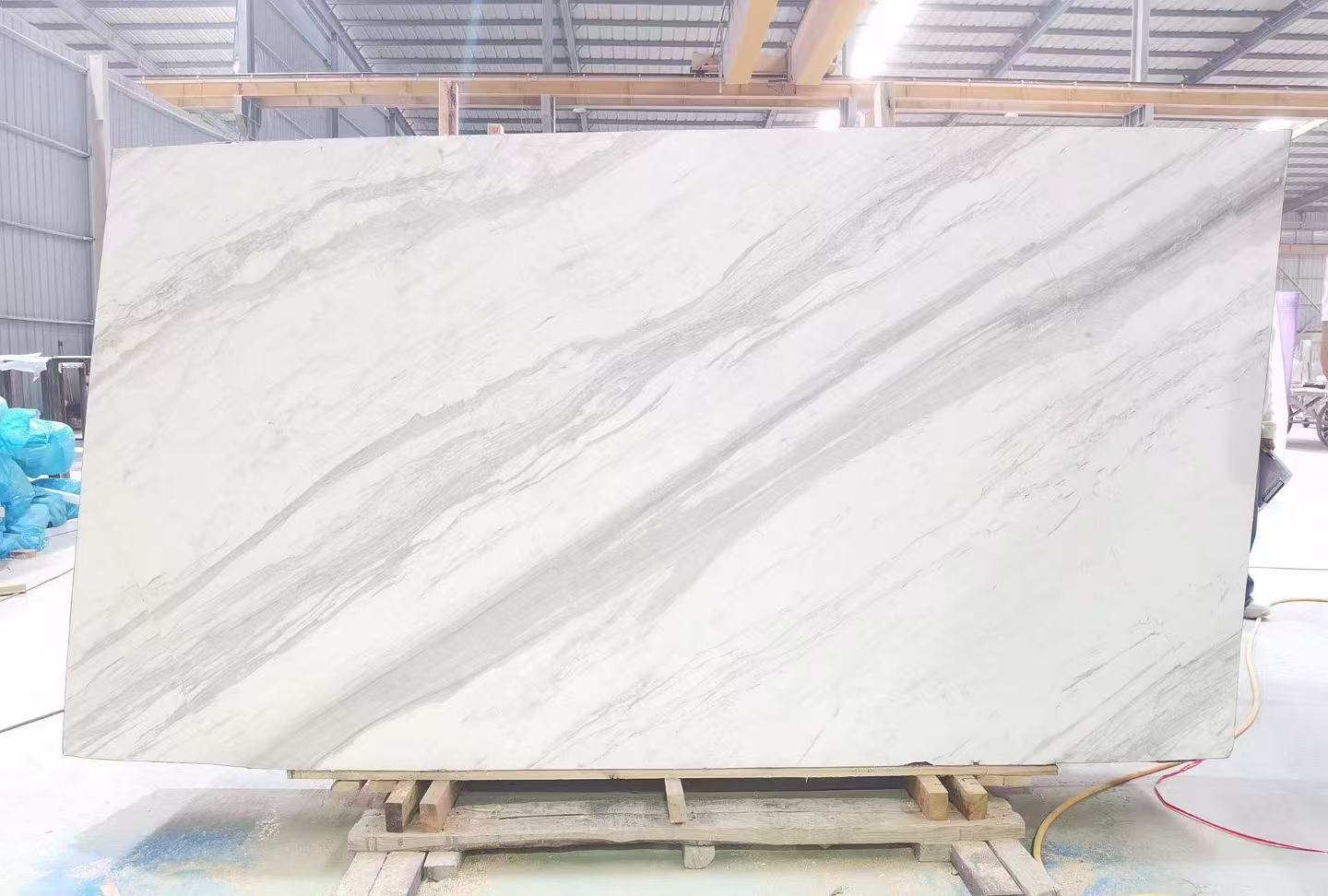
New-quarry example: The slab shown below has finer, lighter grey veining with less pronounced movement than the stronger old-quarry selections shown later in this guide.
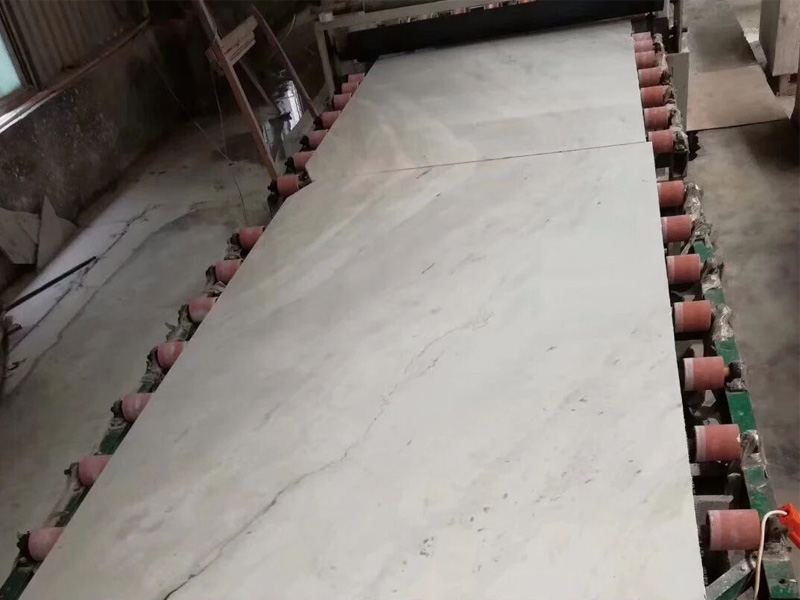
Classic and old-quarry Volakas normally enter a higher price tier. Regular selected slabs may be around $52–60/m² FOB, while premium selections with stronger movement, cleaner surfaces and better continuity may reach $60–80/m².
The buyer is not simply paying for the label “old quarry.” The premium usually reflects a stronger combination of:
For buyers looking for higher-level selections, Excellent Stone can supply Volakas marble slabs from established old-quarry resources, including Spider and JPAPA selections. These materials allow buyers to compare different vein directions and visual styles rather than sourcing only by the generic name “Volakas.”
The main Volakas marble price factors are:
For standard polished slabs, quarry source and actual slab quality usually explain more of the price difference than minor specification changes.
Quarry source is one of the fastest ways to understand why two Volakas quotations fall into different price levels.
Different quarry selections tend to show recognizable differences in:
This makes quarry source a useful first purchasing filter. If one supplier is quoting a commercial new-quarry material and another is quoting a selected old-quarry slab, their prices should not be compared as if they were the same product.
Quarry source tells you where the price should start. The actual slab tells you where it should finish.
Old-quarry Volakas is generally more sought after when buyers want more established vein character and stronger slab movement. But “old quarry” is not a single visual style.
Spider, JPAPA, Dionysos and Large Quarry selections can differ in vein direction, movement and the type of space they create after installation. One selection may produce a more dynamic wall with stronger movement, while another may appear calmer or more regular across a large surface.
Buyers comparing premium Volakas can see our detailed analysis of Spider, JPAPA, Dionysos and Large Quarry Volakas marble.
The goal is not simply to identify the most expensive quarry. The better question is: Which quarry selection produces the appearance your project actually needs?
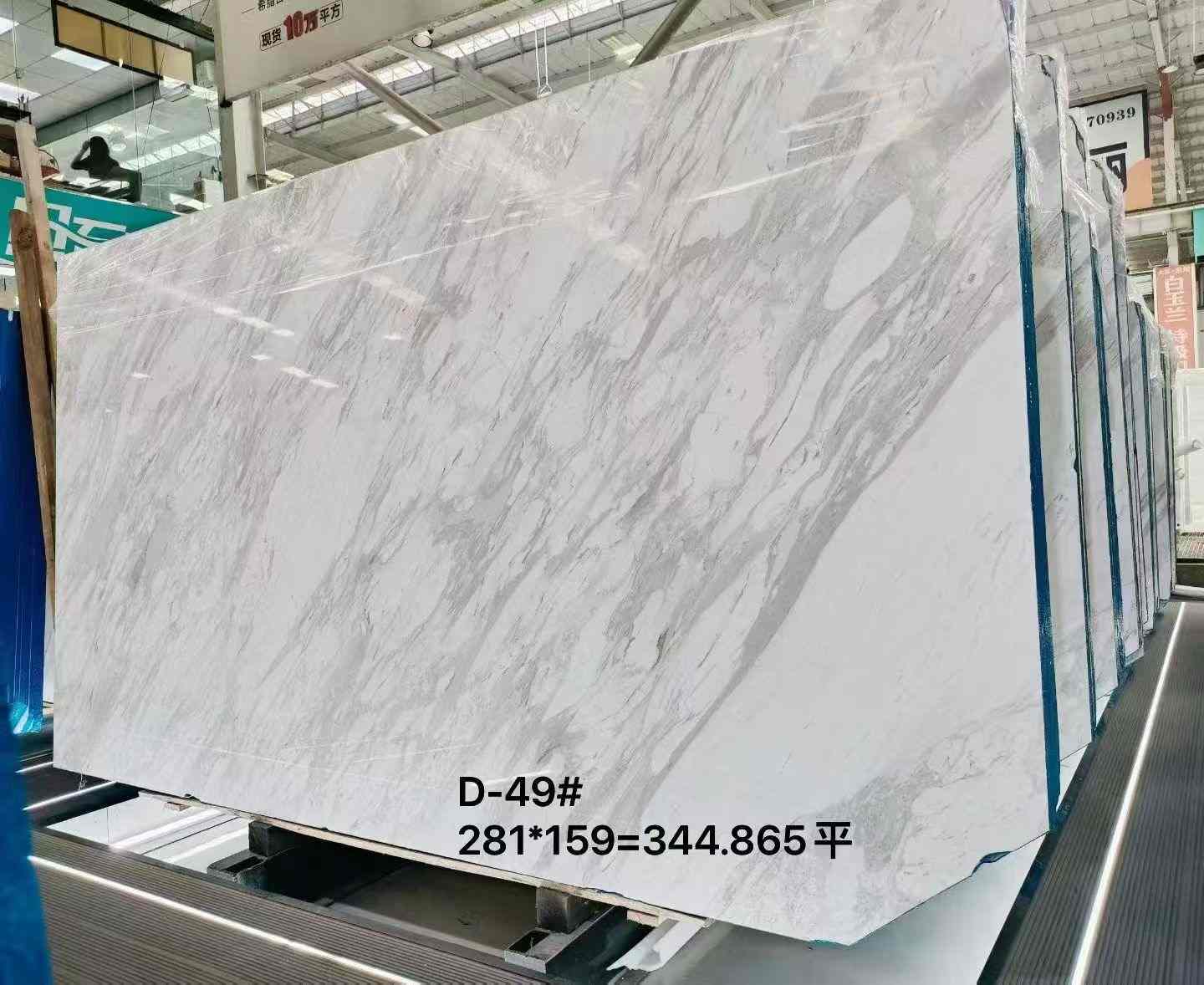
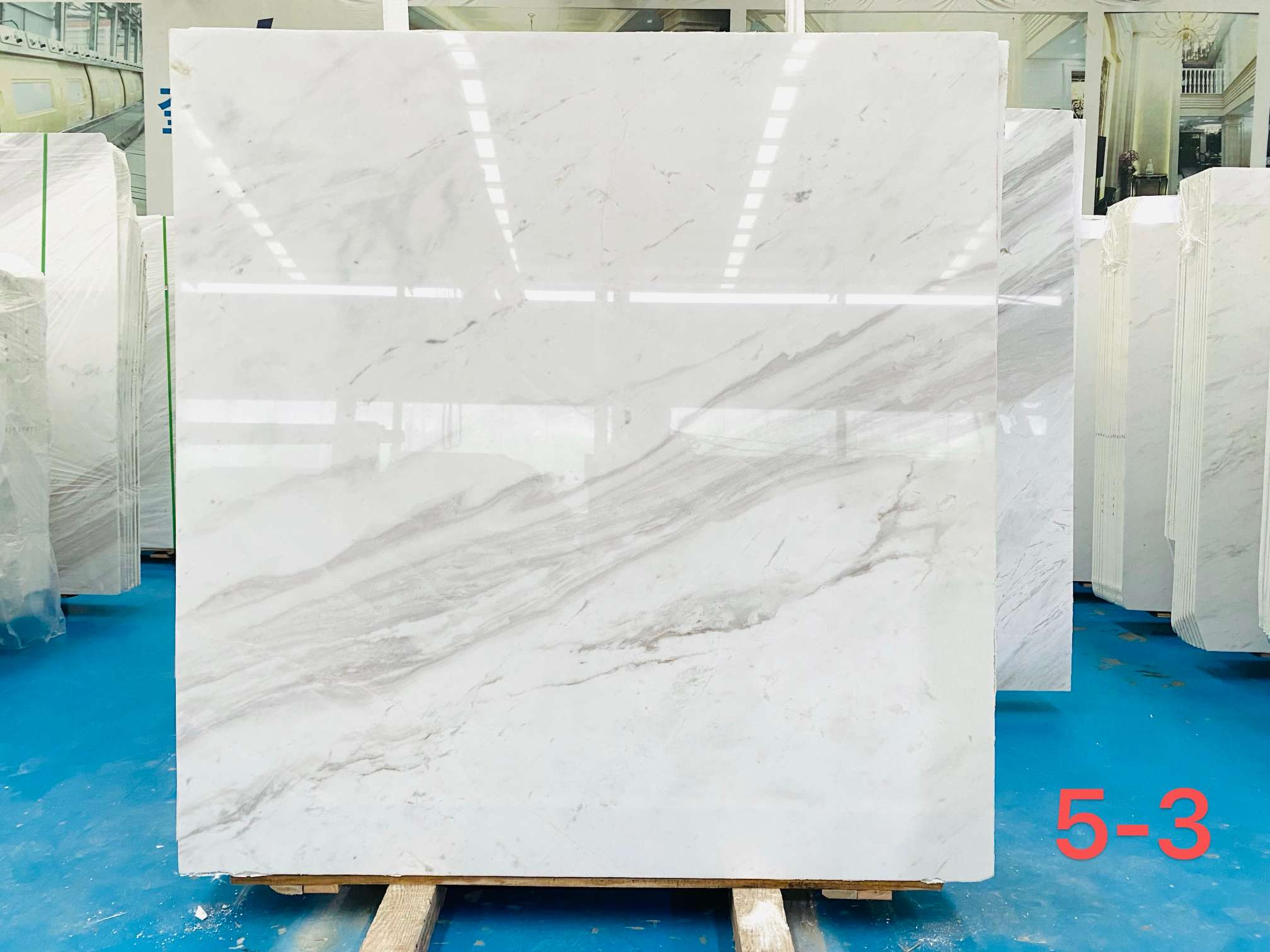
Even slabs from the same broader quarry source can fall into different price levels.
Higher-value selections generally show a better combination of:
This is why grade labels alone are not enough. One supplier's “Grade A” may not look the same as another supplier's “Grade A.” For buyers, actual slab photos are more useful than the grade name itself.
A cheap slab is not necessarily the cheapest material to fabricate.
| Comparison | Slab A | Slab B |
|---|---|---|
| Price | $38/m² | $58/m² |
| Cracks | More | Fewer |
| Crystal Areas | More | Cleaner surface |
| Cutting Restrictions | Higher | Lower |
| Usable Yield | Lower | Higher |
The second slab has a higher purchase price, but it may create less waste and fewer fabrication problems. For project buyers, usable material cost can therefore matter more than the nominal slab price.
Common variables include:
These factors affect cost, but buyers comparing standard 18–20mm polished slabs should first make sure they are comparing the same material quality.
Yes. Quarry source is one of the fastest ways to estimate the likely quality and price tier of Volakas marble. It is especially useful during the early sourcing stage when a buyer is comparing several suppliers.
Suppose a buyer needs 500m² of Volakas slabs.
Without knowing the quarry or material selection, the buyer must immediately judge:
Knowing the quarry first gives the buyer a quicker reference for the likely appearance and price tier. It narrows the field before individual slabs are reviewed.
The quarry gives the first indication, but the final purchase is still made at block and slab level. Natural stone varies, and two blocks from the same broader material source may still produce different slab quality.
Use the quarry to estimate the price tier. Use the actual slabs to confirm the grade.
For higher-value projects, buyers should therefore review current slab or batch photos before confirming an order.
A premium Volakas slab should not be premium only on the quotation sheet. The value should be visible.
Buyers can usually judge the difference through three areas:
Volakas is valued for its white background, but the background is not identical across all slabs.
Lower-priced material may show:
Higher selections normally show a more controlled background across the usable surface. For a large project, the buyer is not purchasing one attractive slab. The buyer is purchasing a group of slabs that must work together.
Lower-priced slabs may show:
Higher-value selections may show:
More veining does not automatically mean higher quality. What matters is whether the movement is balanced and whether it works with the intended project layout. For feature walls, hotel lobbies and large decorative surfaces, vein direction can strongly affect the final spatial result.
Natural marble can contain cracks, crystal areas and repaired sections.
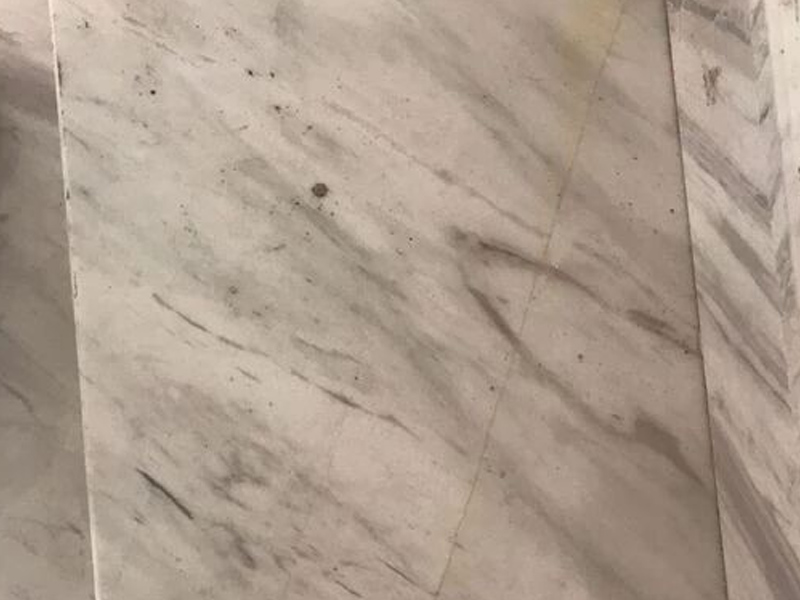
The key buying question is not simply, “Does this slab have a crack?” It is: How much usable area does the slab still provide?
A slab with many weak or visually problematic areas may:
A cleaner slab gives fabricators more freedom to position finished pieces. That is one reason a more expensive slab can still produce better overall project economics.
A raw Volakas slab price should not be compared directly with the price of finished tiles or fabricated pieces. Finished products include additional processing.
Turning slabs into tiles or cut-to-size panels may require:
Excellent Stone can supply custom Volakas marble tiles and cut-to-size pieces for projects that require additional fabrication after slab selection.
Additional fabrication may include:
The more complex the finished piece, the higher the processing cost. This is why online searches for Volakas marble cost often show very different numbers: some quotations refer to raw slabs, while others refer to tiles or fabricated products.
When comparing Volakas slab quotations, buyers should first make sure the offers describe the same material.
Do not compare commercial new-quarry material directly with premium old-quarry selected slabs. The product name may be the same, but the material level is not.
Review:
For larger projects, inspect several slabs together rather than judging one slab in isolation.
Make sure both quotations use the same:
A $/m² number is not meaningful if one quotation is EXW and another is FOB or DDP.
For a fair comparison, confirm:
Premium material is not necessary for every project. A commercial project may achieve better cost control with a consistent mid-range selection, while a feature wall or highly visible interior may justify stronger vein movement, cleaner slabs, better continuity and stricter slab matching.
What is the lowest Volakas grade that still meets the visual and fabrication requirements of this project?
When two quotations look very different, compare them in this order:
If these six items are not the same, the two prices are not directly comparable.
Yes. Premium Volakas can be relatively expensive, but commercial new-quarry selections are available at substantially lower price levels.
Usually, yes. Selected old-quarry material generally sits in a higher price tier, especially when buyers require stronger vein movement and cleaner slab selections.
Yes. Quarry source is one of the fastest ways to estimate the likely appearance, quality level and price range before reviewing individual slabs.
No. Grade labels vary between suppliers, so buyers should compare actual slab photos and selection standards.
No. Vein continuity, balance, slab condition and overall visual quality matter more than simply having more veins.
Yes, on a finished square-meter basis they usually are. Cutting, calibration, edge work and other fabrication costs are added to the slab price.
Yes. Different quarry sources, slab grades, usable areas, specifications and trade terms can produce large price differences even when both products are sold as Volakas marble.
No. Buyers should choose the lowest-priced selection that still meets the project's visual, yield and fabrication requirements.
For standard 18–20mm polished Volakas marble slabs, a practical 2026 export reference is approximately $32–80/m² FOB.
For a fast buying decision:
The quarry gives you the first price expectation. The actual slabs determine whether that price is justified.
For importers, wholesalers and project buyers sourcing Volakas marble slabs, current slab photos and a clearly defined selection standard are more useful than a generic Grade A or Grade B label.
Categories
New Blog
 ROOM 205,NO.45, MIDDLE HAIJING ROAD,XIAMEN,AREA OF PILOT FREE TRADE ZONE(FUJIAN)OF CHINA
For inquiries about our products or pricelist, please leave to us and we will be in touch within 24 hours.



© Copyright: 2026 XIAMEN EXCELLENT STONE CO.,LTD. All Rights Reserved.

IPv6 network supported