English




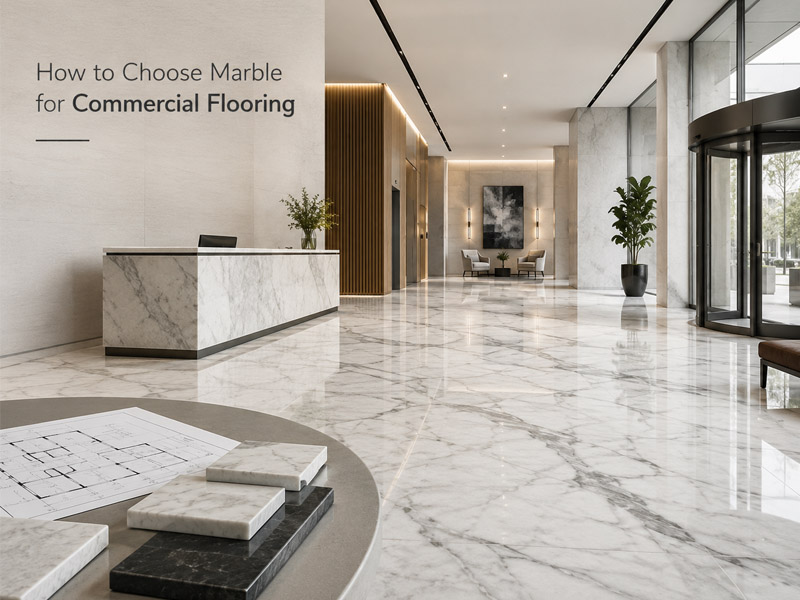
Commercial marble flooring in modern lobby
The best marble for commercial flooring is not always the hardest, cleanest, or most expensive slab. It is the marble whose soundness, finish, thickness, processing method, placement, and maintenance plan can work together. For B2B projects, marble selection should reduce breakage, installation risk, maintenance disputes, and unnecessary material loss.
Commercial marble flooring is chosen for beauty, but it is approved by risk. For stone wholesalers, contractors, and commercial project buyers, a marble floor is not only a design feature. It is also a cost, schedule, maintenance, and margin decision.
A wrong choice may not fail on the first day. The real cost often appears later: breakage during cutting, delayed installation, early wear in the main walkway, water marks, cleaning disputes, or replacement after the project opens. These problems can turn a beautiful stone into a profit loss.
That is why commercial flooring marble should not be selected only by color, slab price, or stone name. The better question is whether the selected marble can become a project-ready flooring material. This depends on slab soundness, finish, thickness, processing method, traffic-zone placement, and maintenance planning.
In commercial flooring, the right marble is not always the most perfect slab. It is the marble whose design value and project risk can be controlled together.
For a broader material approval framework beyond flooring, read our Marble Project Suitability White Paper.
Most marble flooring decisions begin with design, performance data, and surface specification. These steps are useful, but they do not solve the full B2B problem.
| Common selection step | What buyers usually check | Why it is not enough for B2B flooring |
|---|---|---|
| Design and style | Color, veining, brightness, luxury effect, and project atmosphere | A beautiful slab may still create cutting, installation, or maintenance risk |
| Physical performance | Absorption, density, flexural strength, abrasion resistance, and surface stability | Test data supports review, but it does not decide whether the stone fits every traffic zone |
| Finish, size, and thickness | Polished, honed, brushed, slab size, tile size, and thickness | Surface choice and size format affect wear visibility, handling, installation, and breakage risk |
A highly veined white marble such as Calacatta may create a strong luxury flooring effect, but it can also bring higher fabrication and installation risk. Fissures, veining direction, slab integrity, reinforcement needs, finish, thickness, traffic zone, and maintenance all affect whether the stone can become a controlled flooring solution.
For commercial marble flooring, buyers should not approve a stone by appearance or slab grade alone. A practical decision should follow five checks:
A marble becomes suitable for commercial flooring only when these five factors work together. Physical data such as absorption, flexural strength, compressive strength, and abrasion resistance can support the review, but they should be read together with traffic level, finish, installation method, cleaning method, and maintenance responsibility.
A marble flooring decision begins before the stone is cut into tiles or project pieces. The block and slab condition decide how much risk can be controlled later.
Commercial flooring buyers should review soundness at two levels:
| Soundness level | What it means | Flooring impact |
|---|---|---|
| Stone-type soundness | The natural structure and stability of a marble type, such as Carrara, Calacatta, or other highly veined white marble | Helps decide whether the marble type is generally easier or harder to control for flooring |
| Individual slab soundness | The condition of each slab, including fissures, crystal lines, open veins, repairs, holes, and color variation | Affects yield, cutting direction, piece placement, breakage risk, and final cost |
Carrara, for example, is often easier to control for stable flooring than a dramatic, highly veined white marble such as Calacatta. This does not mean one stone is always better. It means each marble type needs a different risk review.
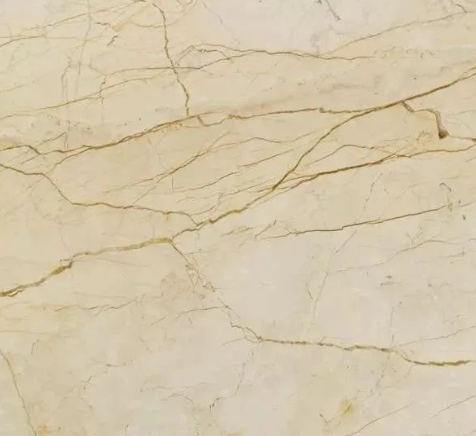
Front marble slab fissures |
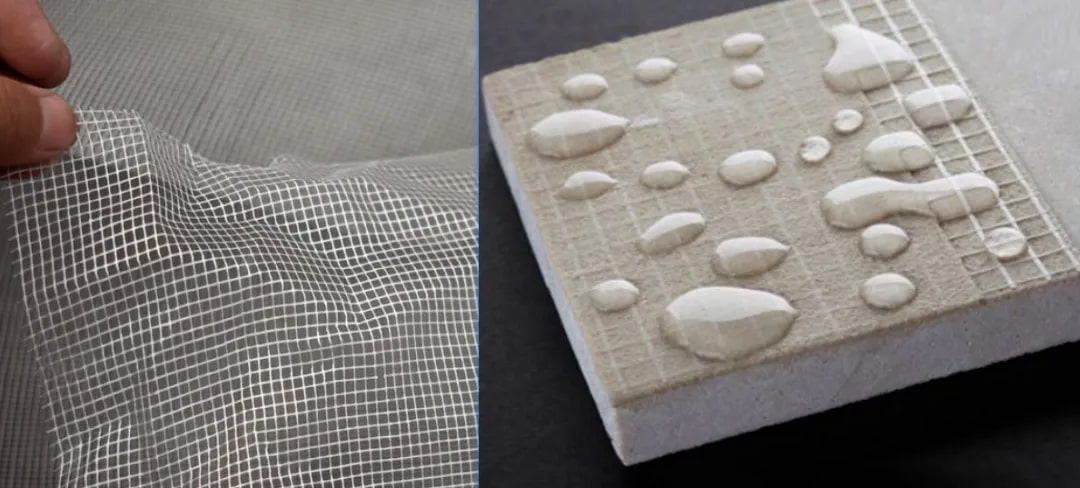
Marble mesh backing support |
In real slab approval, soundness is not judged by one photo. Buyers should check where fissures, repaired lines, open veins, and weak areas will appear after cutting. A visible natural feature may still be acceptable if it can be moved away from long narrow pieces, main walkways, or other high-risk positions.
Many public guides suggest choosing only the best and most sound slabs. That advice is safe, but it is not always the best commercial answer.
| Common advice | B2B project judgment |
|---|---|
| Choose the cleanest and most sound slabs | Choose slabs whose risks can be controlled within the budget, application area, and fabrication plan |
| Avoid slabs with visible defects | Review whether fissures, repairs, or open veins enter high-risk pieces |
| Use A-grade slabs whenever possible | Use the right grade in the right zone to balance risk, cost, and yield |
Trade terms such as A, B, C, or D grade can help describe slab quality, but they should not replace project judgment. Buyers should also understand the difference between marble grade vs marble soundness, because grade mainly affects price, visual approval, and material allocation, while soundness affects cutting loss, reinforcement needs, breakage risk, and claim responsibility.
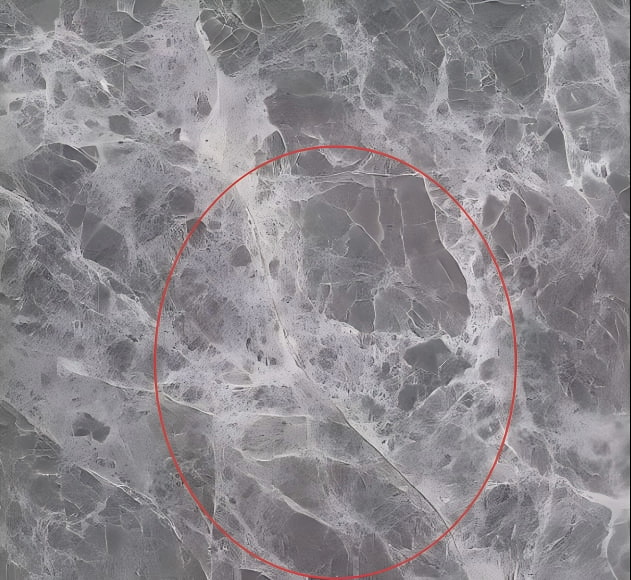
Front marble slab fissures |

Repaired marble surface mark |
The best slab is not always the cleanest slab. It is the slab whose risk can be placed, processed, and controlled.
After the right marble has been selected, engineering processing becomes the next profit-control step.
| Processing factor | Why it matters for flooring |
|---|---|
| Cutting direction | Helps prevent weak veins from becoming breaking paths |
| Reinforcement | Improves stability during cutting, handling, transport, and installation |
| Protection treatment | Helps reduce moisture-related risk, but must match the adhesive system |
| Layout and numbering | Keeps weaker pieces away from high-risk zones and reduces installation mistakes |
For B2B projects, choosing marble is only the first step. Understanding is just as important.
A commercial floor does not carry the same pressure in every area. The main entrance, corridor, elevator hall, reception zone, border, inlay, and decorative center all have different responsibilities. Marble should be judged by where it is used, how much traffic it will receive, and how much risk the project can accept.
| Flooring zone | Main risk to control | Better material strategy | Marble role |
|---|---|---|---|
| High-traffic main path | Wear, scratching, cleaning pressure, slip complaints, and claim risk | Granite, terrazzo, quartz, or reinforced stone system | Limited use, borders, inlays |
| Medium-traffic commercial interiors | Finish wear, maintenance cycle, moisture risk, and layout mistakes | Natural marble with controlled finish, thickness, and protection | Main flooring possible |
| Decorative / low-traffic zones | Visual consistency, cost control, weight, and installation efficiency | Luxury marble or thin marble composite panels | Strong visual role |
Marble is not always the safest flooring choice in uncontrolled high-traffic zones. Public corridors, transport stations, hospital main walkways, shopping mall entrances, and areas with heavy rolling loads often need stronger wear resistance, easier cleaning, and lower maintenance risk.
In these cases, marble can still support the design language through borders, inlays, reception areas, or feature zones, while the main walking path uses granite, terrazzo, quartz, or another lower-risk material.
Medium-traffic commercial interiors offer more room for natural marble. Hotel reception areas, office lobbies, boutique interiors, and private commercial spaces can use marble when the finish, thickness, cutting plan, protection, and layout match the traffic level.
Decorative and low-traffic zones allow stronger design expression. Clubs, showrooms, feature areas, border patterns, and visual centers can use more dramatic marble types. In some projects, thin marble composite panels can preserve the natural marble surface while reducing weight and material cost.
For low-traffic decorative zones, renovation projects, and luxury feature areas, thin marble composite panels can help buyers compare weight, cost, installation, and long-term maintenance.
The best flooring plan may not use one marble everywhere. A better plan protects the design value of marble while keeping the highest performance risk away from the most sensitive stone.
For a hotel lobby, the selected marble may work well in the reception zone, border pattern, or decorative center, but not always in the main entrance path. If the stone has strong veins or repaired areas, the layout should keep weaker pieces away from luggage movement, elevator exits, and entrance traffic. The main path may need a honed finish, stronger material, or a reinforced stone system, while marble preserves the luxury visual effect in controlled zones.
Before approving marble for commercial flooring, buyers should confirm the following items.
| Project stage | Check item | Why it matters |
|---|---|---|
| Before approval | Slab front and back photos | Shows visible fissures, mesh, repairs, and filling |
| Before approval | Thickness and finish | Affects installation, wear visibility, and breakage risk |
| Before production | Cutting direction | Helps avoid weak veins becoming breaking paths |
| Before production | Reinforcement and resin treatment | Improves handling stability but must match the adhesive system |
| Before production | Traffic-zone placement | Prevents fragile or highly veined pieces from entering main walkways |
| Before installation | Six-side protection | Helps reduce moisture-related risk but must not block bonding |
| Before installation | Layout numbering | Reduces installation mistakes and claim disputes |
| Before handover | Maintenance plan | Clarifies cleaning method, polishing cycle, and user responsibility |
This checklist connects slab approval with real project conditions. When the slab, processing plan, installation method, and maintenance responsibility are reviewed together, many disputes can be reduced before production begins.
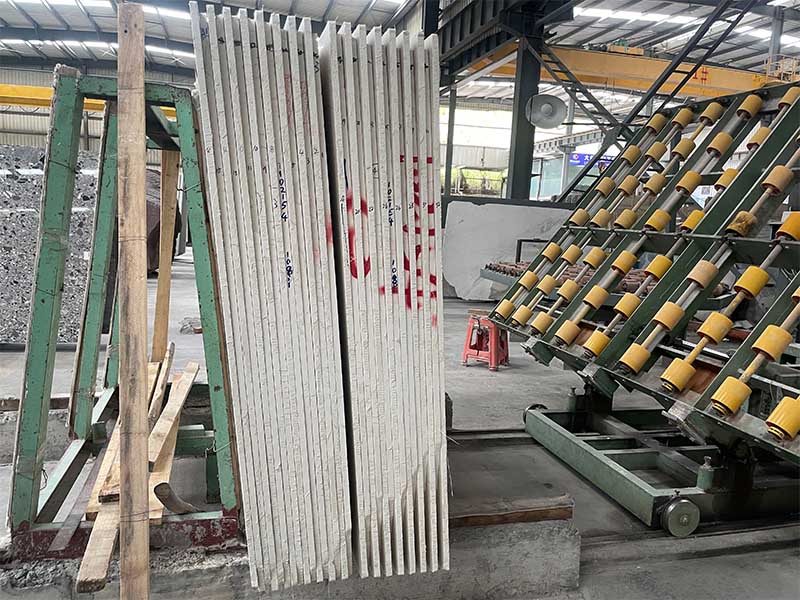
A bundle of marble slabs waiting for inspection |
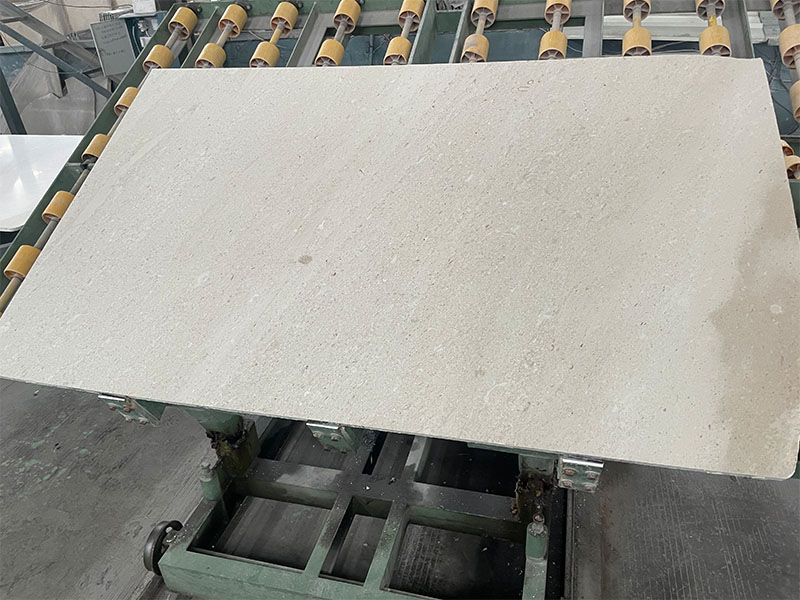
Marble slab-by-slab inspection before approval |
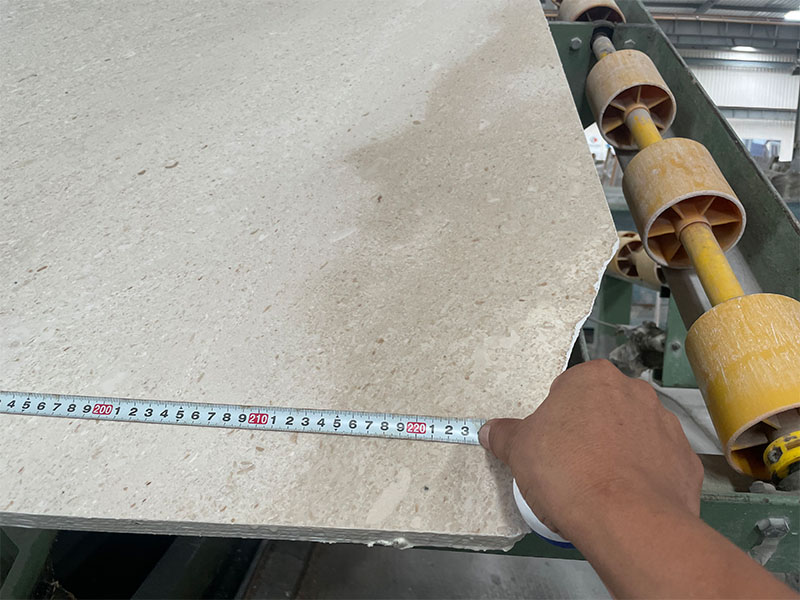
Marble slab dimension check before approval |
Commercial marble flooring selection is not just choosing a slab. It is deciding how that slab will be processed, where it will be used, and how much risk can be removed before installation.
A safer approval process should include physical property reports when available, clear slab photos and videos, back-side images, inspection records, and notes on resin, mesh backing, filling, repair, protection, cutting direction, finish, thickness, layout numbering, and traffic-zone placement. The right solution protects both design value and project value by matching the stone, processing method, placement plan, and maintenance expectation.
There is no single best marble for all commercial flooring projects. The best choice depends on slab soundness, traffic level, finish, thickness, protection treatment, layout plan, and maintenance expectation. For B2B buyers, a suitable marble should reduce breakage, installation delay, cleaning disputes, and unnecessary material loss.
Yes, but only in selected areas. Calacatta marble can work well in luxury reception zones, boutique interiors, clubs, and decorative floor areas. For heavy main paths, buyers should review fissures, veining direction, reinforcement, finish, and maintenance risk before approval.
No. A-grade marble is not always required for every commercial flooring zone. It usually has lower risk but higher cost. If the natural defects of B-grade slabs can be controlled through layout, filling, reinforcement, and zone placement, they may still support good project profit in lower-risk areas.
Mesh backing is an engineering support method. Some marble is mesh-backed because it needs more stability during cutting, handling, transport, or installation. Back mesh can help brittle, fissured, or highly veined marble, but it does not automatically mean higher quality. Buyers still need to check resin, bonding, installation method, and flooring application.
Marble can be used in high-traffic commercial areas, but usually in a limited role. Main walking paths may need granite, terrazzo, quartz, or a lower-risk reinforced stone system. Marble is usually safer in borders, inlays, reception zones, wall-to-floor transitions, or controlled visual areas.
Send us your preferred marble, floor plan, traffic zones, finish requirement, and budget. We can help review the selected marble and decide whether it should be reinforced, re-cut, re-finished, moved to a lower-risk zone, or replaced with a better flooring material.
Categories
New Blog
 ROOM 205,NO.45, MIDDLE HAIJING ROAD,XIAMEN,AREA OF PILOT FREE TRADE ZONE(FUJIAN)OF CHINA
For inquiries about our products or pricelist, please leave to us and we will be in touch within 24 hours.



© Copyright: 2026 XIAMEN EXCELLENT STONE CO.,LTD. All Rights Reserved.

IPv6 network supported