English




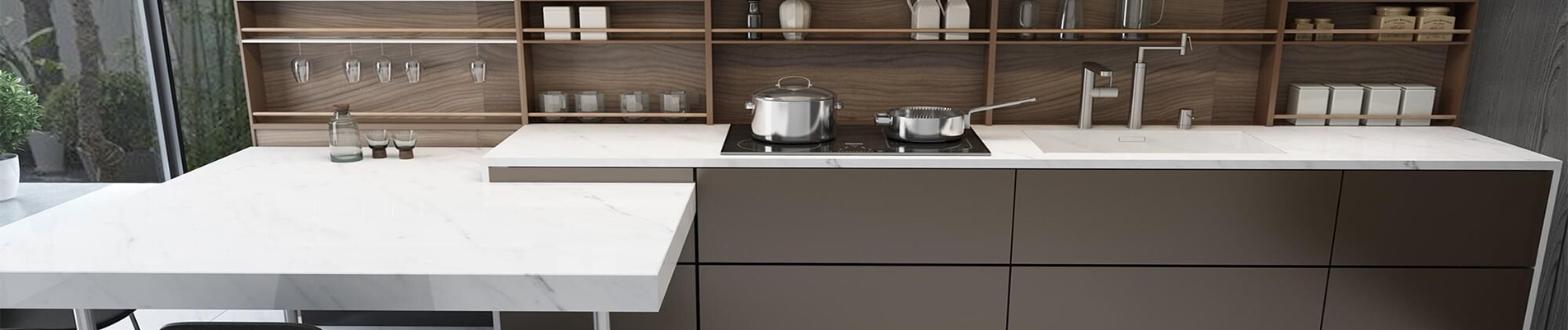
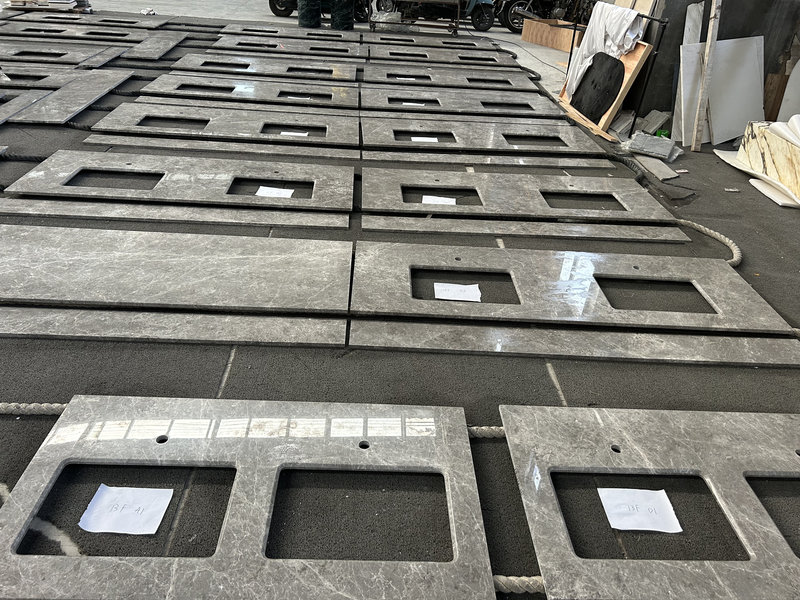
The same Hermes Grey marble was used in two different projects. In one hotel flooring project, breakage occurred when the client cut slabs into tiles. In another project, the same material was used for entrance stone pieces and 70 vanity tops, and the order was delivered successfully.
Neither project used “poor-quality stone.” The test reports were acceptable. So where did the difference come from?
The answer is simple: the same premium natural marble can perform very differently under different fabrication methods, site conditions, and project control processes.
This is one of the most underestimated issues in B2B marble procurement.
As a supplier of natural stone and engineered stone, Excellent STONE works with natural marble projects under one basic principle: marble procurement starts with visual and design selection. Color, veining, origin, design intent, and client preference are usually the first reasons a marble is chosen. For stone wholesalers, contractors, and project buyers, the visual effect should remain a priority.
However, once the visual direction is confirmed, a second level of evaluation is required: is this marble suitable for the specific fabrication method, installation condition, and maintenance expectation of the project?
Design and visual appeal explain why a marble is selected. Project suitability determines whether it can be delivered successfully.
This guide does not challenge the importance of visual selection. Instead, it is based on natural marble supply, fabrication coordination, and project delivery experience. Its goal is to help wholesalers, contractors, and project buyers identify key risks in cutting, drilling, layout, installation, and maintenance before the order moves too far into production.
For a step-by-step material selection framework beyond this procurement white paper, read our Marble Slab Selection Guide for Commercial Projects.

This guide is written for B2B readers involved in marble procurement and project delivery:
In project communication, we often see a familiar situation: the client has already selected the marble color and veining, and the design direction is clear. The next step is usually to check whether the slab surface looks good, whether the color is consistent, whether there are visible cracks, or whether ASTM-related test data can be provided.
These steps are important. They help determine whether a batch of material meets basic quality expectations, whether it is a qualified stone, and whether there are obvious defects that make it unsuitable for purchase.
However, for project delivery, this is only the first level of evaluation.
Test reports, technical data, and slab inspection can indicate whether a marble meets basic quality requirements. They cannot, by themselves, determine whether that marble is suitable for a specific project. A slab may be visually attractive and technically acceptable, but the risk profile changes when it is used for countertop cut-outs, long thresholds, stair treads, high-traffic flooring, or client-side tile cutting.
This is what B2B marble procurement should evaluate as project suitability.
Project suitability is not about deciding whether a stone is “good” or “bad.” It is about determining whether a qualified marble is suitable for the project’s fabrication method, application area, size format, installation capability, and maintenance conditions.
A practical way to understand project suitability is:
Project suitability = Material quality + Application area + Fabrication method + Size format + Installation capability + Maintenance conditions
According to the Natural Stone Institute / Marble Institute of America Marble Soundness Classification, marble can be grouped according to its fabrication and repair requirements. This system is not focused on price, aesthetics, or market value. It focuses on working properties and fabrication behavior, including stability during cutting, drilling, handling, installation, and repair.
ASTM C503/C503M can be used as a technical reference for marble dimension stone. It covers indicators such as absorption, density, compressive strength, modulus of rupture, abrasion resistance, and flexural strength. These values help determine whether the material meets basic requirements for architectural marble dimension stone.
However, these values only confirm baseline material performance. They do not independently answer whether the stone is suitable for sink cut-outs, tile cutting, long pieces, wet areas, or high-traffic applications. Technical data should therefore be used as a screening tool, not as the final purchasing decision. The final evaluation still needs to include application area, fabrication method, size format, and slab review.
To explain the difference between a qualified material and a project-suitable material, we can look at a Hermes Grey project. This case is not intended to suggest that a specific batch of slabs was defective. It shows that even premium marble may create additional loss when the fabrication method and material characteristics are not fully aligned.
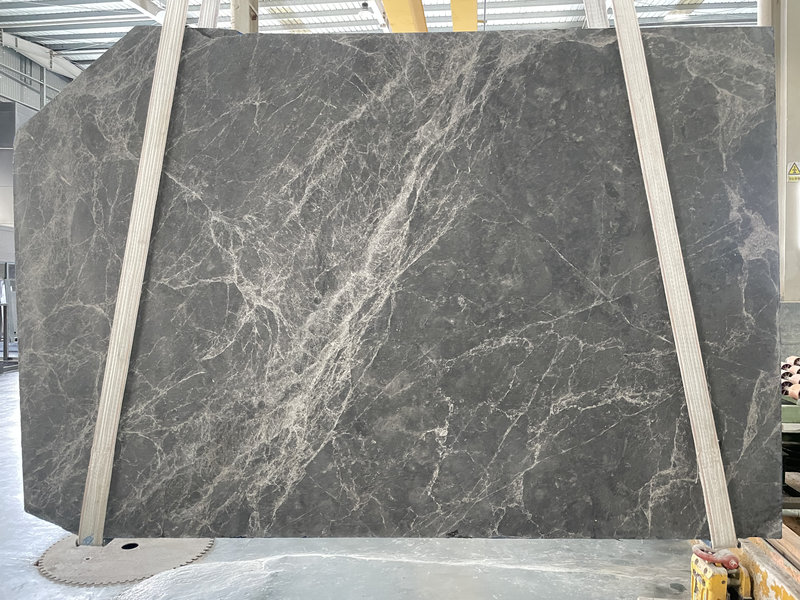
In one hotel flooring project, the client selected Hermes Grey marble. The choice was easy to understand: Hermes Grey has a grey background with dense spider-web veining, which works well for modern hotel interiors and commercial spaces.
The application was flooring. We supplied slabs to the client, and the client planned to cut the slabs into tiles after receiving them. The slabs had no hidden cracks and were supplied with mesh backing to improve stability during transportation. However, based on supplier experience, we still advised the client that a material like Hermes Grey, with dense spider-web veining, requires stronger control over cutting equipment, cutting paths, and fabrication handling.
For client-side tile cutting, we suggested considering Tundra Grey as an alternative with a similar color direction and a less dense veining structure. Compared with Hermes Grey, Tundra Grey can offer a higher fabrication tolerance in this type of situation.
For material comparison, buyers can review the surface pattern, grey tone, and veining consistency of this Tundra Grey slab texture and veining reference when evaluating lower-risk alternatives for tile fabrication projects.
The client still decided to proceed with Hermes Grey. We understood the decision because the visual direction matched the project design. During the subsequent cutting process, two slabs were damaged. This was an unfortunate result, and we later supplied two replacement slabs from the same batch.
This case does not mean that Hermes Grey cannot be used for flooring. It also does not mean that mesh backing is a quality problem. The real lesson is that marble risk cannot be evaluated only by asking whether the material is qualified. It also depends on who fabricates it, how it is cut, what size it is cut into, and how much loss tolerance the project allows.
This logic applies to many natural marbles, not just one material. Clients often focus on color, veining, and design effect. A professional supplier also needs to evaluate how the material will perform under the actual fabrication method and application scenario.
Project communication should therefore separate two questions: first, whether the material meets baseline quality requirements; second, whether the material is suitable for the actual delivery conditions of the project.
| Common Client Question | Surface-Level Concern | Supplier Review |
|---|---|---|
| Will this marble crack easily? | Material stability | Check whether the project involves cut-outs, long pieces, tile cutting, mesh backing, or directional veining. |
| Can slabs with natural lines or crystal lines still be used? | Appearance and structure | Check whether the lines are close to cutting lines, cut-out areas, load-bearing areas, or highly visible areas. |
| Will white marble turn yellow? | Maintenance and complaint risk | Review adhesive, sealing, wet area conditions, installation materials, and cleaning method. |
| If the technical data is acceptable, can we order it? | Baseline quality | Check whether the stone is suitable for the application area, fabrication method, and size format. |
| If the slab looks good, is it ready for purchase? | Visual approval | Also review batch, thickness, mesh backing, veining direction, and fabrication tolerance. |
| What if the client insists on the original material? | Maintaining the design effect | Manage risk through slab selection, layout, reinforcement, size adjustment, alternative materials, and written risk confirmation. |
Marble procurement is not simply selecting a stone name. Names such as Carrara, Calacatta, Nero Marquina, Travertine, and Hermes Grey help clients identify a visual direction quickly, but they do not determine whether the material is suitable for a specific project.
A more complete procurement process should start with visual direction and then move into material source, slab condition, fabrication method, and application scenario. Aesthetics matter, but turning a visual choice into a deliverable procurement plan matters just as much.
If you need a practical execution layer after this white paper, see our guide on how to choose the right marble for commercial projects.
Visual direction is not only about appearance. It affects material range, possible alternatives, and fabrication risk.
The buyer should confirm:
Material source helps buyers understand general material tendencies, but it cannot replace inspection of the actual batch and slabs.
The buyer should confirm:
In quarry and manufacturing quality control, project stone often needs to be traced through quarry face, block, slab, and batch. This is because color, veining, and fissure conditions may vary even within the same origin.
Slab condition directly affects fabrication, transportation, installation, and final visual result.
The buyer should confirm:
Resin treatment and mesh backing are common stabilization methods in natural stone processing. For B2B procurement, the key is not to assume that mesh backing means poor quality. The key is to evaluate why it was used, how much of the slab it covers, and how it affects cutting, handling, and installation.
Delivery conditions determine who controls the fabrication risk and whether the responsibility boundary is clear.
The buyer should confirm:
In marble procurement, color and veining determine whether a client wants to select the material. A professional stone supplier also needs to evaluate whether it can be fabricated reliably, delivered according to drawings, kept within acceptable loss, and maintained without future disputes.
For B2B procurement, a more useful question is: will the material’s physical characteristics affect cutting, cut-outs, installation, maintenance, or delivery?
A fabrication-friendly marble can also be described as a sound marble or stable marble.
These materials usually have better slab integrity, meaning fewer fissures, open seams, voids, or obvious structural weak points. Their behavior during fabrication is more predictable. They are not necessarily more expensive or visually stronger, but they are easier to control during cutting, drilling, handling, installation, and batch production.
For this type of material, buyers should confirm:
For contractors, the commercial value of this type of material is not that it is “more premium.” Its value is that loss is easier to control, fabrication communication is clearer, and lead-time risk is lower.
Some marbles have strong visual impact but lower fabrication tolerance. In English industry communication, they may be described as delicate marble, fragile marble, vein-sensitive marble, fissure-sensitive marble, or less forgiving during fabrication.
These materials often have strong visual features: large patterns, bold veins, brecciated structure, black-and-gold contrast, dark contrast, or green veining. They work well as focal materials and can create a premium or dramatic effect.
However, strong visual value does not mean easy fabrication. Calacatta variants, Nero Marquina, Breccia Aurora, Portoro, and Fior di Pesco often require closer review of fissures, open seams, voids, lines of separation, mesh backing, and resin treatment.
For these materials, buyers should confirm:
The right approach is not to say that these materials are “bad.” A more accurate approach is to say that they have high visual value, but when used for cut-outs, stairs, long pieces, or complex edge profiles, they require stricter slab selection, layout planning, reinforcement, and loss control.
A marble that absorbs water or shows stains easily is not necessarily a poor-looking material. Many marbles look warm, natural, and attractive, but once used in bathrooms, countertops, vanity tops, or wet areas, they may show water marks, oil stains, soap residue, darkening, insufficient sealing, or cleaning marks.
This issue cannot be evaluated by absorption rate alone. Color, porosity, finish, and use environment must also be considered.
Common tendencies include:
For suppliers, the key is not to simply tell the client whether the marble will get dirty. The key is to explain what type of use marks may appear in the specific application, and what sealing, cleaning, and maintenance practices are required.
Flooring and high-traffic areas require attention to abrasion resistance, compressive strength, slip resistance, gloss loss, and maintenance cycles. The question is not which marble looks best, but whether the material can withstand foot traffic, cleaning, and long-term maintenance.
Marbles with stronger abrasion and compressive performance are generally more suitable for flooring, commercial spaces, hotel corridors, lobbies, and stair treads. However, this cannot be judged by name alone. The evaluation should include density, compressive strength, abrasion resistance, finish, thickness, size format, and installation method.
Flooring projects can be divided into three use levels:
The same marble may require different procurement decisions in these three scenarios.
Dense marble is often evaluated by density, porosity, surface gloss, and polish retention. In practical terms, the question is whether the material can produce a stable, fine, and long-lasting surface finish.
These materials often look refined, polish well, and create a more premium surface effect. They are commonly used for walls, floors, countertops, hotel interiors, and display areas where appearance matters.
However, high density and high polish do not mean low maintenance:
Procurement should review three factors: whether the material is dense enough, whether the finish suits the application, and whether the client accepts the cleaning, sealing, and refinishing requirements.
| Type | Visual Features | Physical Characteristics | Procurement Focus | Common Applications |
|---|---|---|---|---|
| Fabrication-friendly marble | Relatively even veining | Better slab integrity | More controllable cutting, drilling, and handling | Countertops, stairs, cut-to-size work |
| Fragile or vein-sensitive marble | Bold veins, large patterns, brecciated structure | More sensitive fissures or open seams | Slab selection, layout, reinforcement, loss allowance | Feature walls, focal areas |
| Water- or stain-sensitive marble | Light colors, porous structure, honed finish | Absorption, porosity, sealing sensitivity | Wet areas, countertops, cleaning and maintenance | Bathrooms, vanity tops |
| Abrasion- and compression-focused marble | Stable tone, lower visual conflict | Related to abrasion, compression, and slip resistance | Floor thickness, finish, traffic level | Flooring, stairs, commercial spaces |
| Dense high-polish marble | Fine surface, strong gloss | Density and polish retention | Gloss retention, scratches, water marks | Premium walls, floors, countertops |
The same marble faces very different conditions when used in bathrooms, countertops, floors, feature walls, stairs, and thresholds.
The supplier’s role is not simply to answer whether a stone can be used. The supplier should help the buyer confirm which fabrication, installation, and maintenance conditions the marble must meet for the specific project.
Marble bathrooms are often selected for their design effect. White marble makes a space brighter, beige marble creates warmth, dark marble creates contrast, and travertine or porous stones create a natural texture.
However, bathrooms amplify water absorption, water marks, soap residue, darkening, sealing, and slip resistance issues.
Marble countertops support the overall interior style. Carrara offers a classic white-grey look. Calacatta and Statuario create strong focal points. Nero Marquina and Portoro create dramatic contrast.
However, countertops amplify risks around cut-outs, acid etching, oil stains, water marks, and edge fabrication.
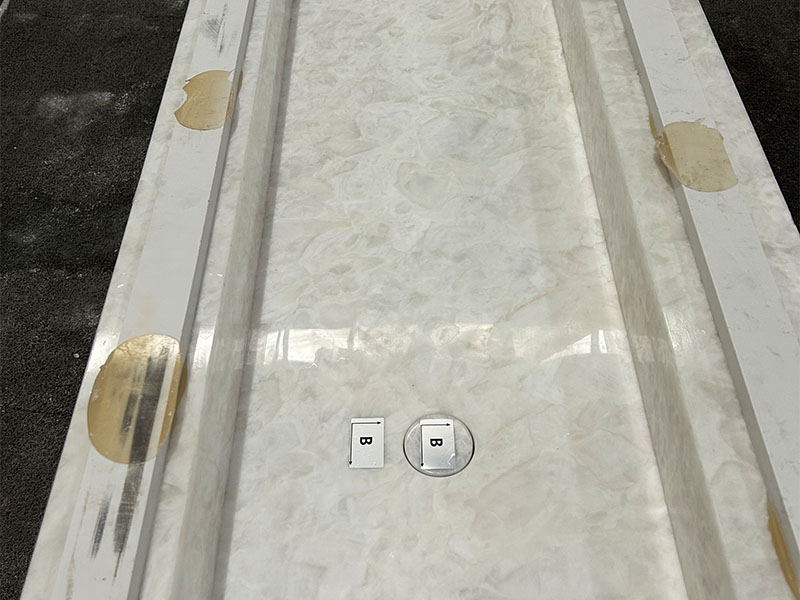
Marble flooring can create a premium, natural, and continuous spatial effect. Light colors feel brighter, grey tones feel more modern, beige tones feel warmer, and dark colors create a stronger visual presence.
However, flooring amplifies abrasion, gloss loss, scratches, slip resistance, and maintenance cycles.
If the client plans to cut tiles independently, the supplier should also review the material’s veining structure, mesh backing, cutting equipment, and operating capability.
For a deeper flooring-specific review, read our How to Choose Marble for Commercial Flooring.
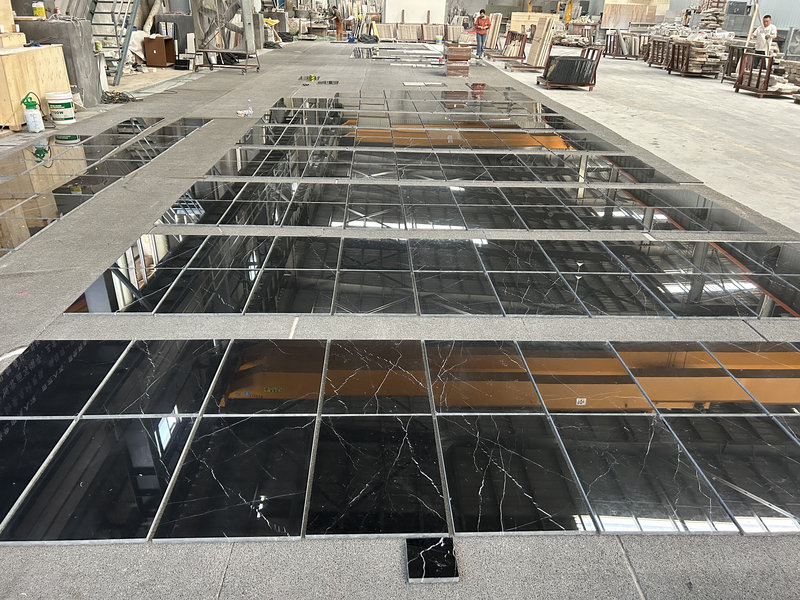
Walls and feature walls are some of the best applications for marble with strong visual expression. Strong-veined white marble, black-and-gold marble, brecciated stone, and large-pattern materials can all become focal points.
However, wall and large-slab projects require close attention to slab layout, bookmatching, vein matching, mesh backing, adhesive compatibility, flatness, and installation tolerance.
Strong-veined materials should not be cut casually. If the cutting direction is wrong, the vein flow may be broken, the visual effect may weaken, and material loss may increase. Feature wall projects should be laid out in advance, with slab positions and vein direction confirmed before fabrication.
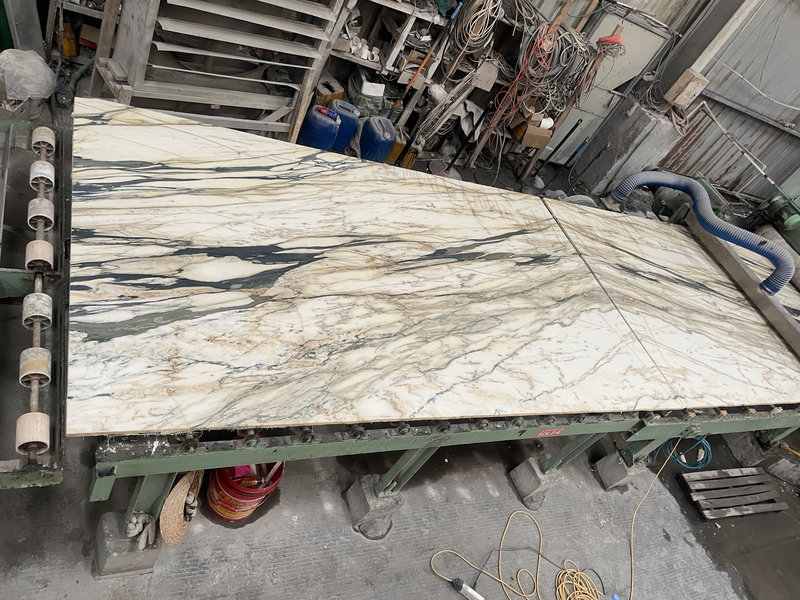
Stair treads, thresholds, and long pieces can complete a space and strengthen the material expression.
However, these pieces amplify risks related to flexural strength, modulus of rupture, hidden cracks, transportation, and installation. The longer, narrower, or thinner the piece, the more attention should be paid to slab integrity, thickness, edge treatment, and transport protection.
If the client prefers strong-veined or brecciated marble, the supplier should clearly point out whether fissures cross the piece direction, whether reinforcement is needed, and whether additional loss allowance should be included.
| Application | Main Risks | Supplier Should Confirm |
|---|---|---|
| Bathroom | Absorption, water marks, slip resistance, cleaning | Finish, sealing, adhesive, wet area location |
| Countertop | Cut-outs, acid etching, edge chipping | Slab integrity, cut-out position, edge profile, reinforcement |
| Flooring | Abrasion, gloss loss, slip resistance | Traffic level, abrasion resistance, finish, thickness |
| Feature wall | Vein matching, color variation, mesh backing, flatness | Slab layout, bookmatch, adhesive, substrate |
| Stairs / thresholds | Flexural risk, hidden cracks, transport breakage | Thickness, length, fissure direction, protection method |
Marble families are not meant to replace slab-specific evaluation. They help suppliers and buyers understand material tendencies during early communication.
A more reliable way to discuss a marble family is not to say that it is always suitable for a certain application. Instead, explain why clients prefer it, what needs to be confirmed, and where the supplier should avoid overpromising.
Carrara is not valuable only because of price. It is often used as a benchmark white-grey marble because of mature supply, strong recognition, broad design acceptance, and relatively stable visual expectations.
These strong-veined white marbles are commonly used in premium interiors. Clients often select them because the slab pattern itself becomes a focal point.
These materials are often associated with high whiteness, stability, and premium white marble effects. However, high whiteness also reduces tolerance during installation and maintenance.
These materials may not be the strongest visual focal points, but they are often suitable for large-area wall and floor applications, commercial spaces, and project supply.
The focus is not “luxury.” The focus is size format, batch consistency, long-term appearance, maintenance, and supply stability.
Dark marbles create strong contrast and are often used for feature walls, local accents, countertops, and premium focal points.
The key question for travertine is not only color. It is whether the material is filled or unfilled.
Voids, filling, absorption, finish, and maintenance method can directly affect the project result.
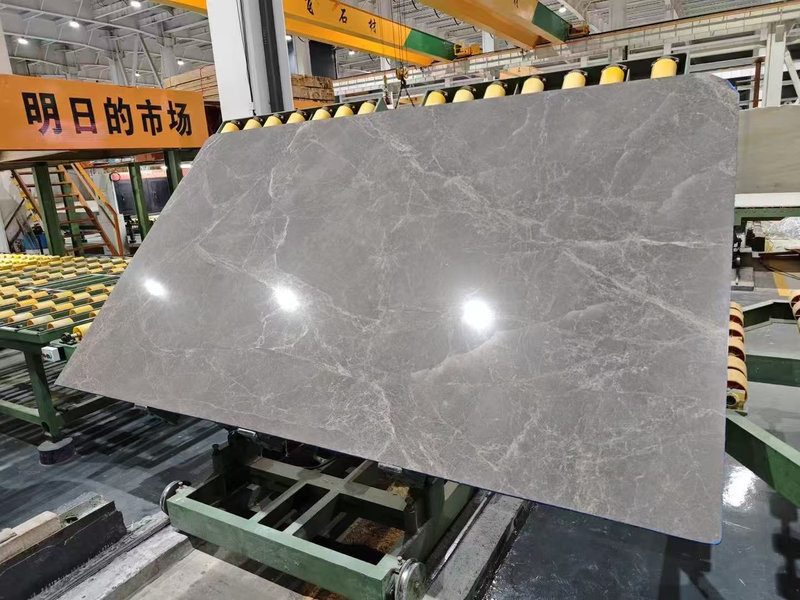
Hermes Grey has a distinctive visual character. Its grey background and dense spider-web veining make it suitable for modern hotels, commercial spaces, and premium interiors.
For a closer material review, buyers can examine the grey background, spider-web veining, slab appearance, and application context through this Hermes Grey slab appearance and veining reference.
However, because of its obvious spider-web veining, application area, cutting method, and fabrication responsibility should be reviewed carefully. If the client plans to cut tiles independently, veining direction, mesh backing, cutting equipment, and operator capability should be confirmed. If the supplier fabricates according to CAD drawings, risks can be reduced through layout planning, size control, and pre-shipment inspection.
Hermes Grey is not unsuitable. It simply requires clearer fabrication control.
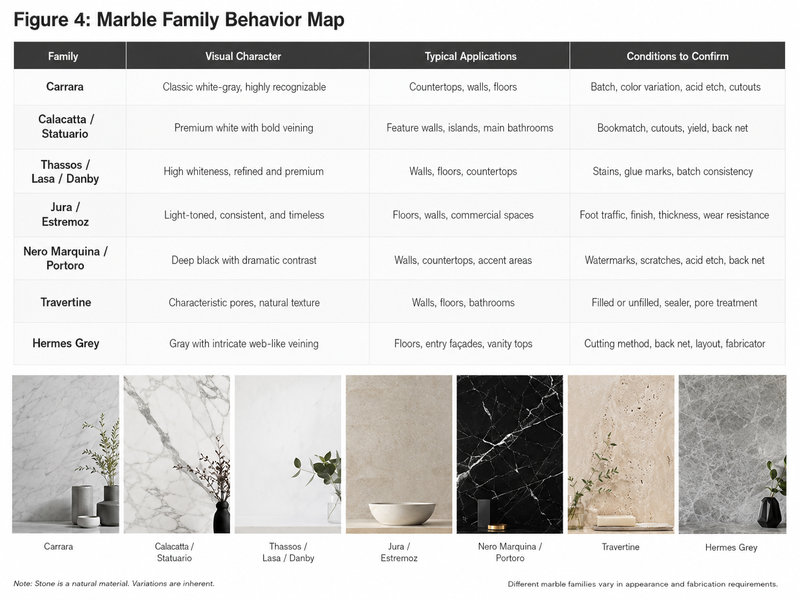
The following table is for early-stage screening and communication only. It does not replace review of the actual batch, slab photos, fabrication drawings, and project-specific supplier evaluation.
| Family | Visual Value | Common Applications | Conditions to Confirm |
|---|---|---|---|
| Carrara | Classic white-grey, widely recognized | Countertops, walls, floors | Batch, color variation, etching, cut-outs |
| Calacatta / Statuario | Premium strong-veined white marble | Feature walls, islands, master bathrooms | Vein matching, cut-outs, loss allowance, mesh backing |
| Thassos / Lasa / Danby | High whiteness, premium effect | Walls, floors, countertops | Contamination, adhesive marks, batch |
| Jura / Estremoz | Light commercial look, stable and practical | Floors, walls, commercial spaces | Traffic level, finish, thickness, abrasion |
| Nero Marquina / Portoro | Strong dark contrast | Walls, countertops, focal areas | Water marks, scratches, etching, mesh backing |
| Travertine | Porous natural texture | Walls, floors, bathrooms | Filled / unfilled, sealing, voids |
| Hermes Grey | Grey spider-web veining | Floors, entrance stone, vanity tops | Cutting method, mesh backing, layout, fabricator |
Physical limitations are not a reason to deny a material automatically. They indicate that the material may need a more suitable delivery method.
When the client likes the color, veining, and design effect of a marble, but the material has fabrication or maintenance limitations in a specific application, the supplier should not reject the choice immediately. A better approach is to acknowledge the visual value first, then explain the project conditions required for successful delivery.
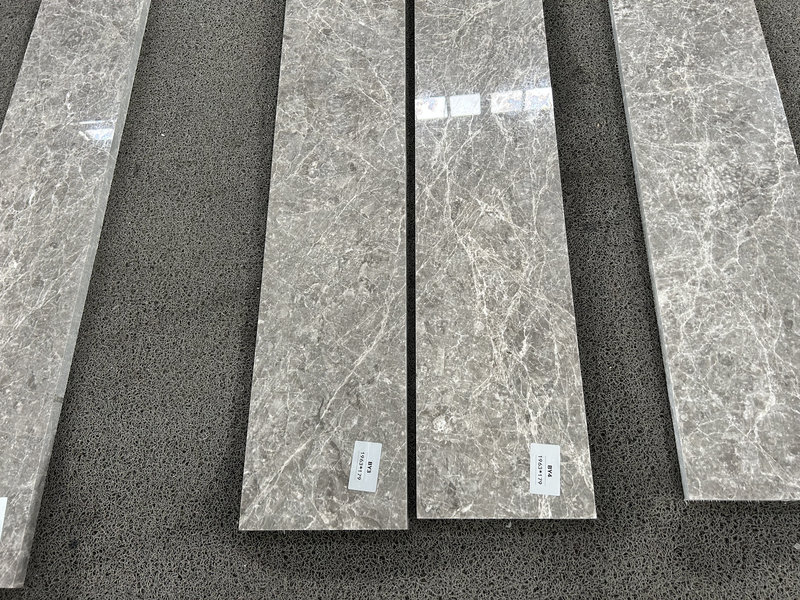
In another Hermes Grey project, the client was a contractor. The order included Hermes Grey entrance stone pieces and 70 vanity tops.
This time, the client provided CAD drawings to Excellent STONE at an early stage. We confirmed dimensions, carried out cutting and fabrication, controlled finished-piece quality, and completed factory inspection and vanity top checks before shipment. The project was delivered successfully.
This case forms a clear contrast with the hotel flooring tile project. The same material was used, and both were premium natural marble projects. However, when the supplier participated in drawing review, layout planning, cutting, fabrication, and pre-shipment inspection, the project risk was significantly reduced.
For a related project example, see how this Hermes Grey entrance stone and vanity top project was coordinated from CAD drawings and slab layout to fabrication, finished-piece inspection, and shipment preparation.
This is why contractors should provide drawings, sizes, and application information as early as possible. The earlier the fabrication conditions are confirmed, the easier it is to preserve the design effect while controlling loss, lead time, and delivery risk.
For project-volume orders, see what contractors should confirm before placing a bulk marble slab order.
In this project, our role was not only to supply material. We also participated in drawing review, fabrication control, finished-product inspection, and delivery risk management.
This checklist is designed for wholesalers, contractors, and project buyers before inquiry, selection, and order placement. It also shows what a professional stone supplier usually needs to help confirm in the early stage of a project.
Before sending RFQs, use our marble sourcing guide for importers to define the material, quantity, scope, reservation, and approval points that make supplier quotes comparable.
This guide can be used in the following way:
Excellent STONE is a supplier of natural stone and engineered stone, serving slab wholesale, project procurement, fabricated stone products, and custom stone projects. Our natural marble is mainly exported to North America, the Middle East, and Europe, while we also serve clients in other regions.
Our clients include slab wholesalers, contractors, project buyers, and customers who require slab supply, fabricated products, and custom-size stone services.
This guide is based on our practical experience in natural marble export, slab selection, fabrication coordination, and project delivery. It focuses on how wholesalers and contractors can make more reliable procurement decisions between visual design, material quality, and fabrication conditions.
The purpose of this guide is not to recommend one material for every situation. It is to help B2B clients build a clearer decision-making process around visual selection, fabrication conditions, and delivery responsibility.
No. Technical data can confirm that the material meets baseline quality requirements, but project suitability also depends on application area, fabrication method, size format, slab condition, and maintenance conditions. Countertop cut-outs, stair treads, high-traffic flooring, and client-side tile cutting all require different evaluations.
Hermes Grey can be used for hotel flooring, but tile size, cutting method, mesh backing, and fabricator capability should be reviewed. If the client cuts the tiles independently, cutting path and loss allowance should be controlled more carefully. If the supplier fabricates according to drawings and completes layout, size, and finished-piece inspection before shipment, the risk is easier to manage. For the broader decision logic, use the commercial marble flooring selection framework.
No. Mesh backing is a common stabilization method for natural stone. The supplier needs to review why the backing was used, how much area it covers, and whether it relates to transportation, cutting, cut-outs, long-piece fabrication, or installation risk.
The buyer should confirm veining structure, mesh backing, thickness, cutting equipment, tile size, and loss allowance. Materials with strong veining or dense spider-web veining require more careful control of cutting path and fabrication tolerance.
Risk can often be reduced through slab selection, layout planning, reinforcement, size adjustment, a different fabrication method, or a visually similar alternative material. The goal is not to reject the design, but to make the design more deliverable.
A supplier should be involved early when the project includes cut-outs, stairs, long pieces, bookmatched feature walls, high-traffic floors, client-side cutting, or strong-veined materials. Early review of drawings, sizes, slab condition, and fabrication method helps identify loss, fabrication, and delivery risks sooner.
An alternative should be considered when the selected material meets the visual direction but the project involves complex cut-outs, long pieces, high-traffic flooring, wet areas, client-side cutting, or low tolerance for schedule and loss risk. A visually similar material with lower fabrication risk, more stable supply, or clearer maintenance requirements may be more suitable.
Technical data confirms baseline material performance, but slab condition directly affects fabrication and installation. Natural lines, crystal lines, mesh backing, resin treatment, veining direction, thickness, and batch variation can all affect cut-outs, cutting, layout, transportation, and installation results.
Marble procurement begins with visual and design selection. Color, veining, origin, spatial character, and client preference remain the first step in material selection. This should not change.
However, for B2B procurement, once the visual direction is confirmed, project suitability must be reviewed: can this qualified marble be delivered successfully under the current application, fabrication method, size format, and maintenance conditions?
Professional procurement is not about simply deciding whether a stone is good or bad. It is about respecting the design intent while allowing the supplier and buyer to confirm material behavior, fabrication conditions, and delivery responsibility in advance.
Visual and design considerations explain why a marble is selected. Project suitability determines how it can be delivered successfully.
 ROOM 205,NO.45, MIDDLE HAIJING ROAD,XIAMEN,AREA OF PILOT FREE TRADE ZONE(FUJIAN)OF CHINA
For inquiries about our products or pricelist, please leave to us and we will be in touch within 24 hours.



© Copyright: 2026 XIAMEN EXCELLENT STONE CO.,LTD. All Rights Reserved.

IPv6 network supported