English




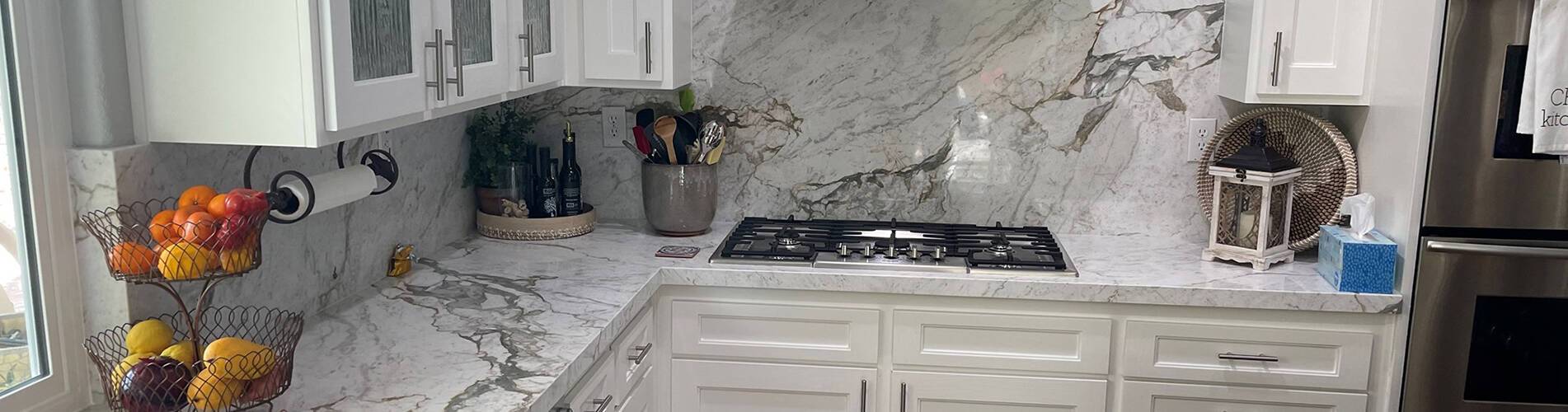
Pietra Grey Marble is a good choice for contractors only when the buyer can confirm what material they are actually buying. In the stone market, “Pietra Grey” may refer to real Iranian Pietra Grey Marble, but it may also be used loosely for similar dark grey marble, China Pietra Grey-style marble, or other grey stones sold under close commercial names. For small and medium contractors, the first job is not only to compare price. It is to confirm the name, origin, appearance, batch, and processing information before offering the material to a client.
Real Pietra Grey Marble is usually linked with Iranian names such as Lashotor Marble, Lashter Marble, Lashator Marble, Persian Grey Marble, Iranian Grey Marble, Graphite Marble, Armani Grey, and sometimes Shakespeare Grey. These names are useful signals, but they are not enough on their own. Some suppliers use similar names because the stone has a dark grey background and white veins, not because it comes from the original Iranian quarry area.
A contractor should treat the name as the first filter, not the final proof. If a supplier only says “Pietra Grey style,” “grey marble,” or “similar to Pietra Grey,” the buyer should ask for more details. The safer description is “Iranian Pietra Grey / Lashotor Marble,” together with block photos, slab photos, and current stock images.
Authentic Pietra Grey Marble is mainly associated with Iran, especially the Isfahan stone region and names such as Lashotor, Lashter, Najafabad, or Shahreza. This origin matters because the commercial value of Pietra Grey comes not only from its color, but also from its recognition as an Iranian dark grey marble.
For contractors, origin affects both price and project communication. If the client asks for real Pietra Grey, a cheaper grey marble with a similar look may not be acceptable. When buying, contractors should ask: Is the block from Iran? Is it from the Lashotor or nearby quarry area? Is it processed in Iran, China, Turkey, or another stone-processing center? Processing in China does not automatically mean the stone is fake, because Iranian blocks can be cut and finished in China. The key is whether the block origin is clear.
Real Pietra Grey Marble usually has a deep grey, charcoal grey, or black-grey background with fine white or silver-white veins. Better batches often look compact, calm, and refined, making them suitable for large wall surfaces. Lower-grade or different materials may show a lighter grey base, cloudy patterns, yellow areas, wide broken veins, or unstable color between slabs.
Contractors should not rely only on small samples. A small sample may look clean, while the full slab may show large color variation, repaired lines, or unwanted patches. For wall panels, full slab photos, dry lay photos, slab numbering, and packing sequence are more important than a single polished sample.
Similar stones should be separated into same-price design alternatives and lower-price budget alternatives. Same-price alternatives compete with Pietra Grey in visual design, while lower-price alternatives mainly compete on cost.
| Alternative Type | Example Materials | Price Level | Main Difference |
|---|---|---|---|
| Same-price name variant | Armani Grey, Graphite Marble, Persian Grey | Similar | May be the same material or a close trade-name overlap; origin must be checked. |
| Same-price design alternative | Nero Marquina, dark grey Italian-style marble | Similar or higher | Stronger contrast or different veining style. |
| Same-price soft grey alternative | Tundra Grey, Fior di Bosco-style grey marble | Similar | Lighter and softer, less black-grey than Pietra Grey. |
| Low-price alternative | China Pietra Grey Marble | Lower | Similar dark grey and white-vein look, but not Iranian Pietra Grey. |
| Low-price grey substitute | Bosi Grey, Bruce Grey, Windram Grey | Lower to mid | Visual consistency and naming can vary greatly by supplier. |
| Low-maintenance substitute | Pietra Grey-look porcelain slab | Variable | Not natural marble; better uniformity, but different value and selling logic. |
Pietra Grey Marble is suitable for marble wall tile and wall panel projects because its best physical advantages are more useful on vertical surfaces than on heavy-traffic floors.
| Property | Common Value | Wall Panel Label | Meaning for Contractors |
|---|---|---|---|
| Density | approx. 2.61–2.77 g/cm³ | Suitable, but heavy | Premium feel and good polishing, but fixing load must be checked. |
| 18mm weight | approx. 49–50 kg/m² | Conditional | Suitable for many wall panels with proper handling. |
| 20mm weight | approx. 54–55 kg/m² | Conditional | Common for lobby wall panels, but may need stronger fixing. |
| Water absorption | approx. 0.17%–0.42% | Suitable | Good for interior walls, but sealing is still needed. |
| Porosity | approx. 0.44%–0.47% | Suitable | Supports polished surface and lower staining risk. |
| Flexural strength | often around 11–12 MPa | Conditional | Large panels need resin, mesh backing, careful cutting, and packing. |
| Compressive strength | approx. 84–108 MPa | Suitable | Enough for cladding, but not the main wall-panel concern. |
| Mohs hardness | approx. 3–4 | Suitable for walls | Fine for vertical use, not ideal for heavy abrasion. |
| Abrasion resistance | Medium | Better for walls | Wall use avoids the main wear issue of marble flooring. |
| Acid resistance | Weak, like most marble | Not a selling point | Do not promote it as acid-resistant countertop stone. |
| Vein matching | Good when slabs are selected well | Suitable | Strong value for lobby and feature walls. |
| Batch stability | Depends on block | Conditional | Needs current slab photos and dry lay control. |
Pietra Grey works well on marble wall tile and panel projects because its dense structure helps create a polished, high-value grey-black surface. On hotel lobbies, apartment lobbies, and reception walls, this density gives the wall a calm and expensive look.
Pietra Grey is practical for interior wall panels because its relatively low water absorption and low porosity reduce moisture and staining risks compared with more open stones. It still needs sealing, but it is easier to manage on vertical interior walls than in wet floors or kitchen countertops.
Pietra Grey is suitable for large wall panels when contractors treat it as a planned wall system, not just loose slabs. Large or thin panels should use mesh backing, resin treatment, reinforced packing, dry lay layout, and suitable fixing methods.
Pietra Grey is better promoted for walls because wall surfaces do not face the same abrasion, impact, and slip issues as floors. This allows the stone’s color, veins, and polished effect to become the main value.
Pietra Grey can be supplied as standard tiles, slabs, cut-to-size panels, bookmatched slabs, or backed panels depending on the project. Small shop walls may use 600×600mm or 600×1200mm marble wall tile. Apartment lobbies often use 18mm or 20mm cut-to-size panels. Hotel feature walls may use large slabs, bookmatched panels, or reinforced composite panels.
The right specification depends on the wall area, visual target, installation method, and replacement needs. Standard marble wall tile is easier for repeated areas, while slabs, custom-cut panels, and bookmatched pieces are more suitable for lobby feature walls. Contractors who are not sure which product form to start with can use a marble wall cladding buying guide for contractors and wholesalers to compare tiles, slabs, custom-cut panels, and bookmatched slabs before requesting a price.
If the project brief points to a dark grey marble wall with a calm and premium appearance, Pietra Grey can then be compared with other grey or black-grey stones. For this comparison, contractors should check Pietra Grey Marble slabs for wall panels by real slab photos, thickness, finish, vein direction, backing condition, and packing details.
Pietra Grey should be purchased by matching its physical properties with the wall application. Contractors should present its density as a premium visual advantage, while also checking wall load and installation method. They should present low absorption as interior-wall confidence, while still recommending sealing and neutral cleaning.
Pietra Grey should also be purchased by batch, not only by name. Large grey-black walls will show color difference, vein density, and repair marks more clearly than small tiles. Before confirming an order, contractors should ask for current slab photos, dry lay photos, panel numbers, finish details, backing information, and packing plans.
Pietra Grey is best sold as a project wall package. For small and medium contractors, this means the offer should include material selection, slab photos, size planning, cut-to-size drawings, surface finish, backing method, packing, and installation sequence. This approach reduces disputes and makes Pietra Grey easier to use in lobby walls, elevator halls, reception walls, and modern interior feature walls.
Categories
New Blog
 ROOM 205,NO.45, MIDDLE HAIJING ROAD,XIAMEN,AREA OF PILOT FREE TRADE ZONE(FUJIAN)OF CHINA
For inquiries about our products or pricelist, please leave to us and we will be in touch within 24 hours.



© Copyright: 2026 XIAMEN EXCELLENT STONE CO.,LTD. All Rights Reserved.

IPv6 network supported