English




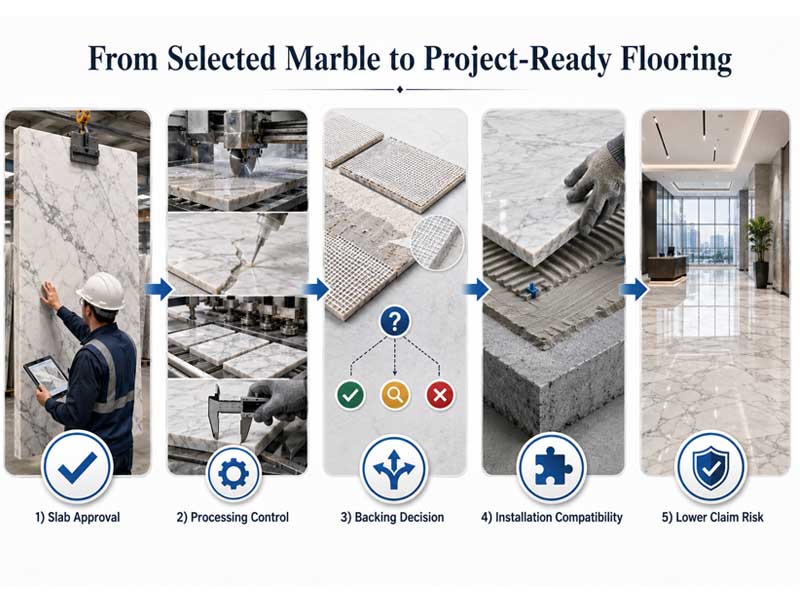
Contents Why are marble slabs mesh backed? Mesh-backed marble types and resin backing Mesh-backed marble bonding risks Should mesh backing be removed? How to inspect mesh-backed marble slabs Supplier, installer and adhesive responsibilities Mesh-backed marble acceptance checklist FAQ Quick Answer Mesh backing is primarily a reinforcement treatment, not an installation system. Resin and fiberglass ...
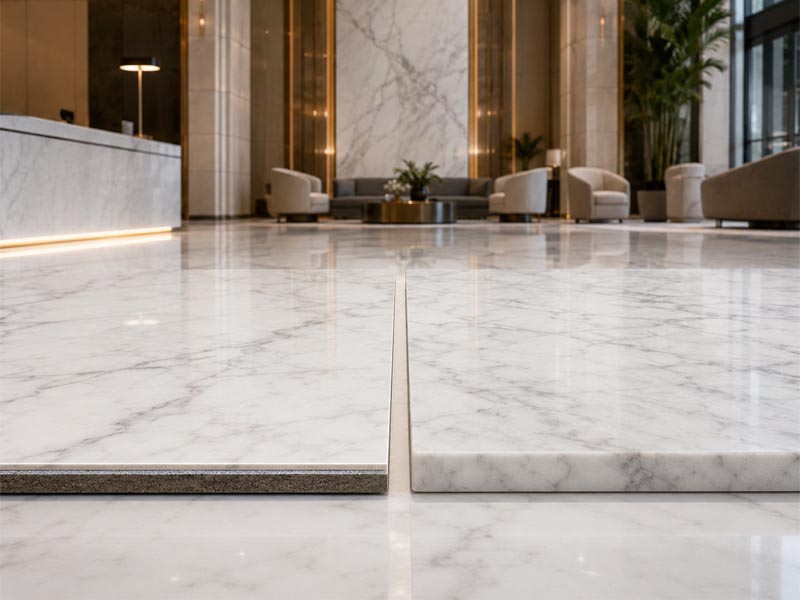
Thin marble panel beside solid marble flooring Commercial marble flooring is not only a design decision. For project buyers, contractors, and stone wholesalers, it is also a decision about weight, cost, installation risk, maintenance depth, and long-term responsibility. Thin marble panels are becoming more common in commercial interiors because many projects want the natural beauty of marble witho...
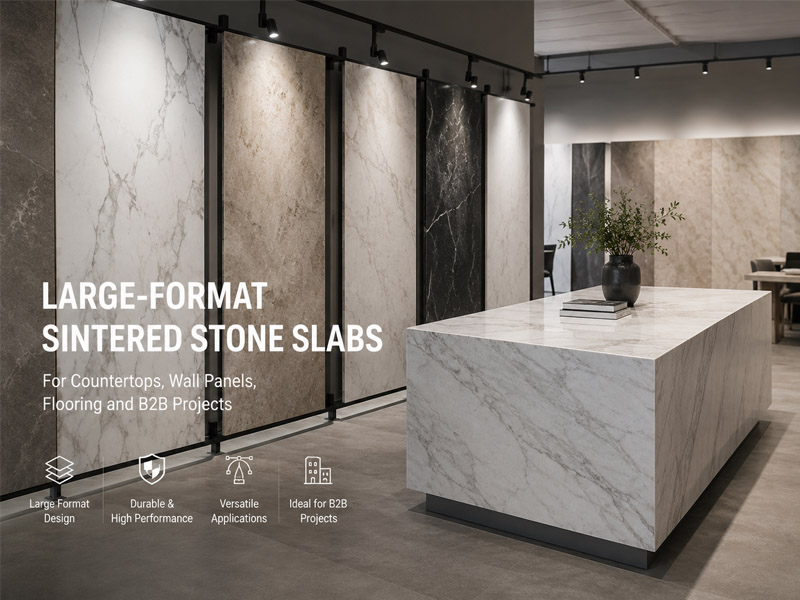
Large-format sintered stone slabs displayed in a showroom for countertops, walls and flooring Sintered Stone Slabs: Sizes, Thickness, Colors and Applications Quick Answer Sintered stone slabs are large-format engineered mineral surfaces used for countertops, wall panels, flooring, table tops, bathroom vanities, commercial counters and architectural interiors. For B2B buyers, the most important sel...
Sintered stone supplier guide for slabs countertops wall panels furniture and export projects Quick Answer: What Makes a Reliable Sintered Stone Supplier? A reliable sintered stone supplier should provide slabs, application advice, samples, test reports, fabrication guidance, packaging and export support. If you are replacing quartz countertops, check whether the supplier understands sintered ston...
Sintered stone slabs, countertop samples and wall panel applications displayed for B2B buyers Quick Answer Sintered stone price depends on slab thickness, size, finish, color, application, fabrication, packaging, order quantity, brand level and supplier capability. Thin 3-6mm slabs may reduce material cost for wall panels, cabinet facing and renovation overlays. Countertops, flooring, table tops a...
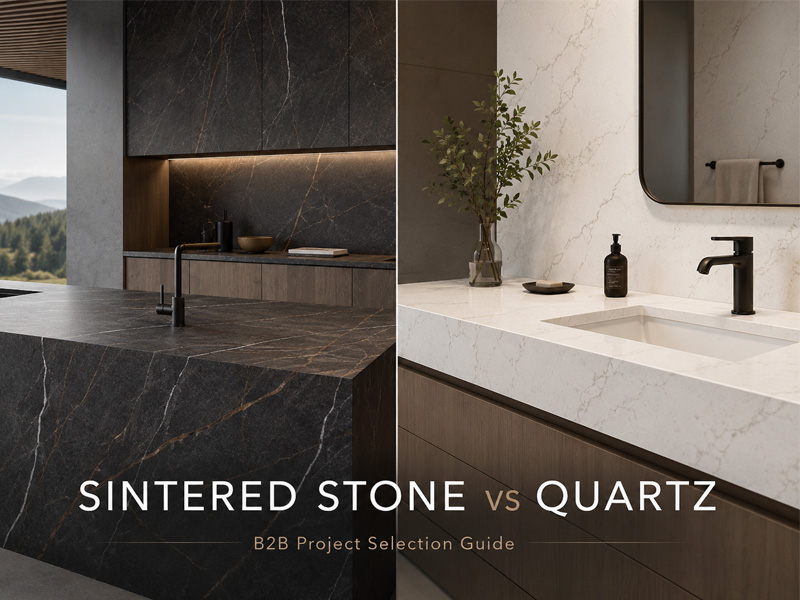
Quick Answer: Which One Should You Choose? For standard indoor countertops, both sintered stone and quartz can work, but they solve different project risks. Choose quartz when the project needs familiar fabrication, mature local installation, consistent colors, and predictable indoor countertop production. Choose sintered stone when the project needs stronger heat resistance, UV resistance,...
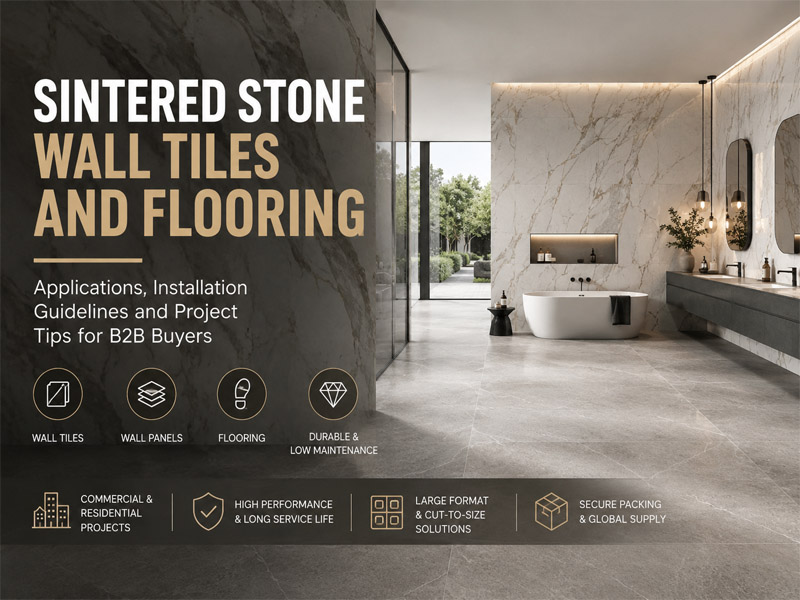
Quick Answer Sintered stone can be used for wall tiles and flooring, but walls and floors need different selection logic. Wall tiles focus on size, joints, wall flatness, moisture resistance and visual effect. Flooring must consider slip resistance, traffic level, surface finish, substrate flatness and installation risk. For standard budget wall or floor areas, porcelain tile may still be p...
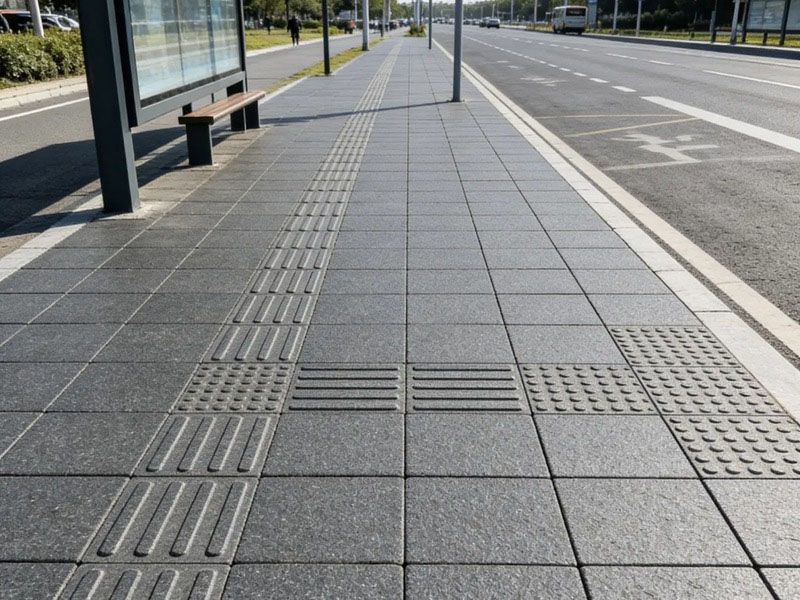
Public-Project Evidence for Outdoor Granite Finish Selection Based on our review of municipal tender projects across North America, Europe, Australia and Southeast Asia, flamed granite is the most practical starting point among the granite finishes used for outdoor pedestrian paving, while bush-hammered granite provides a more regular mechanical pattern. Natural-split and tumbled finishes suit mor...
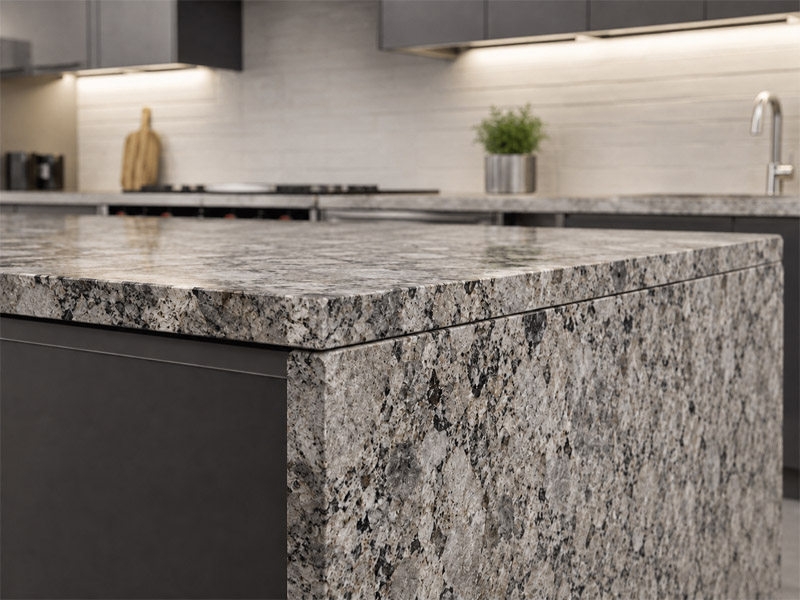
Quick Answer For most imported granite slab orders, 20mm and 30mm are the two main thicknesses to compare. We normally recommend 20mm granite slabs for standard countertop production because they use less stone, cost less and provide better container efficiency. They are suitable for regular kitchen countertops, vanity tops and local fabrication when the finished pieces have normal-sized openings ...
Categories
New Blog
 ROOM 205,NO.45, MIDDLE HAIJING ROAD,XIAMEN,AREA OF PILOT FREE TRADE ZONE(FUJIAN)OF CHINA
For inquiries about our products or pricelist, please leave to us and we will be in touch within 24 hours.



© Copyright: 2026 XIAMEN EXCELLENT STONE CO.,LTD. All Rights Reserved.

IPv6 network supported