English







Quick Answer
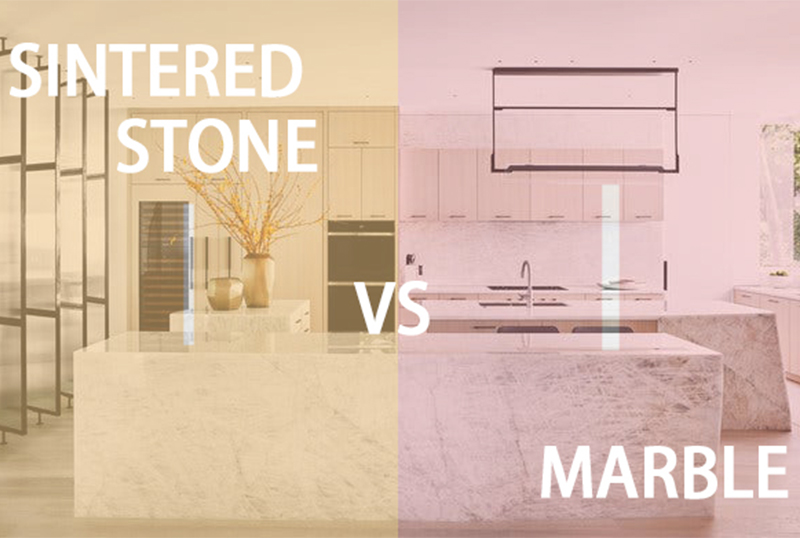
The main decision is not whether sintered stone or marble is universally better. It is whether the project values natural stone character more, or needs stable performance across repeated surfaces.
- Choose marble when natural veining, real stone value and luxury presentation are more important than maintenance control.
- Choose sintered stone when the surface must handle stains, cleaning, moisture, heat exposure and repeated commercial use with less maintenance.
- For B2B projects, consistency is the key difference. Sintered stone is easier to control across countertops, vanity tops, wall panels, dining tables and export orders.
- For marble-look design, sintered stone is usually more practical. It can deliver a similar visual direction while reducing concerns about water marks, acid etching and batch variation.
- The final choice should be based on application, fabrication risk and total project cost, not only slab appearance or material price.
What Are Sintered Stone and Marble?
Sintered stone is an engineered slab made from natural minerals that are compacted and fired under high temperature and pressure. It is designed to be dense, low-porosity and suitable for countertops, walls, furniture and commercial interiors. Marble is a natural metamorphic stone formed over time, with unique veining, color movement and mineral character in every slab. Both materials can create a premium surface, but they serve different project needs. If you need a basic material introduction first, this guide explains what is sintered stone before you compare it with marble by application.
Should You Choose Sintered Stone or Marble?
Choose Marble If You Need Natural Luxury
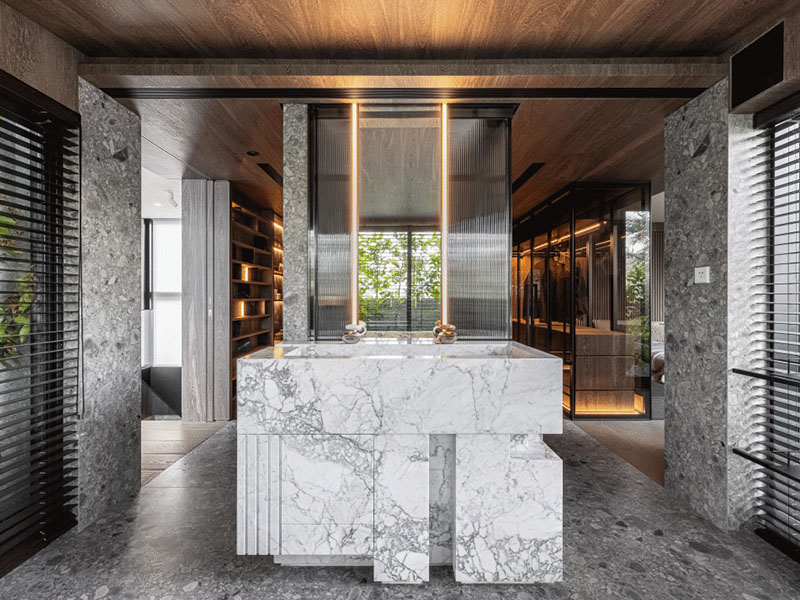
Marble is the right choice when the project values natural stone identity more than low maintenance. Each marble slab has its own veining, shade variation and mineral depth, which makes it difficult to copy completely. This is why marble remains popular in high-end residential interiors, luxury hotel lobbies, private villas, designer bathrooms and statement feature walls.
It is especially suitable for low-touch or decorative areas where the surface does not face heavy staining, frequent food preparation or aggressive cleaning. A marble wall, fireplace surround, reception desk or bathroom accent can provide a level of natural elegance that engineered surfaces may imitate visually but cannot fully replace in material identity.
However, marble requires realistic expectations. It is naturally porous and sensitive to acidic contact, so sealing, careful cleaning and regular maintenance are part of the ownership cost. For clients who accept this maintenance in exchange for natural beauty, marble still has strong value.
Choose Sintered Stone If You Need Practical Performance
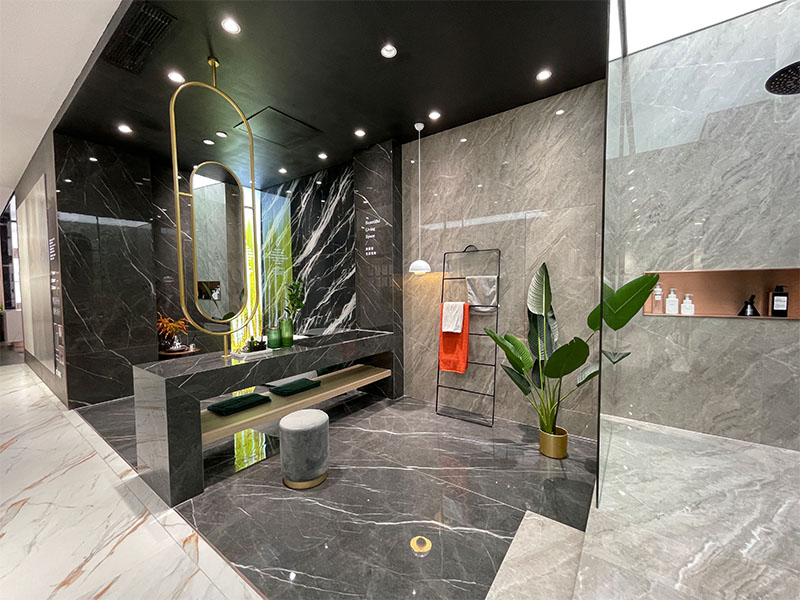
Sintered stone is usually better when the project needs a durable, stable and low-maintenance surface. It is commonly used for kitchen countertops, island tops, bathroom vanity tops, restaurant tables, wall panels and hotel or apartment projects where many pieces must look consistent.
For project teams, the value is not only stain resistance or heat resistance. The bigger advantage is project control. Slab size, thickness, color range, surface finish and batch consistency can usually be managed more predictably than natural marble. This makes sintered stone practical for contractors, furniture manufacturers, hotel developers, distributors and countertop fabricators who need repeatable results across multiple rooms, units or orders.
Sintered Stone vs Marble: Key Differences
| Factor | Sintered Stone | Marble |
|---|---|---|
| Material type | Engineered mineral slab | Natural stone |
| Appearance | Controlled marble-look, stone-look or solid-color designs | Unique natural veining |
| Porosity | Very low porosity | Naturally porous |
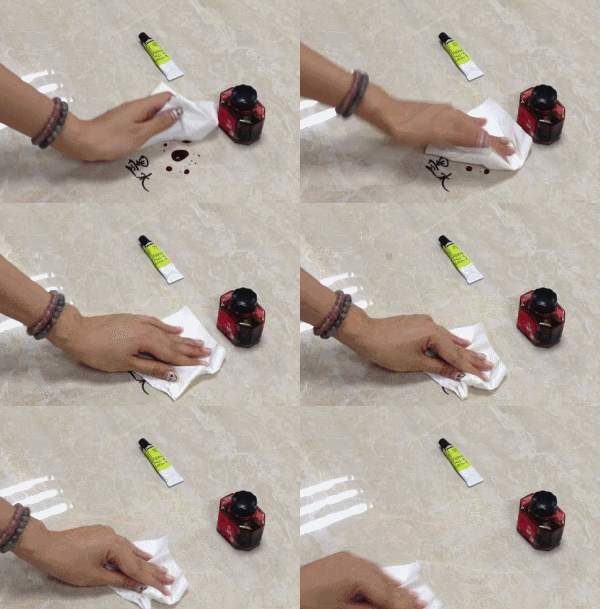
| Stain resistance | Strong resistance to common spills | Can stain if not sealed or maintained |
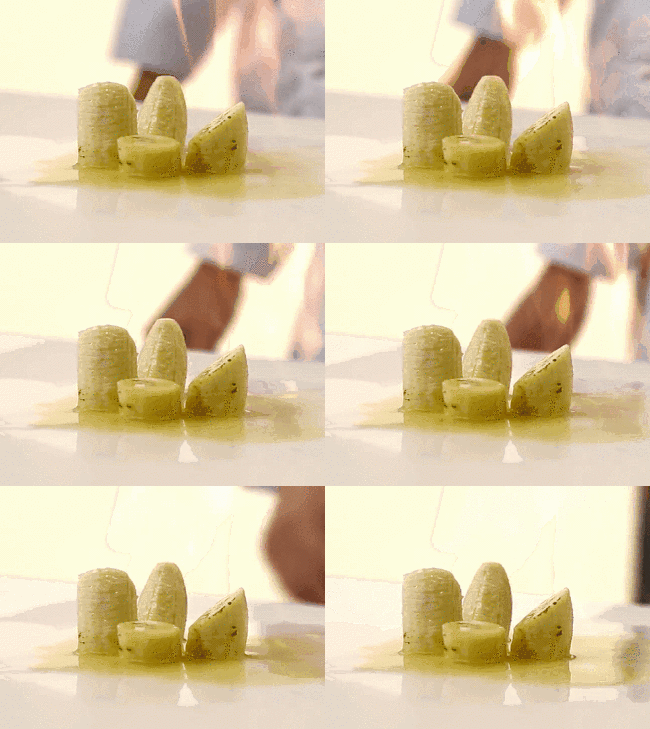
| Acid resistance | Better resistance to daily acidic contact | Can etch from lemon, vinegar or acidic cleaners |
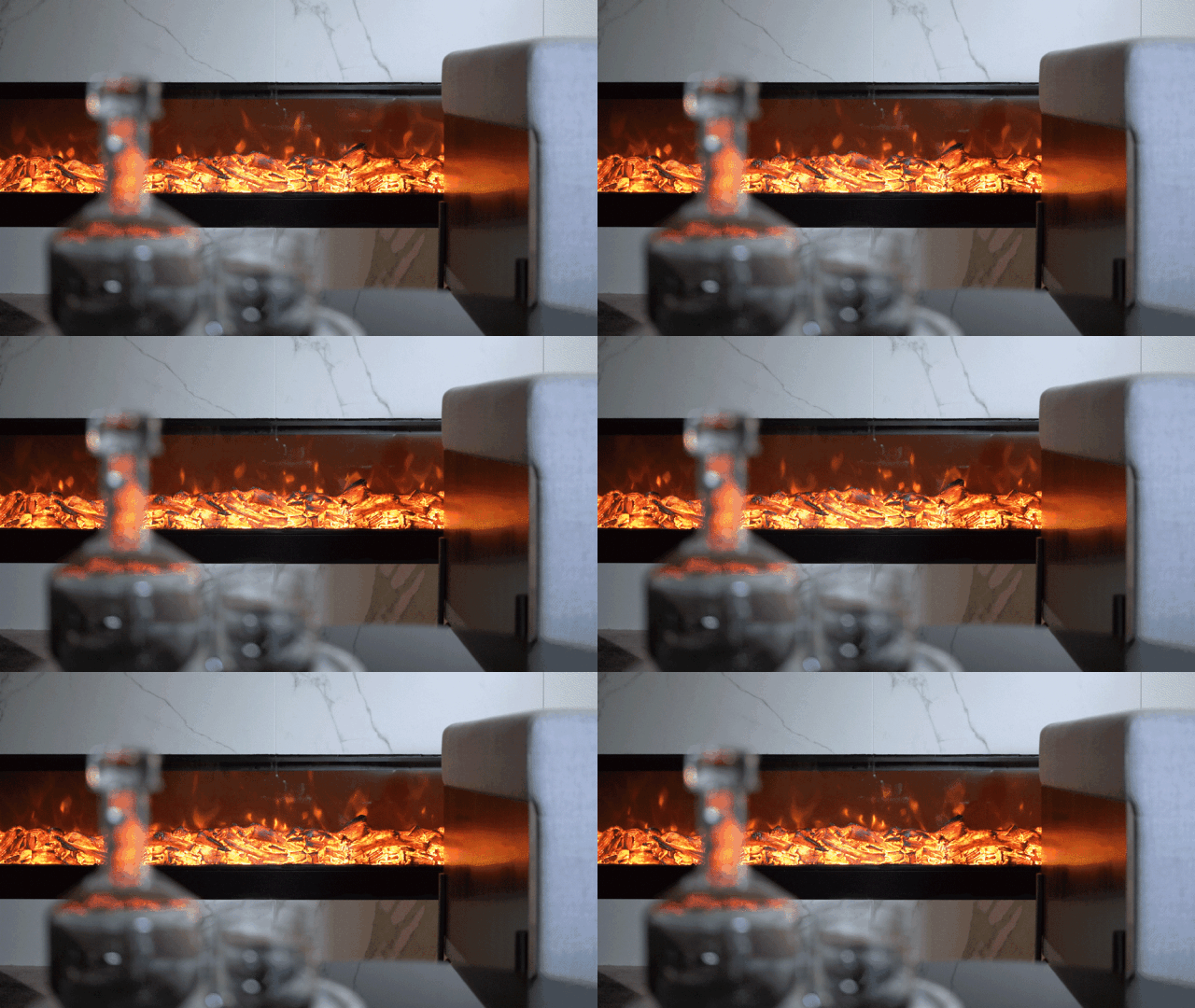
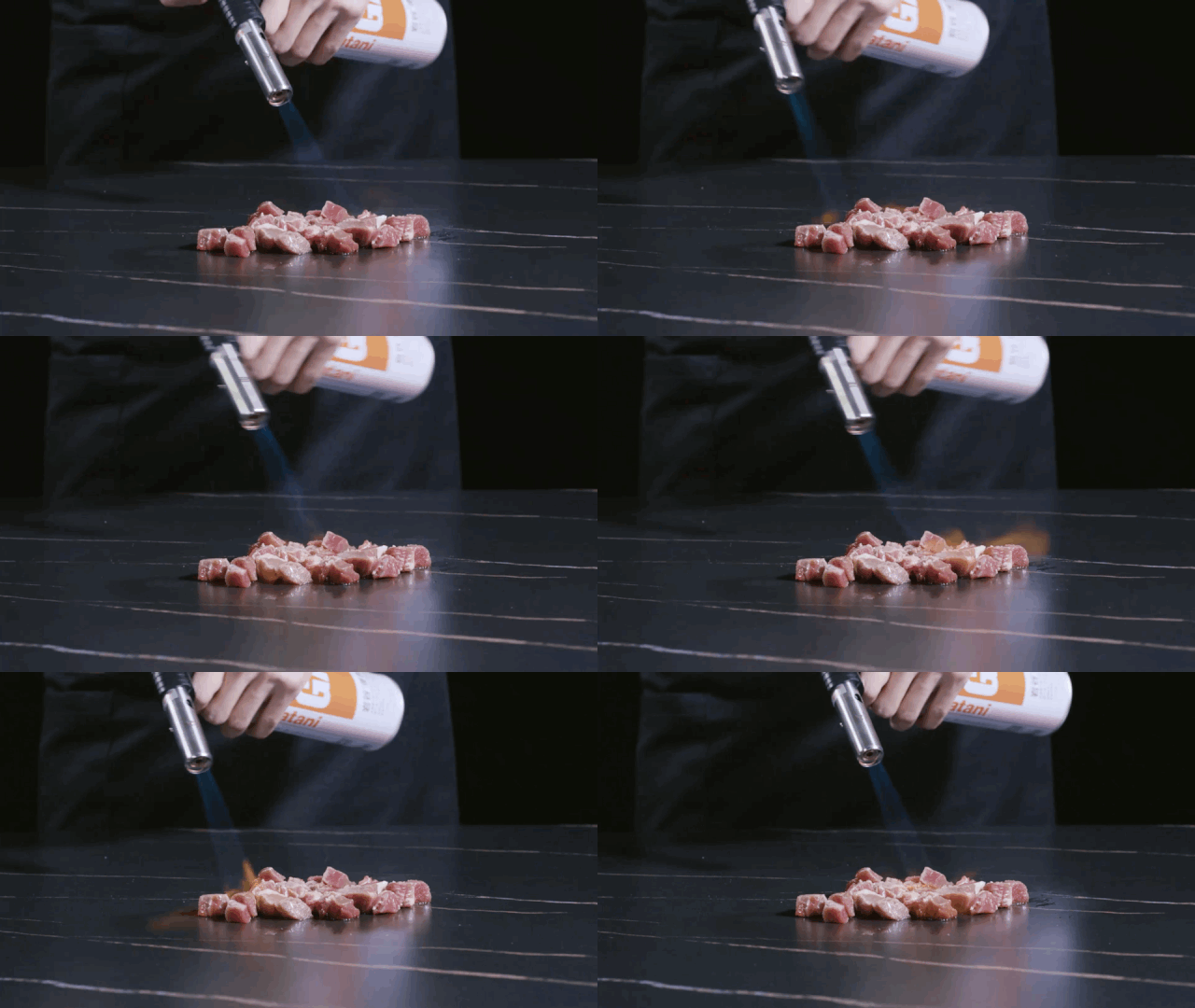
| Heat resistance | Strong heat resistance, depending on product specifications | Good natural heat tolerance, but sealers and finish need care |
| Maintenance | Low maintenance, usually no sealing | Requires sealing and careful cleaning |
| Consistency | Better for repeated projects | Each slab varies |
| Fabrication | Requires skilled cutting, edge work and installation | Easier to shape, but sensitive to staining and etching |
| Best use | Countertops, vanity tops, tables, walls, commercial interiors | Luxury walls, accents, natural stone projects |
This comparison shows why marble vs sintered stone is not only an aesthetic question. Marble wins when natural character is the main value. Sintered stone wins when daily performance, low maintenance and batch control matter more.
Appearance: Natural Marble vs Marble-Look Sintered Stone
Appearance is often the main reason these two materials are compared. The beauty of Calacatta, Carrara and other marble styles is widely valued, while many projects also require a surface that is easier to maintain in kitchens, bathrooms, furniture or commercial spaces.
Natural marble has real mineral depth and organic veining. No two slabs are exactly the same. This is attractive for luxury design, but it can also make large projects harder to control. Color difference, vein direction and slab selection may require more planning, especially when the same design must be repeated across multiple rooms or products.
Marble-look sintered stone offers a different advantage. It can provide a more controlled visual direction, especially when a project needs matching color, repeated table tops, large wall panels or several countertop pieces in the same design. In hotel, apartment, retail and furniture programs, marble-look sintered stone slabs make it easier to compare vein styles, background colors, finishes and batch consistency before confirming the final application.
Still, the material should not be judged only by catalogue images. Sintered stone can imitate marble visually, but it does not become natural marble. Edge appearance, body color, vein depth, surface finish and reflection should be checked with real samples and slab photos before bulk orders.
Countertops and Kitchen Islands: Which Performs Better?
For kitchen countertops and islands, sintered stone is often more practical than marble. Kitchens face oil, coffee, wine, sauce, heat, knives, water and frequent cleaning. Marble can look beautiful in a kitchen, but it needs sealing, careful cleaning and fast spill removal, especially around acidic foods such as lemon juice, vinegar and tomato sauce.
For kitchens, islands and bar counters, sintered stone countertops are often selected when the project requires a marble-style surface with better resistance to daily stains, heat and repeated cleaning. They are also useful for large islands and waterfall edges where a continuous visual effect is important.
Marble countertops can still work in premium residential kitchens, especially when the client accepts natural wear as part of the material’s character. But for rental apartments, commercial kitchens, hotel service areas and high-use residential projects, sintered stone usually gives the project team better control over long-term appearance and maintenance.
Commercial Kitchen and Bar Countertops
Commercial countertops need a different level of performance. Restaurant counters, café bar tops, hotel buffet counters and retail service counters are cleaned frequently and exposed to unpredictable use. In these areas, sintered stone is usually a safer choice because operators need stain resistance, easy cleaning and lower maintenance cost.
Marble can still be used in luxury hospitality spaces, but it is better placed in lower-touch decorative areas or branding surfaces. For high-use commercial counters, the engineered option is normally more practical for daily operation.
Bathroom Vanity Tops and Wet Areas
Marble has long been used in bathrooms because it creates a soft, elegant and natural look. For luxury residential bathrooms, it can still be a strong design choice. The challenge is that bathrooms involve moisture, soap, cosmetics, hair dye, cleaning chemicals and water marks. If the marble is not sealed and cleaned properly, the surface can become stained, dull or etched over time.
In hotel bathrooms and apartment projects, sintered stone vanity tops help keep a consistent marble-look design while reducing concerns about water marks, cosmetics and repeated cleaning. This matters when one project includes dozens or hundreds of similar vanity units. The project is not only choosing a surface material, but also trying to control room-to-room consistency, installation speed and future maintenance.
For boutique bathrooms where natural stone identity is the main design value, marble remains attractive. For repeated wet-area programs, sintered stone usually offers easier project control.
Dining Tables and Furniture Tops
Dining tables and furniture tops are another important application in the sintered stone vs marble discussion. Marble dining tables feel luxurious and natural, but they can be sensitive to wine, coffee, acidic food, scratches and daily family use. For homeowners or commercial clients who accept natural wear, marble can still be a premium choice.
For furniture suppliers, Calacatta White sintered stone table tops can be used for dining tables, coffee tables and loose furniture where the design needs a marble look but also stable size, easier cleaning and export packing. This is especially useful for repeated furniture programs, hotel loose furniture, apartment furniture packages and table top distributors.
In this application, fabrication details matter as much as the slab design. Edge radius, beveling, backing material, corner protection and crate packing should be confirmed before production. A beautiful marble-look surface can still fail in shipment or installation if the table top edge and packaging are not planned correctly.
Wall Panels, Feature Walls and Commercial Interiors
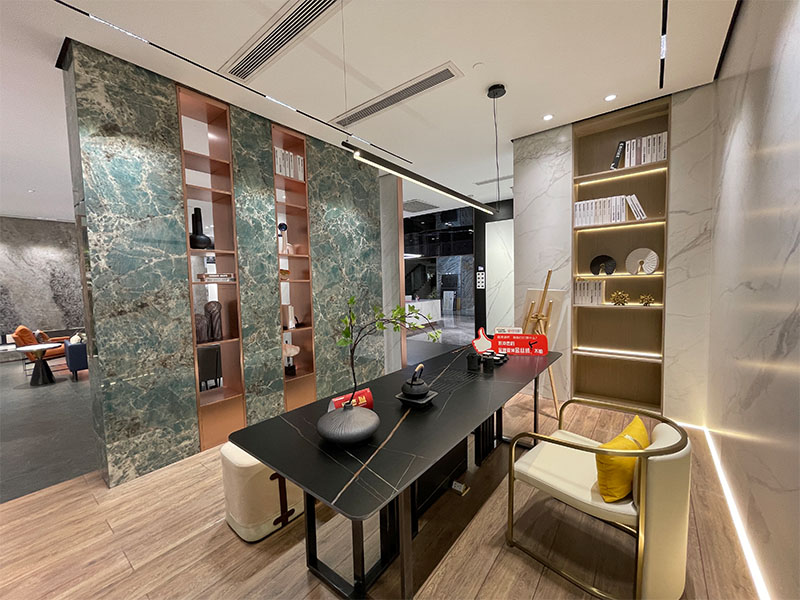
For wall panels, both materials can work well, but they serve different purposes. Marble is ideal when the project wants a natural stone focal point, such as a villa background wall, luxury lobby or private residence feature wall. Its natural variation can become the visual center of the space.
In hotels, retail stores and modern residential interiors, sintered stone wall panels are often chosen for large-format surfaces where consistent veining, lighter maintenance and cleaner installation planning matter. They are suitable for commercial feature walls, elevator surrounds, corridor walls, reception backgrounds and modern residential interiors.
For exterior or semi-outdoor use, product specifications should be checked carefully. Some sintered stone products are suitable for UV exposure and weather conditions, while installation systems, panel thickness and fixing methods must still be designed correctly. Marble can also be used for impressive architectural surfaces, but its weight, porosity and maintenance requirements need more careful project evaluation.
Cost: Material Price vs Total Project Cost
It is too simple to ask whether sintered stone is cheaper than marble. The real question is total project cost.
Marble cost depends on origin, rarity, slab selection, thickness, quality, wastage, sealing and future maintenance. Premium marble can be expensive, and replacement can be difficult if the original batch or quarry selection is no longer available.
Sintered stone cost depends on brand, slab size, thickness, surface finish, pattern technology, fabrication difficulty, edge profile, cutouts, installation and packaging. In many repeated projects, it may offer better cost control because the color and size are easier to repeat.
A useful sintered stone price guide should consider not only slab price, but also thickness, finish, cutting loss, edge processing, packing, transportation, installation risk and future maintenance. For B2B projects, these hidden factors often decide whether a material is truly cost-effective for a commercial or export order.
What Are the Disadvantages of Sintered Stone?
Sintered stone has strong performance, but it is not a material that should be selected only by looking at pictures. Its disadvantages are mostly related to fabrication, installation and supplier capability.
First, cutting and edge processing require skilled equipment and experienced workers. Sink cutouts, faucet holes, mitered edges and long pieces must be handled carefully. Poor processing can lead to chipped edges or cracks around openings.
Second, large-format slabs need proper transportation, lifting and installation. Thin slabs can reduce weight, but they still require correct support and handling. A large wall panel or long island top may be difficult to replace if it breaks during delivery or installation.
Third, not all marble-look sintered stone products have the same visual quality. Some designs look flat, and some edges may not match the surface pattern well. Real samples, slab photos, body color, surface finish and fabrication details should be checked before ordering.
What Should Project Teams Check Before Ordering?
Before ordering sintered stone or marble for a project, clear requirements should be prepared. This helps the supplier check feasibility, cost and production risk before quotation.
Important details include:
- Application: countertop, vanity top, wall panel, table top or flooring
- Slab size and thickness
- Surface finish: polished, matte, honed or textured
- Color and pattern direction
- Edge profile and corner radius
- Sink cutouts, faucet holes and appliance openings
- Shop drawings or CAD files
- Quantity and repeated room types
- Packing method and crate labeling
- Delivery schedule
- Sample approval and inspection photos
Before bulk production, project teams should request marble-look sintered stone samples to confirm color, finish, edge appearance and batch direction. This is especially important for export projects, hotel bathrooms, commercial counters and furniture table tops, where size accuracy and packing details can affect installation speed.
Conclusion
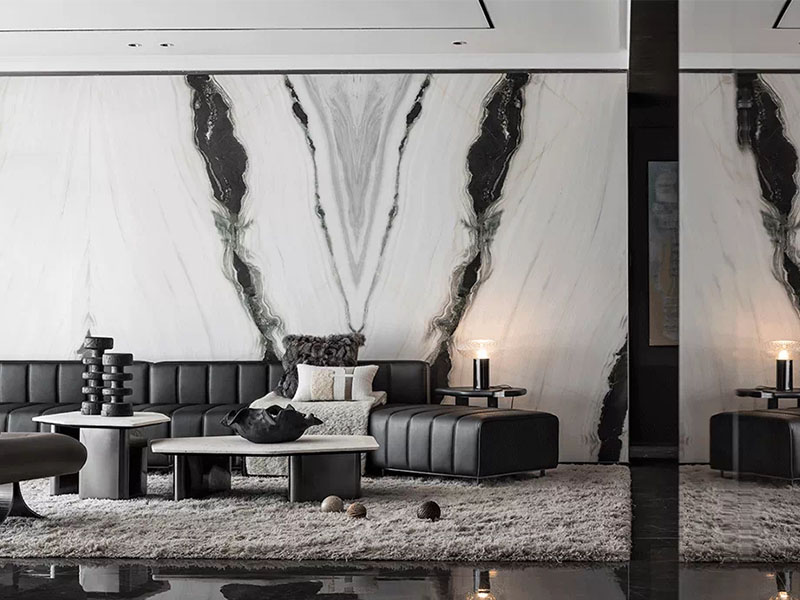
Marble and sintered stone are both premium surface materials, but they are not used for the same reason. Marble is the better choice when a project needs natural luxury, unique veining and real stone value. Sintered stone is usually the better choice when the project needs a marble-look surface with low maintenance, stain resistance, stable color and easier control for repeated production.
For countertops, bathroom vanity tops, wall panels, dining tables and commercial interiors, sintered stone can be a practical alternative to marble. The key is to select the right slab, finish, thickness and fabrication supplier.
To compare materials for countertops, vanity tops, wall panels or furniture projects, send drawings for project support.
FAQ
Is sintered stone better than marble?
Sintered stone is better for low maintenance, stain resistance, heat resistance and repeated project control. Marble is better when natural stone value, unique veining and luxury identity are the main priority.
Does sintered stone look like real marble?
High-quality marble-look sintered stone can look very close to marble, especially in Calacatta and Carrara styles. However, it does not fully replace the natural mineral depth and uniqueness of real marble.
Is sintered stone more stain resistant than marble?
Yes. Sintered stone usually has much lower porosity, so it is more resistant to common stains from coffee, wine, oil and food. Marble can stain if it is not sealed or cleaned correctly.
Can sintered stone replace marble countertops?
It can replace marble countertops in many practical applications, especially kitchens, islands, bathrooms and commercial counters. But when natural stone identity is a primary design requirement, marble remains the better choice.
Which is better for bathroom vanity tops?
For luxury residential bathrooms, both can work. For hotel bathrooms, apartment vanity programs and wet areas that need low maintenance, sintered stone is usually more practical.
Is sintered stone good for dining tables?
Yes. Sintered stone is a strong option for dining tables and furniture tops because it offers a marble-look surface with better resistance to stains, heat and daily cleaning.
Is sintered stone cheaper than marble?
Sometimes, but not always. The total cost depends on material grade, thickness, fabrication, installation, shipping, maintenance and replacement risk. Sintered stone often gives better cost control in repeated or commercial projects.