English




Quick Answer
Marble and granite fail in different ways in transit, so the packing has to be different too. Most export packing information in this industry is written for “natural stone” as one category, and that is where a lot of damage starts.
Marble is a carbonate rock, softer than granite and weaker at the edges. The damage we see on marble is almost never a slab cracked through the middle. It is chipped arrises and broken corners, and it comes from the slab moving inside its own packing. A bundle with 10 mm of play in it will chip marble on a route that leaves granite untouched.
Polished marble also marks more easily. Two polished faces rubbing together for four weeks will dull the gloss. A polished surface left against bare metal, or against trapped moisture, can pick up staining that no amount of repolishing will lift — on a white or light grey material, that slab is finished.
Three things govern how we pack marble, then. The bundle has to be tight with no internal movement. Every polished face has to be separated from the next. And no polished surface goes against bare timber, bare metal or the floor. Everything below follows from those three.
Three systems cover almost everything we ship in marble. Which one you get depends on the product form, not the order size. These are the builds we use for the marble slabs and cut-to-size we supply.
| Packing type | Used for | Structure | Load limit |
|---|---|---|---|
| Double wooden A-frame bundle | Gangsaw big slabs, 2 cm and 3 cm | 50×50–70×70 mm timber, 80×80 mm base, ≥100 mm forklift clearance | ≤ 2.5 t per bundle |
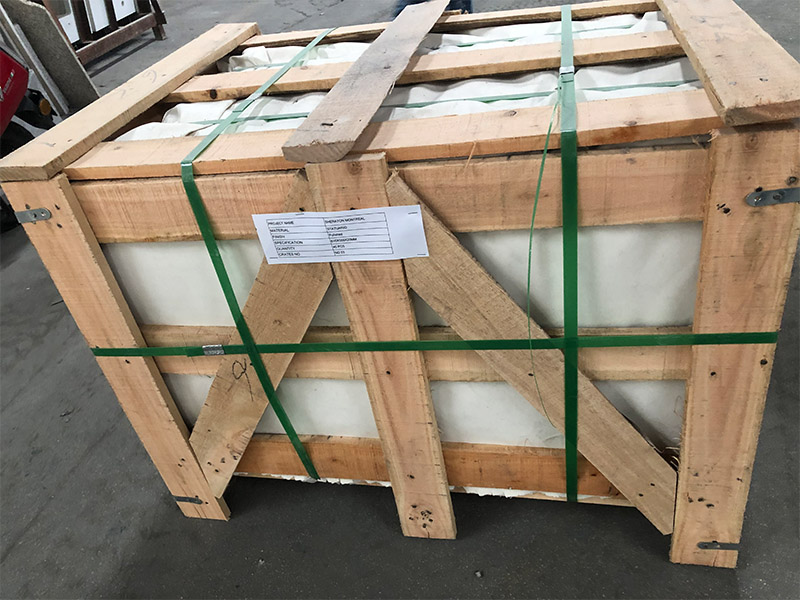
| Wooden crate | Cut-to-size, tiles, project pieces | 18–25 mm base, 12–18 mm walls, 10–20 mm EPE lining | ≤ 1.5 t per crate |
| Foam box inside a wooden crate | Thin tiles | Boxed in foam first, then crated as above | ≤ 1.5 t per crate |
Those are the standard builds. Reinforced versions exist for high-value or oversized material — see what you can specify in your purchase order below.
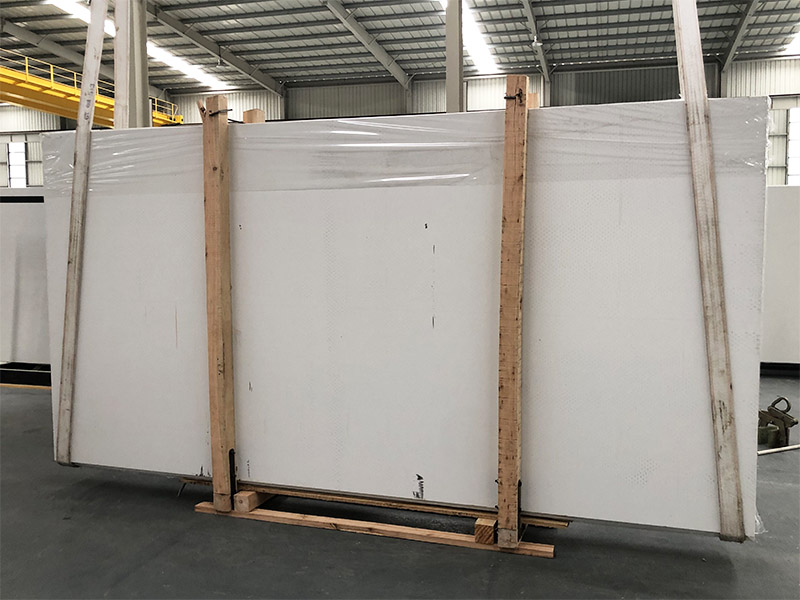
Every bundle of big slabs sits in two wooden frames, one entered from each end. We cut the frames for that bundle, not from a stock of standard sizes, because the inner width has to match what is actually going in.
Frame timber is 50×50 mm or 60×60 mm, pine or hardwood. Heavy work — 3 cm material, larger formats — goes up to 70×70 mm. The base widens to 80×80 mm so the weight spreads instead of pressing down along two contact lines, and the post-to-beam joints get triangular gussets. That is the joint that fails first. Underneath, we leave at least 100 mm of clearance so forklift tines go in clean and never reach stone.
The inner width of the frame is set from the actual total thickness of the slabs going into that bundle, plus 5–10 mm.
That clearance works in both directions. Build the frame dead tight and it will press on the stone the moment the timber swells or the container heats up. Build it loose and the whole bundle works back and forth for a month at sea. Five to ten millimetres is the window.
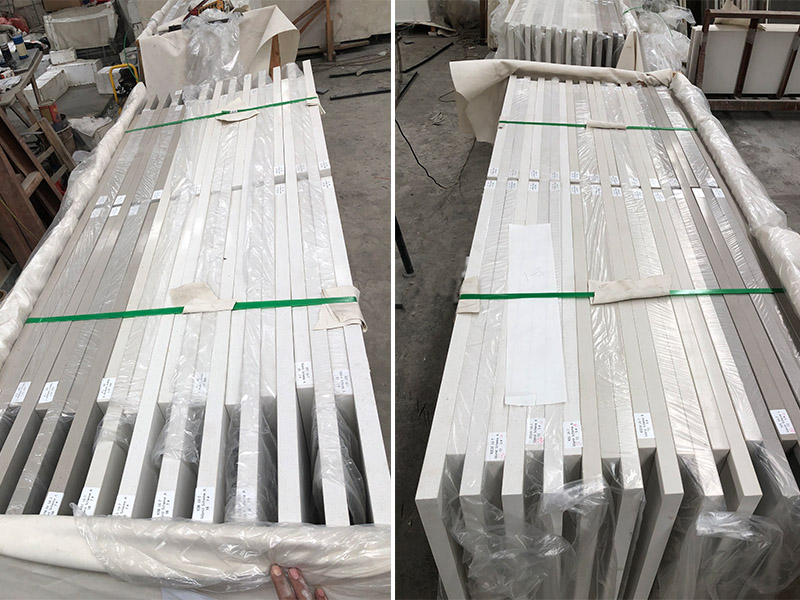
Slabs go in vertically, polished face to polished face, foam between the faces and foam around the edges. We lift the bundle, enter both frames from the ends, and check the gap on each side before anything is fastened. If the frames and the slabs are not tightly matched, the bundle comes apart and gets rebuilt. Strapping it harder does not fix a bad fit. Then the frames come upright and clamp the bundle top to bottom.
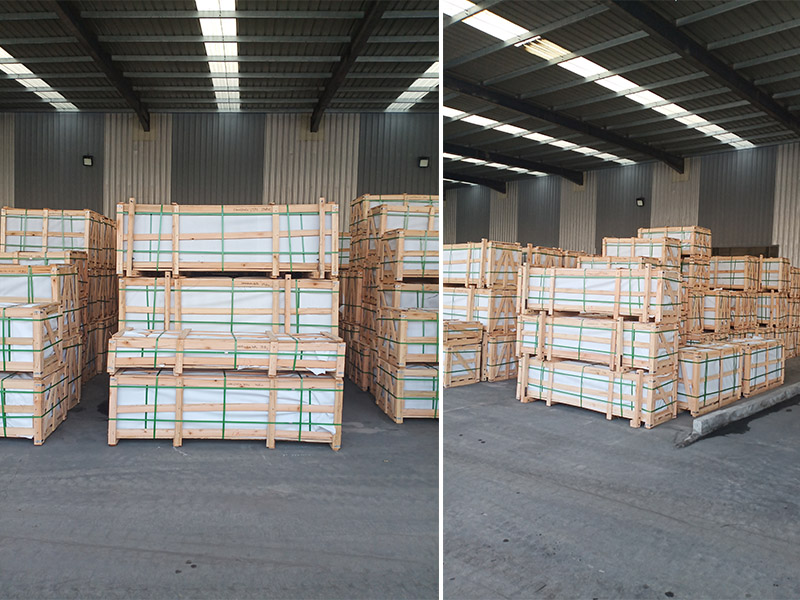
Fastening is at least four transverse straps per bundle in 16 mm PET, crossing points locked off with iron wire, edge protectors under the strap so it cannot cut into the arris. Heavy bundles take a 20 mm iron waistband at each end. Bundle weight is capped at 2.5 tonnes, a limit set by what can be handled safely at both ends of the trip, not by what the frame will carry.
Each bundle is labelled on the side before it leaves the packing bay: variety, specification, quantity, bundle number.
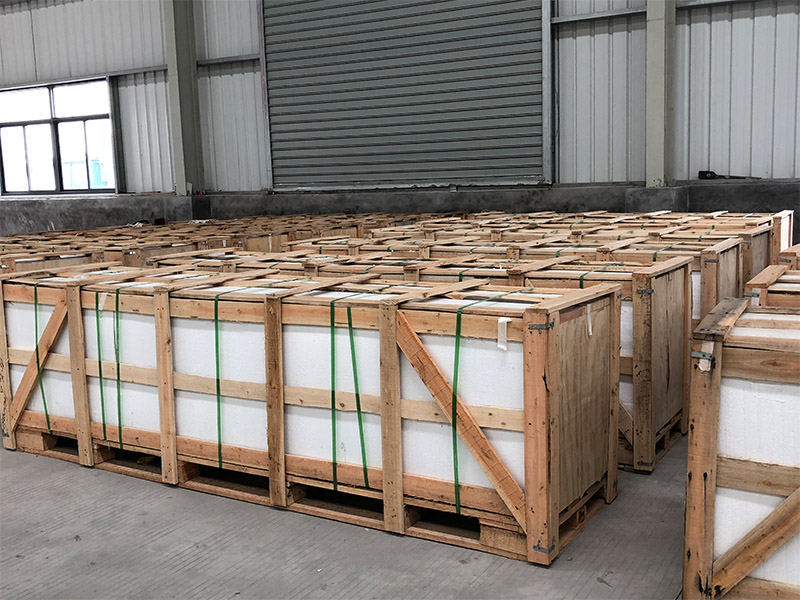
Cut-to-size, tiles and project pieces go into wooden crates capped at 1.5 tonnes.
Crates are built from standard boards and squares. The base runs 18–25 mm, and we take it to 20 mm or more where the crate is loaded heavy. Walls are 12–18 mm; anything standing over 1.5 m tall goes to 18 mm with the sides braced. Inside, 10–20 mm EPE covers every face the stone touches, with edge protectors at the arrises.
We crate the same or closely similar specifications together. Pieces stack face to face and back to back, which halves the number of polished-against-unpolished contacts and cuts friction in transit. They go in tight against each other, no gaps and no looseness. Styrofoam lines the inside of the crate. Multi-layer packing takes a board and a foam layer between each layer, and where small pieces run in several rows, a board divides every row.
Two things happen before a crate is filled. It is set down stable, or tilted slightly backwards, so pieces lean back and cannot tip out during loading. And stone waiting to be packed never sits on the floor — rubber pads or timber strips go underneath it.
Crate width is set so it divides into the 20 ft container's internal width of roughly 2.35 m. Get that wrong and you spend the loading day filling voids.
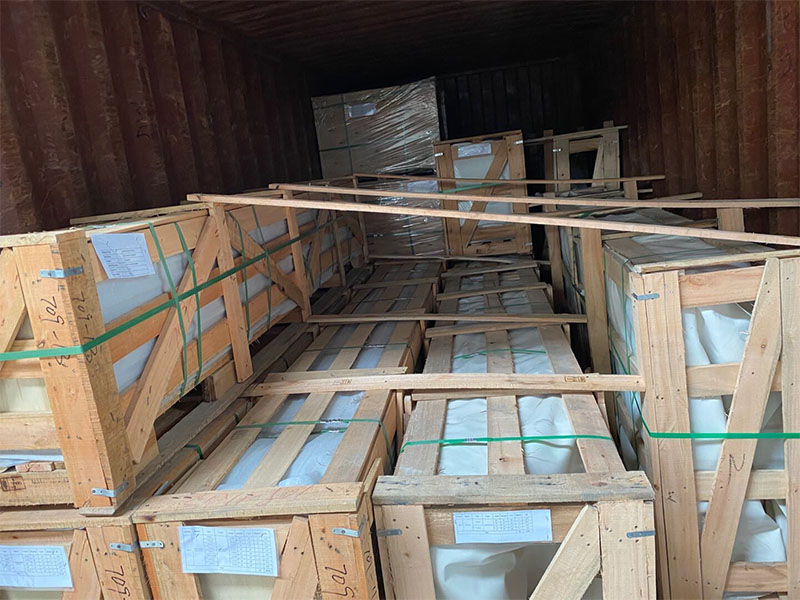
Before a crate closes, the variety, specification and quantity inside are counted against the packing list and written on a label fixed to the side.
All wood packaging leaving us is ISPM 15 compliant, fumigated with methyl bromide, and marked MB.
ISPM 15 is the IPPC standard for solid wood packaging in international trade. It recognises four treatments: heat treatment (HT, core temperature of 56 °C held for 30 minutes), methyl bromide fumigation (MB), dielectric heating (DH) and sulphuryl fluoride (SF). Ours is MB.
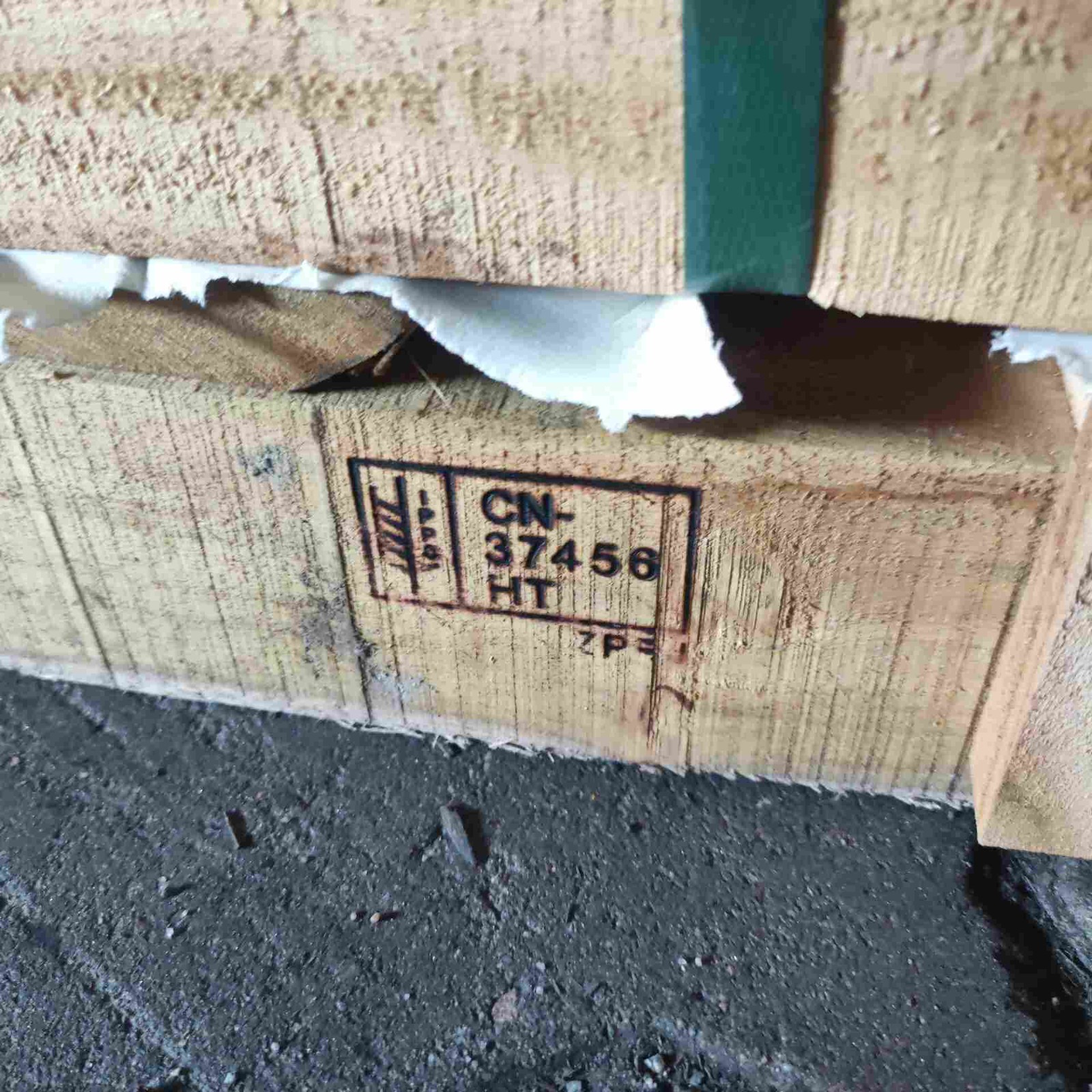
The mark itself is the compliance evidence, not a certificate sitting in a file somewhere. It carries the IPPC symbol, the two-letter ISO country code for where the wood was treated, the treatment provider's unique certification number, and the treatment abbreviation. That is what quarantine reads at the border. We can send you a photograph of it with the treatment documentation for your shipment.
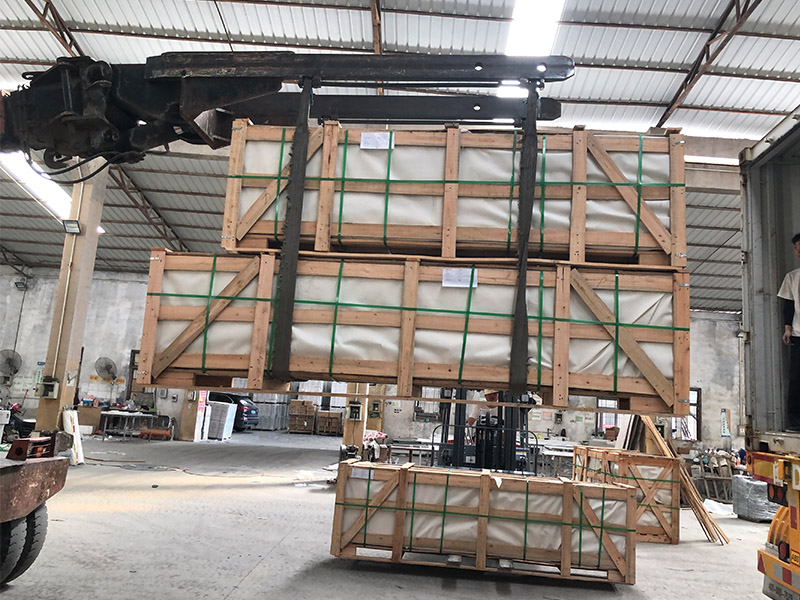
A container of marble hits its weight limit while it is still less than half full, so loading marble is a weight problem before it is a space problem.
Bundles go in along the centre line and spread down the length of the container, so the weight is not sitting over one axle position. That is what keeps the box legal on the road at the far end, not just safe at sea.
We stack staggered, not in straight columns, so vertical load is not running through a single line of frames. Anti-slip rubber strips go between bundles. Voids get braced and filled at loading — a void left alone closes up at sea, and the load shifts with it.
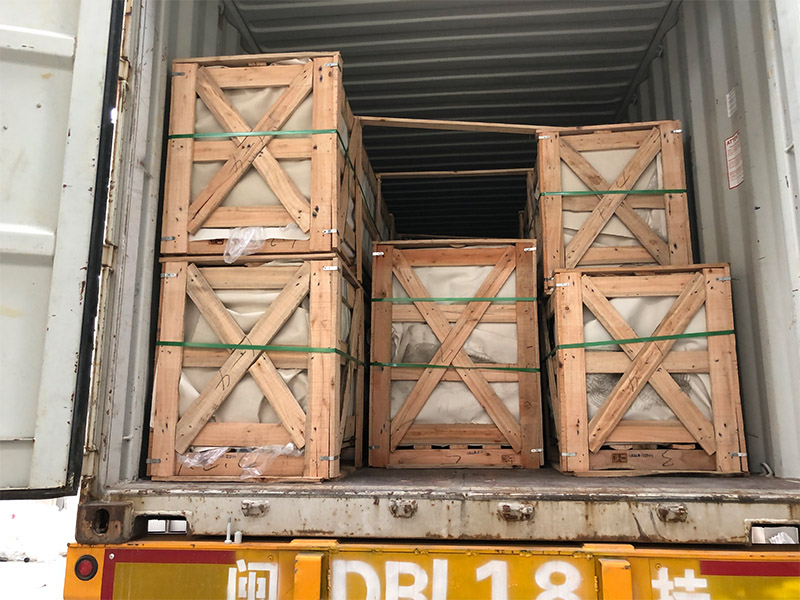
Crates carry a centre-of-gravity mark, lifting points and a moisture label, so whoever opens the container at the other end is not guessing. For securing and weight distribution we work to the IMO/ILO/UNECE CTU Code, which is the international reference for packing cargo transport units.
Short answer: a 20 ft container takes 8–12 bundles at 18–22 tonnes net, which is roughly 330–410 m² in 2 cm or 220–270 m² in 3 cm.
The longer answer matters more, because the figures published for this vary so widely that they are hard to use. Four things move the number: slab format, thickness, the weight of the packing itself, and the road weight limit at the destination. Here is how to work it out for your own order.
Marble runs at roughly 2.7 tonnes per cubic metre. That gives:
At the two common big-slab formats:
| Slab format | Area | Weight at 2 cm | Weight at 3 cm |
|---|---|---|---|
| 2400 × 1200 mm | 2.88 m² | approx. 156 kg | approx. 233 kg |
| 3000 × 1500 mm | 4.50 m² | approx. 243 kg | approx. 365 kg |
1. The container. A 20 ft box is rated at about 30,480 kg gross. Tare runs 2,200–2,400 kg, so structural payload lands around 28,000 kg.
2. The road limit at the destination. This is almost always the real constraint, and it is why published container figures differ so much. In the United States the federal Interstate limit is 80,000 lb gross vehicle weight, with 20,000 lb on a single axle and 34,000 lb on a tandem. Take out tractor, chassis and container tare, and the cargo weight buyers work to sits well under the container's structural payload. European and Australian limits bite the same way at different numbers.
3. The packing. Timber frames and crates are part of the gross weight. They are not free carriage.
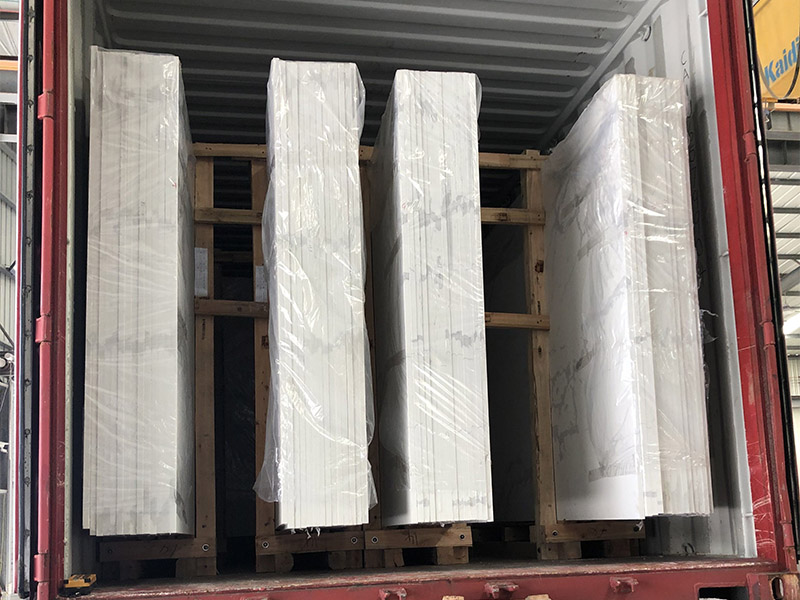
A 20 ft container of marble big slabs normally takes 8–12 bundles at 18–22 tonnes net. Against the figures above, that is roughly 330–410 m² in 2 cm, or 220–270 m² in 3 cm. Exact quantity depends on the format and thickness you order; formats vary between different marble materials, and so does the number of slabs a bundle will take.
Tell us the road weight limit you work to at your destination and we load to it. That is a much cheaper conversation before the container is booked than after it is turned away at the port.
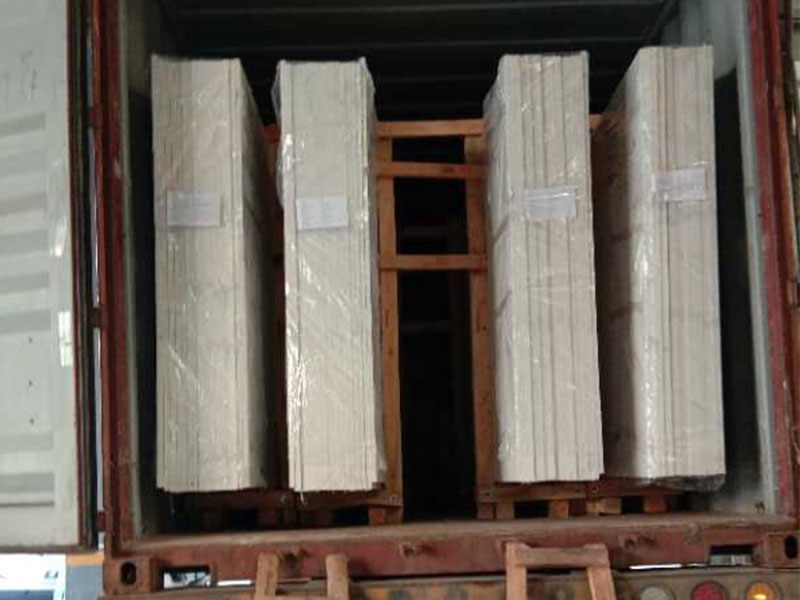
At 2.7 t/m³ a 40 ft container reaches its weight limit long before it is full, so you pay freight on space you cannot fill. Marble moves in 20 ft boxes for the same reason blocks do. A 40 ft only makes sense on lighter or lower-density material.
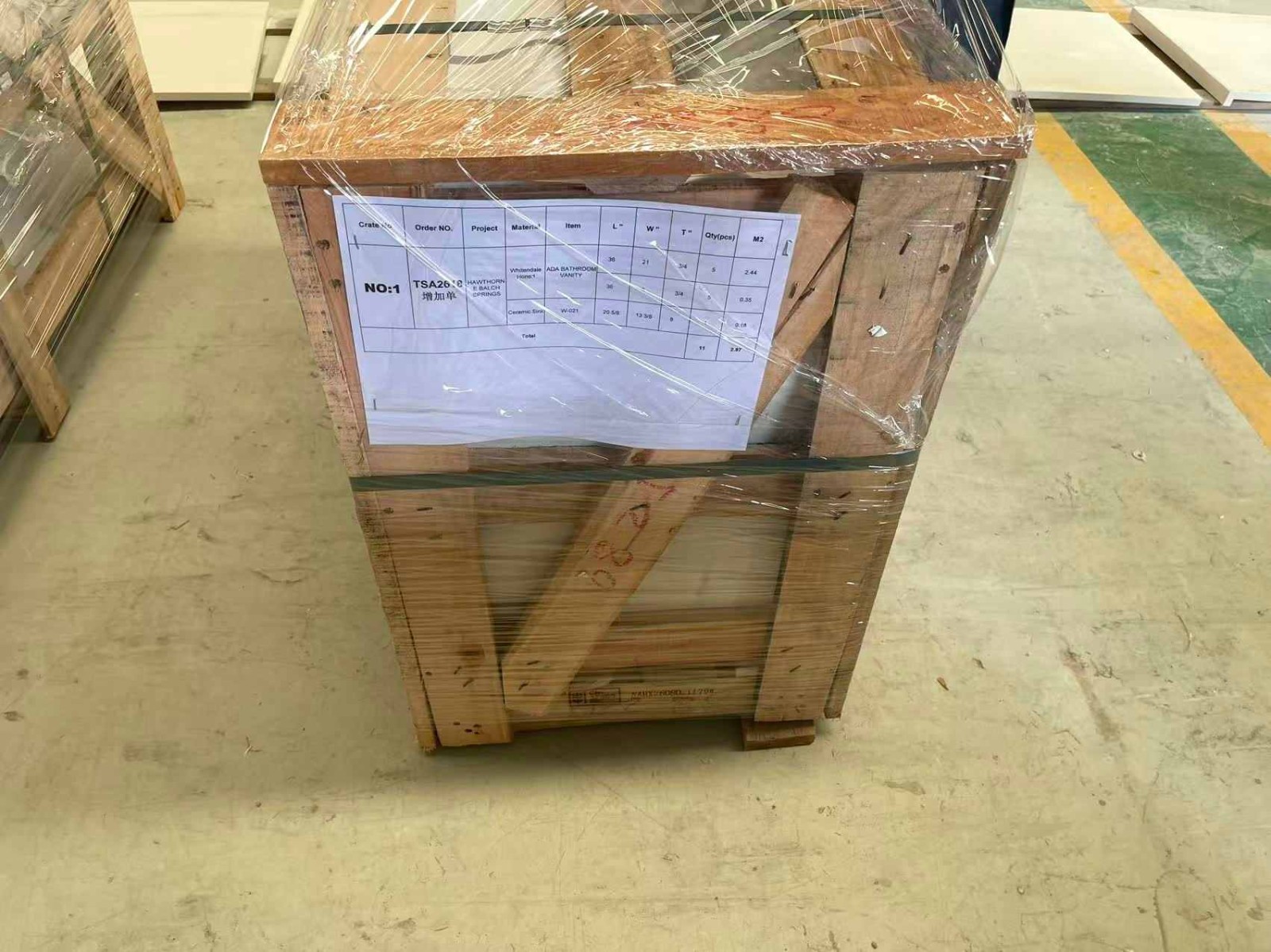
Nothing is packed until it has passed final inspection, and nothing is sealed until QC has signed for it.
Pieces are counted against the packing list, cleaned, and visually checked. Anything that fails goes back to QC and the workshop to be remade. The packer records what went into each crate and bundle, and a QC inspector confirms and signs before the crate closes. That is part of our service on every order.
What it leaves you holding:
If a claim ever has to be made, this is the paperwork that settles it quickly, and it costs nothing to have it on file.
Everything above is our standard build. It can be adjusted, and order stage is when to say so — not once the container is booked.
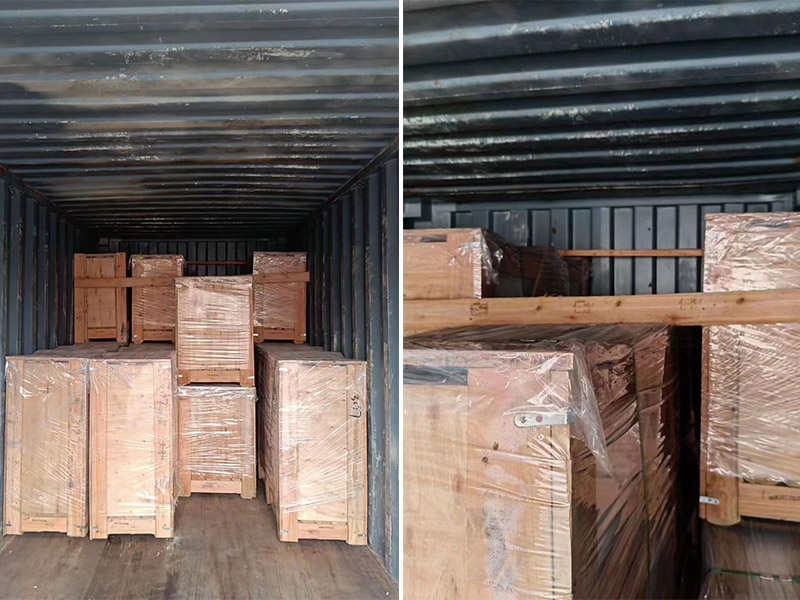
Specify none of it and you get the standard build above, which is set up for a normal 20 ft ocean shipment.
Is your wood packaging ISPM 15 compliant?
Yes. All crates and frames are ISPM 15 compliant and fumigated with methyl bromide. Each one carries the IPPC mark showing the country code, the certification number and the MB treatment code.
How many marble slabs fit in a 20 ft container?
A 20 ft container of big slabs normally takes 8–12 bundles at 18–22 tonnes net, which works out at roughly 330–410 m² in 2 cm or 220–270 m² in 3 cm. The limit is weight, not space.
Can you load to our destination's weight limit?
Yes. Tell us the limit you work to and we load the container to that figure instead of to its structural capacity.
Do you heat treat or fumigate the timber?
We fumigate with methyl bromide. The IPPC mark on the timber carries the MB code. ISPM 15 also recognises heat treatment, dielectric heating and sulphuryl fluoride, and any of the four is valid for import.
Why does marble ship in 20 ft containers rather than 40 ft?
Marble weighs about 2.7 tonnes per cubic metre. A 40 ft container reaches its weight limit well before it is full, so the extra space cannot be used and you pay freight on it anyway.
What should we do if slabs arrive damaged?
Photograph the packing before it is opened, then photograph the damage where it sits in the crate or bundle. Send those together with the loading photographs and packing list from the shipment. Matching arrival condition against loading condition is what makes a claim straightforward to settle, which is why the loading record is worth keeping even when nothing goes wrong.
Can we specify our own packing?
Yes. Packing can be built to your requirement. Tell us at order stage and we confirm the specification before production starts.
Send us the material, format and destination
We will come back with the packing specification and the container quantity for your order, so you know the loaded weight before you book the box. Contact us.
 ROOM 205,NO.45, MIDDLE HAIJING ROAD,XIAMEN,AREA OF PILOT FREE TRADE ZONE(FUJIAN)OF CHINA
For inquiries about our products or pricelist, please leave to us and we will be in touch within 24 hours.



© Copyright: 2026 XIAMEN EXCELLENT STONE CO.,LTD. All Rights Reserved.

IPv6 network supported