English




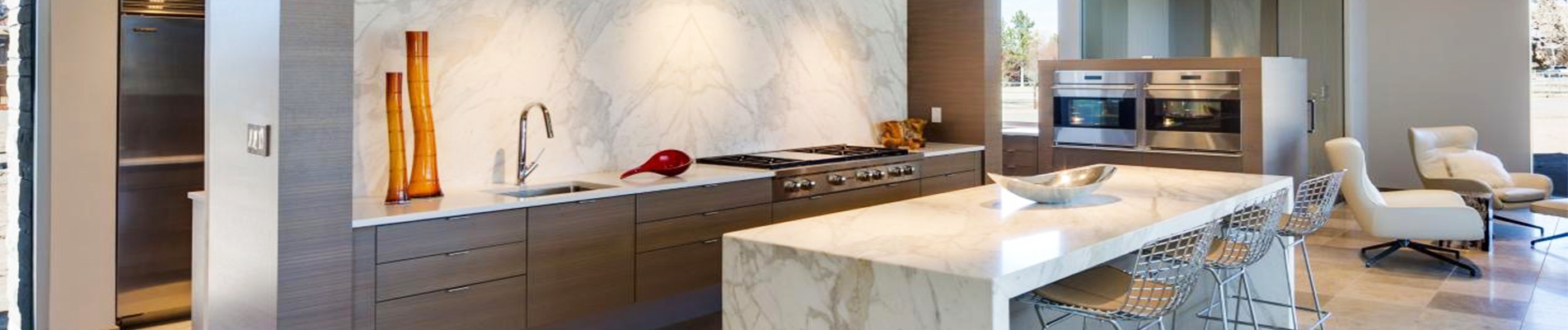
Is Dekton sintered stone? Dekton is Cosentino's branded ultra-compact mineral surface; its high-pressure and high-temperature production puts it in the broad family of sintered mineral surfaces. Neolith vs Dekton: both are Spanish brands serving similar applications, but they use different product systems, collections, sizes, finishes and technical documentation. When can another sintered stone be used instead? When the project permits a material substitution and the alternative meets the design, performance, fabrication and delivery requirements—not merely because it has a similar color.
Dekton, Neolith and Lapitec are brand names. Sintered stone is a wider description of manufactured mineral slabs made through pressure and high-temperature processing. It is therefore possible to compare them, but incorrect to treat the three names as a generic material grade or to label an independent product as genuine Dekton.
| Name | What the name describes | Buyer implication |
|---|---|---|
| Dekton | Cosentino's Spanish ultra-compact surface range | A branded system with its own colors, technical documents and regional supply channels |
| Neolith | A Spain-based branded sintered stone range | A separate collection with its own slab formats, finishes and application guidance |
| Lapitec | An Italian sintered stone brand associated with full-body slabs | Particularly relevant where exposed edges and body appearance matter |
| Sintered stone | A broad material category rather than one manufacturer | A potential alternative when substitution is accepted and required properties are verified |
A brand can simplify a buyer's initial assessment because architects and fabricators may know its history, warranties and supporting documentation. Brand recognition, however, is not the same as project approval. An unbranded or independently branded alternative still needs the right sample, test evidence, cutting method, packaging and delivered specification. These considerations matter more than merely calling a material “Dekton style.”
For an introduction to the underlying material, read what sintered stone is and how it is made.
Both names come from Spain, but they are distinct manufacturers and product systems. Dekton is marketed by Cosentino as an ultra-compact surface; Neolith describes its slabs as sintered stone. These are commercial descriptions, not proof that every model from either brand has an identical body, finish or set of certifications.
| Comparison | Dekton | Neolith |
|---|---|---|
| Brand | Cosentino, Spain | Neolith, Spain |
| Common description | Ultra-compact surface | Sintered stone |
| Thickness guidance | Cosentino's current technical range includes 8, 12, 20 and 30 mm, with other specialist products in some markets | Neolith's product guidance commonly specifies 6, 12 and 20 mm, with selection dependent on application |
| Slab format | Large formats; dimensions vary by collection and region | Large formats; dimensions vary by collection and region |
| Pattern and body | Color, decoration and through-body appearance vary by product | Color, decoration and through-body appearance vary by product |
| Price | Premium branded product; local prices depend on color, size, finish and distributor | Premium branded product; local prices depend on color, size, finish and distributor |
The ranges above describe manufacturer product guidance, not a promise that every color is available in every size or thickness. Confirm the current product sheet and locally stocked format before specifying a large countertop or wall panel.
Which costs more, Neolith or Dekton? There is no reliable universal winner: the price varies with the actual color and thickness, regional stocking, fabrication and installation. A fair comparison should use two quotations for the same finished pieces, not two unrelated slab prices.
Where does Lapitec fit? Lapitec emphasizes full-body sintered stone and offers its own slab and finish system. For a Lapitec vs Dekton decision, the first technical question may be whether the project needs consistent body appearance at exposed edges, not which brand has the more familiar name.
Some buyers have a Dekton reference because its appearance was used in a mood board, not because the project legally or technically requires the original product. That is where a color-led search can help. These are similar visual directions, not identical patterns or authorized Dekton products.
| Dekton appearance requested | Excellent Stone option to review |
|---|---|
| Entzo / Entzo22: white background with grey and gold Calacatta-style veining | Calacatta Gold sintered stone, a white marble-look option with grey and warm-gold movement |
| Aura / Aura 22: white background with flowing grey Calacatta or Carrara-style veins | Oriental Snow Flake White, Saint Blanco Calacatta and Snow White for three different grey-vein interpretations |
| Aura-style finished furniture: similar white-and-grey marble look for a tabletop rather than a raw slab | Calacatta White table tops as a finished-product example |
Start with the overall pattern and then compare vein scale, background white, color temperature, repeat direction and edge appearance. A small chip alone cannot prove that the vein composition will work across a long island or a multi-panel wall. Ask for actual slab photographs and confirm the selected production color before cutting.
Alternatives become relevant when the design team wants a particular stone look, but the named brand is not mandatory. A buyer may need a different delivered cost, shorter sourcing route, private-label range, adjusted slab format or the ability to coordinate several product types in one order. The useful starting point is the project requirement rather than a claim that one brand is overpriced.
An unusually low price needs careful interpretation. Some sellers use “sintered stone” loosely for large-format porcelain. Porcelain is itself a fired mineral-based ceramic, and the categories can overlap; the label alone cannot establish equivalent density, water absorption, strength or suitable applications. Before comparing prices, compare the real product sheets and samples. See our sintered stone and porcelain distinction.
A full-body requirement is different from a request for a printed marble pattern. It may be driven by visible edges, exposed profiles, polished chamfers, mitered corners or the desire for a consistent body tone when the slab is machined.
Excellent Stone has full-body / through-body sintered stone options for such projects. The exact degree of color and pattern continuity must be judged from a real cut sample: a uniform body color does not necessarily mean that a printed face pattern continues through the thickness. For Lapitec-style specifications, review the edge, finish, thickness and fabrication detail together. A new full-body product-series page will be linked here after it is published.
We supply independently branded sintered stone products for projects that allow a substitute material. Available choices include marble-look, stone-look and solid-color directions, selected full-body options, slab formats, custom cut-to-size fabrication and project packing. Sample-based color development, OEM and ODM arrangements can also be reviewed for suitable order quantities.
| What Excellent Stone supports | What the buyer can confirm |
|---|---|
| Color samples and slab photographs | Appearance and production color before approval |
| Different body and finish options | Edge appearance, tactile finish and application fit |
| Thickness and slab-format selection | Piece yield, handling requirements and fabrication plan |
| Cut-to-size pieces, edges and cutouts | Drawings, tolerances and coordination before processing |
| OEM / ODM and project-specific color review | Feasibility, quantity and repeat-order requirements |
| Export packing and project labels | Protection and identification during delivery |
| SGS and other third-party test reports where available | Evidence for the selected model and required property |
Our Chile sintered stone alternative project is an example of the type of order supported; the customer subsequently placed a repeat order.
A wider color overview is available in the online sintered stone showroom. For project review, actual samples and specifications take priority over promotional photography.
A sensible alternative review checks more than the appearance of two product names.
| Review item | Decision to make |
|---|---|
| Brand requirement | Is a named manufacturer mandatory, or are documented substitutions allowed? |
| Color and vein layout | Is the visual direction close enough at full-slab scale? |
| Body structure | Is a printed surface acceptable, or is a full-body appearance required? |
| Slab size and thickness | Will the available format produce the specified pieces with workable handling? |
| Finish and performance | Does the finish meet stain, slip, outdoor and maintenance needs? |
| Fabrication | Can the selected fabricator cut holes, miters and exposed edges correctly? |
| Testing and documentation | Which reports or certificates apply to this exact product? |
| Packing and delivery | Are finished pieces protected and labeled for the project sequence? |
For countertops, the critical details are worktop thickness, cabinet support, sink and cooktop cutouts, and how the edges will be finished. Our sintered stone countertop guide covers those decisions.
For interior walls, consider large-panel layout, backing and fixing, movement joints, access into the site and breakage risk. The wall-panel export and installation planning guide explores this work in more detail.
For outdoor kitchens, a suitable sintered mineral surface may be preferable to common resin-bound quartz where sunlight is persistent. Verify outdoor approval for the chosen finish, weathering performance, supports and local installation requirements. Exterior façades need their own engineered fixing and code review; they should not be treated as a routine countertop application.
Excellent Stone's indicative sintered stone slab range is US$10–50 per m², depending on thickness, finish, design series and order conditions. This is a product-range indication, not a quotation for any specific Dekton, Neolith or Lapitec model, and it does not include every fabrication, freight, tax or installation cost.
A lower initial slab price is useful only if the required pieces can be fabricated, packed and installed without costly replacement. Compare like-for-like drawings, processing, wastage allowances and delivery terms. The sintered stone pricing guide explains why slab prices differ.
The principal material risk is not that sintered stone is soft. It is rigid and brittle, so bad cutting or support can damage a very hard slab. Substitution should therefore be agreed with the fabricator as well as the buyer.
| Detail | Practical control |
|---|---|
| Sink and cooktop cutouts | Confirm exact drawings, corner radii and cutting sequence |
| Exposed edges | Review chips, finish, corner protection and body color on a real sample |
| Mitered corners | Confirm cutting accuracy, bonding details and handling protection |
| Holes and drilling | Confirm positions and use tooling suited to the product |
| Slab handling | Keep correct support and use equipment matched to slab size and weight |
| Local fabrication | Share product guidance and check that the local shop has suitable experience |
Send the design reference and clarify whether the original brand is mandatory. Include the final application, preferred appearance, slab or finished-piece dimensions, thickness, finish, quantity, destination and any required test documents. For cut-to-size work, supply drawings showing edges, openings, holes and the intended installation arrangement. Confirm whether fabrication will be completed before export or locally after delivery.
These details let the supplier assess material availability, sample needs, processing feasibility and packing before quoting. A request such as “Dekton alternative, white marble look” is a useful start, but not enough to fix a project price or confirm a replacement.
Dekton is a particular branded ultra-compact surface; sintered stone is a broader product category. An independent slab may have comparable uses but is not genuine Dekton.
Dekton is a mineral-based ultra-compact surface made using pressure and heat. It is not conventional resin-bound engineered quartz.
No. It is a manufactured surface, not a slab quarried from natural rock.
There is no universally better product. A brand-specified project may need genuine Dekton; an open specification may allow another sintered stone if design, technical requirements, cost and delivery fit.
No. Full-body describes properties extending into the body or edge, while a printed surface can carry its main pattern on the face. Examine cut samples to confirm what the chosen model actually provides.
Market labels can be inconsistent, and fired mineral surfaces can overlap in manufacturing principles. Assess the actual formulation, performance data and standards rather than accepting either name as a quality grade.
Yes. Color or series development, supplied samples, private labeling and processing arrangements can be discussed against a realistic design brief and quantity.
It can be, but there is no reliable fixed discount across models and markets. Compare delivered fabricated cost, not just the price of an unprocessed square meter.
Dekton is a trademark of Cosentino. Excellent Stone is not affiliated with Cosentino and does not present its independently supplied products as original Dekton materials.
For samples, project drawings and a quotation, contact Excellent Stone.
 ROOM 205,NO.45, MIDDLE HAIJING ROAD,XIAMEN,AREA OF PILOT FREE TRADE ZONE(FUJIAN)OF CHINA
For inquiries about our products or pricelist, please leave to us and we will be in touch within 24 hours.



© Copyright: 2026 XIAMEN EXCELLENT STONE CO.,LTD. All Rights Reserved.

IPv6 network supported