English




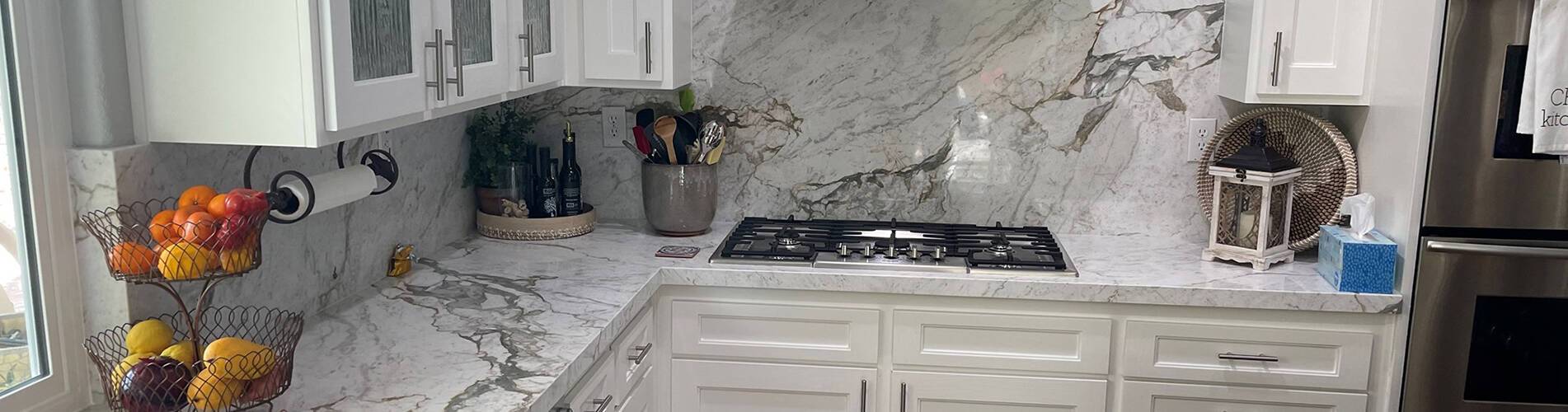
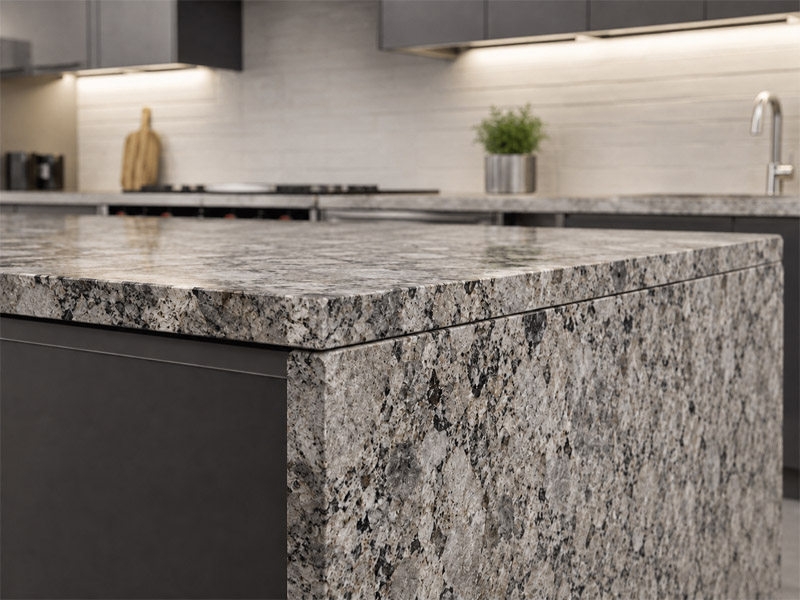
Quick Answer For most imported granite slab orders, 20mm and 30mm are the two main thicknesses to compare. We normally recommend 20mm granite slabs for standard countertop production because they use less stone, cost less and provide better container efficiency. They are suitable for regular kitchen countertops, vanity tops and local fabrication when the finished pieces have normal-sized openings ...
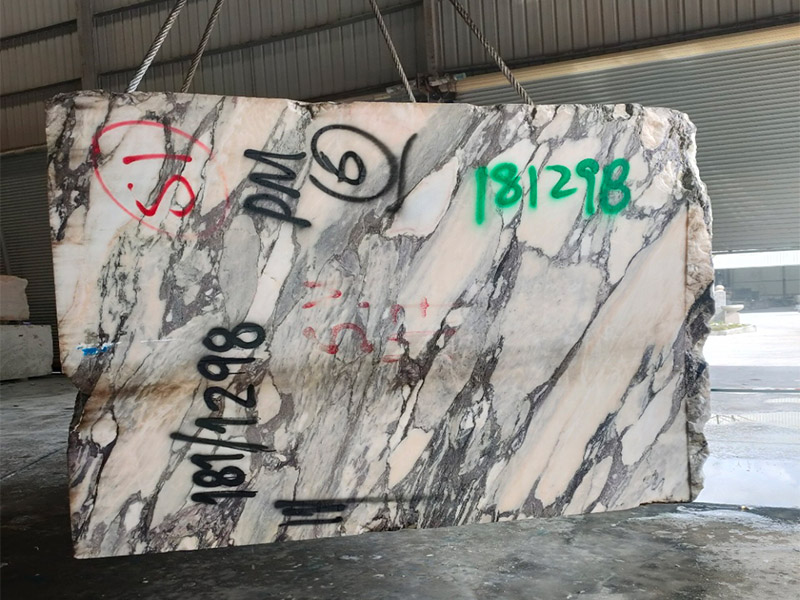
Quick Answer By price: Italian Calacatta Viola offers the richest burgundy color and is usually the most expensive. Turkish Viola has similar breccia patterns but softer color at a lower price. Chinese material is cooler and greyer and is typically the least expensive. By slab appearance: Choose bright slabs with balanced creamy-white areas, rich burgundy breccia and natural, continuous movement. ...
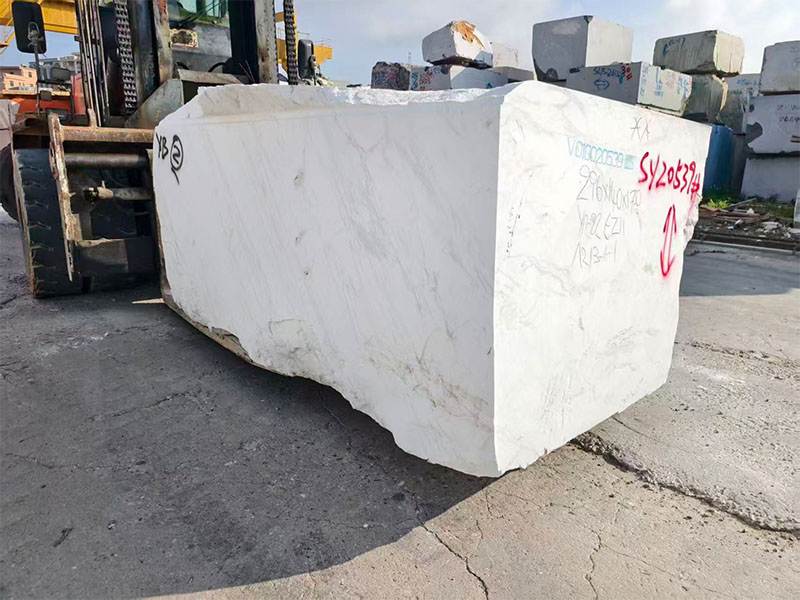
Quick Answer Spider and JPAPA are the most widely accepted Volakas marble selections in the international slab market we observe through Shuitou. Dionyso follows, while the Large Quarry commercial selection appears less frequently in export trading. Here, “most popular” refers to market circulation, export selection frequency and acceptance among overseas stone buyers from Shuitou, a m...
Quick answer: To choose white marble slabs, match three things — the look you need, the environment the stone has to survive, and your supplier's ability to keep a whole order consistent. Pick the variety by the effect you want. Choose calcite or dolomite marble based on how wet the space is, because calcite marbles yellow. Then put the grade criteria, slab size, thickness and finish in writ...
The harder part is to verify a Chinese marble supplier and make sure its quotation and actual marble refer to the same product before you commit to the order. For an overseas buyer, the process comes down to six questions: Who actually controls the material, fabrication and quality control? Which marble blocks or slabs are available for your order now? Are competing quotations based on the same sp...
Quick Answer For a U.S. marble shipment, customs preparation should start before the container leaves the factory. Your broker needs a clear description of the goods, their processing state, country of origin, a reviewed HTS classification, and commercial and packing information that describe the same shipment. For ocean freight, key ISF information is required before or around shipment departure,...
Quick Answer To verify a Chinese marble supplier, do not rely on one business license, factory photo, certificate, sample, platform badge or project image. Check seven core areas: Legal identity — Is the Chinese company real and active? Transaction identity — Who are you contracting with, whose chop is on the contract, and who receives payment? Production control — Who actually c...
Quick Answer A pre-shipment inspection should not give every marble slab the same checklist and the same inspection effort. First confirm that the slabs being inspected are the actual slabs or batch you approved. Then concentrate on the risks that matter for that particular marble: structural soundness, repairs, dimensions, finish, usable area, or visual consistency. On a first order, material ide...
Quick Answer A marble dry lay inspection is an inspection of relationships. Finished pieces are laid out dry, in the positions the drawing gives them, so you can see what they look like as one surface instead of as a stack of individually passed QC results. Which orders that is worth doing on, and which it only buys handling on, is the narrower question below. On projects that use a physical dry l...
Categories
New Blog
 ROOM 205,NO.45, MIDDLE HAIJING ROAD,XIAMEN,AREA OF PILOT FREE TRADE ZONE(FUJIAN)OF CHINA
For inquiries about our products or pricelist, please leave to us and we will be in touch within 24 hours.



© Copyright: 2026 XIAMEN EXCELLENT STONE CO.,LTD. All Rights Reserved.

IPv6 network supported