English




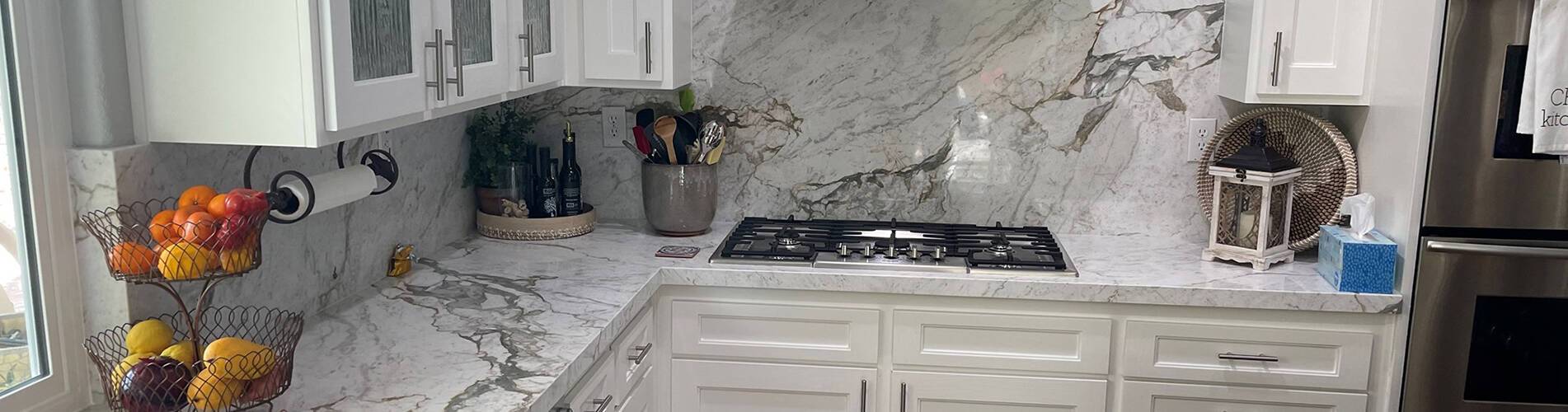
The harder part is to verify a Chinese marble supplier and make sure its quotation and actual marble refer to the same product before you commit to the order.
For an overseas buyer, the process comes down to six questions:
China supplies domestically quarried marble, but it is also an important processing and trading centre for imported natural stone. Blocks from Italy, Turkey, the Middle East, Brazil and other origins are brought into China, processed into slabs or finished products, and exported worldwide. Shuitou in Fujian is one of the main locations where slab inventories and fabrication factories are concentrated.
That makes importing marble slabs from China different from buying a standardized manufactured product: you need to choose both the supplier and the actual natural material.
Contents
When buyers search for a China marble supplier or consider buying marble direct from a Chinese factory, one common assumption is that a genuine factory should also own the quarry.
That is often the wrong test for imported marble.
A Chinese supplier may process domestically quarried stone, imported blocks, slabs from its own inventory, or material sourced from specialist slab and block suppliers in Shuitou. What matters commercially is whether the company can identify and reserve suitable material, control fabrication and remain responsible for QC and delivery.
The origin of the marble and the location of fabrication are separate facts. Italian marble processed into slabs or cut-to-size pieces in China remains Italian-origin marble.
Before ordering, establish:
These questions tell you more than labels such as “factory direct” or “quarry direct.”
There is no single best channel for sourcing marble from China. Online platforms, the Xiamen Stone Fair, the Shuitou stone market and factory visits serve different purposes.
Online sourcing platforms are useful for finding suppliers, comparing basic product ranges and sending initial RFQs.
They are best used to answer:
They are less useful for confirming:
A supplier profile or product photograph does not by itself show current slab availability, material allocation or fabrication control.
The Xiamen Stone Fair is useful for meeting many stone suppliers within a short period, comparing product categories and building a shortlist before further verification.
It can reduce the time needed for initial supplier discovery, especially for buyers planning regular stone imports. A trade-fair booth, however, should still be by material and production verification before a substantial order is placed.
If the order value or future purchasing volume justifies the trip, visiting Shuitou in person can be especially useful when buying marble slabs from China.
Natural marble sold under one commercial name may include different blocks, backgrounds, vein patterns, slab sizes and price levels. In Shuitou, buyers can compare current inventory rather than relying only on catalogue photographs.
Useful things to compare include:
The material search can then be combined with a factory visit. The slab market answers whether the right material is available; the factory shows whether the supplier can fabricate and inspect it correctly.
Visiting Shuitou to source marble?
Excellent Stone is a China marble supplier based in Shuitou, with access to marble slab displays and a processing factory. Buyers can compare current slabs first and then review fabrication and QC in the factory instead of making the entire purchasing decision from catalogue images.
Once you have a shortlist, the main question is whether the supplier can handle the product and order requirements you actually have.
A factory may quote thousands of square metres of monthly capacity, but the number is meaningless unless you know what it measures.
Slab sawing volume and finished cut-to-size output are not the same.
For example, our stated capacity of approximately 8,000 m² per month refers to finished countertops and cut-to-size production rather than raw slab sawing volume.
“Do you have CNC?” is too broad a question.
Ask what equipment is used for your actual product, how many machines are available and whether similar work is currently in production.
The point is not to count machines. It is to confirm that the factory regularly performs the fabrication your order requires.
During a Chinese marble factory visit, pay more attention to current production than to the showroom.
Check:
A factory visit is useful but not essential for every order.
Remote buyers can request:
The principle is simple: replace general claims with evidence linked to the actual order.
A common mistake when buying marble from China is comparing price before confirming what each supplier is pricing.
A useful RFQ should define:
This makes competing quotations comparable.
Terms such as Grade A, Premium Grade or First Choice are commercial labels unless the supplier defines what they mean.
Instead of comparing the grade name, compare:
The written specification matters more than the grade label.
| Compare | What to Confirm |
|---|---|
| Material | Commercial name and origin |
| Selection | Acceptable colour and vein range |
| Thickness | Nominal thickness and tolerance |
| Finish | Polished, honed or other |
| Slab size | Actual available dimensions |
| Area | How invoiced slab area is measured |
| Repair | Resin, mesh and reinforcement expectations |
| Fabrication | Edges, holes, cut-outs and CNC work |
| Packing | Included or charged separately |
| Quantity | MOQ and trial-order conditions |
| Incoterm | FOB, CIF or other term plus named port |
| Lead time | When the production period starts |
| Payment | Deposit and balance basis |
Natural marble slabs have irregular edges, so price per square metre alone is not enough to compare two offers.
Our slab quotations deduct unusable irregular portions and calculate the actual usable slab area rather than simply charging the maximum rectangular length × width.
Two suppliers can therefore quote a similar unit price while calculating the invoice on a different area basis.
The landed cost of importing marble from China may include:
Excellent Stone normally quotes FOB Xiamen when FOB terms are requested, but buyers should compare the final landed cost rather than only the supplier's price per square metre.
MOQ, trial-order conditions, lead time and payment terms should also be confirmed before ordering. For luxury marble slabs, our orders generally start around 50 m², although trial orders can be discussed.
This is one of the most important differences between importing natural marble and buying a standardized manufactured product.
A small sample can show general colour, vein tone and finish, but it cannot show the full visual range of several slabs.
For appearance-sensitive work, do not rely only on:
Instead of expecting every slab to match one ideal sample, define an acceptable visual range.
This may include:
For natural marble, an approved range is usually a more realistic purchasing control than one isolated sample.
Before finalizing an appearance-sensitive order, ask for photographs of the actual slabs available for allocation.
Useful information includes:
Numbering allows approval and rejection to refer to specific slabs rather than vague descriptions such as “the whiter slab” or “the one with less grey.”
Slabs from the same block, especially consecutive slabs, generally provide the best available control over visual continuity, although natural variation can still occur within one block.
This can be particularly useful for:
A quotation confirms the commercial basis of the order. It does not necessarily mean that the slabs shown to you have been reserved.
For appearance-sensitive marble, confirm the actual slabs before treating the material selection as final. Once selected slabs are reserved in our slab orders, the agreed slab price is locked.
Need to select slabs before fabrication?
As a China marble supplier with slab displays in Shuitou and our own processing factory, Excellent Stone can show buyers the current material before fabrication and then carry the approved slabs through cutting, QC and packing. This is particularly useful when a project requires same-block selection, consecutive slabs or visual matching.
Once the supplier, quotation and actual marble are confirmed, the remaining import steps are mainly about classification, shipping responsibility, packing and shipment records.
Marble can fall under different tariff headings depending on how far the stone has been processed. Roughly sawn stone and further worked products may not use the same classification.
Give your customs broker the actual product description, including product form and processing, and ask them to confirm the applicable classification.
Do not assume that the words “marble slab” alone determine the duty.
Duty, documentation, timber treatment, inspections and other import requirements vary by destination and can change.
Confirm current requirements with your customs broker or freight forwarder before shipment rather than relying on an old general import guide.
FOB and CIF are common in international stone quotations, but they represent different cost and responsibility arrangements.
When comparing suppliers, use the same Incoterm and the same named port. “FOB” without a named port is not a complete quotation basis.
Packing depends on the product form:
Packing and timber-treatment requirements should be confirmed for the destination market.
Stone is dense, so a container often reaches its practical or legal weight limit before it runs out of cubic space.
There is therefore no universal answer to how many square metres of marble fit in one container.
The actual quantity depends on:
Before releasing the order, carry out a pre-shipment inspection to confirm that the approved material, finished order, and packing evidence match.
These records establish what left China. At destination, photograph the container, seal and any visible packing damage before or during unloading if a transport problem is found.
Yes. A sourcing agent is not required if you can manage supplier communication, specification, material approval, inspection and import arrangements.
For marble, factory direct is better judged by access to material allocation, fabrication and QC than by quarry ownership alone.
No. China exports both domestically quarried marble and products made from imported marble blocks.
Italian, Turkish and other imported marble can be processed into slabs or finished stone in China while retaining its original stone origin.
For a substantial order, repeat purchasing programme or project where slab appearance matters, it can be very worthwhile.
Shuitou allows buyers to compare current slabs and different selections directly, then combine the material search with a visit to the factory that will fabricate the order.
A successful marble import from China depends on making a few important decisions specific before the order moves forward:
The goal is not to create more purchasing procedures. It is to remove uncertainty at the points where natural marble varies most: supplier responsibility, actual slab selection, quotation basis and shipment control.
Categories
New Blog
 ROOM 205,NO.45, MIDDLE HAIJING ROAD,XIAMEN,AREA OF PILOT FREE TRADE ZONE(FUJIAN)OF CHINA
For inquiries about our products or pricelist, please leave to us and we will be in touch within 24 hours.



© Copyright: 2026 XIAMEN EXCELLENT STONE CO.,LTD. All Rights Reserved.

IPv6 network supported