English




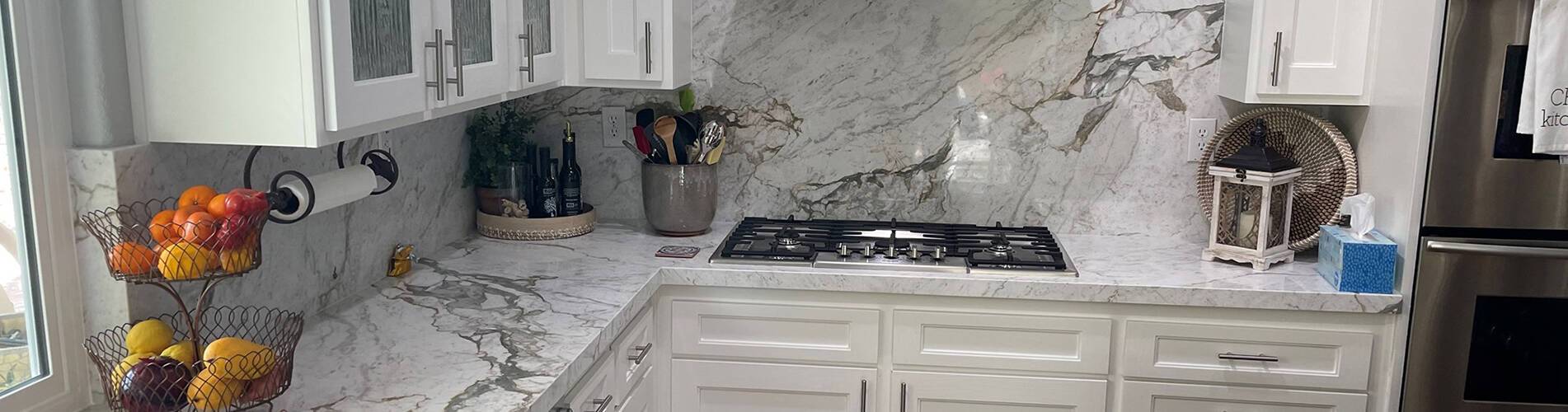
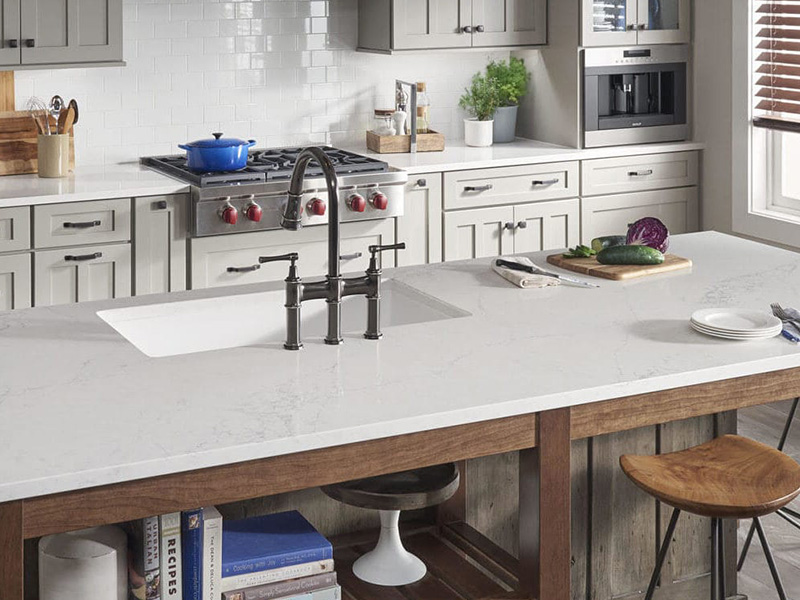
Quartz and marble add elegance to any place!They can be installed as tiles on the walls or floors, as backsplashes ,sidespalshes,aprons or on the tops of kitchen countertops and bathroom and powder room vanities. But what is the difference between them? Marble Marble is a metamorphic rock. This means it was formed over millions of years from another rock. In the case of marble, the original rock w...
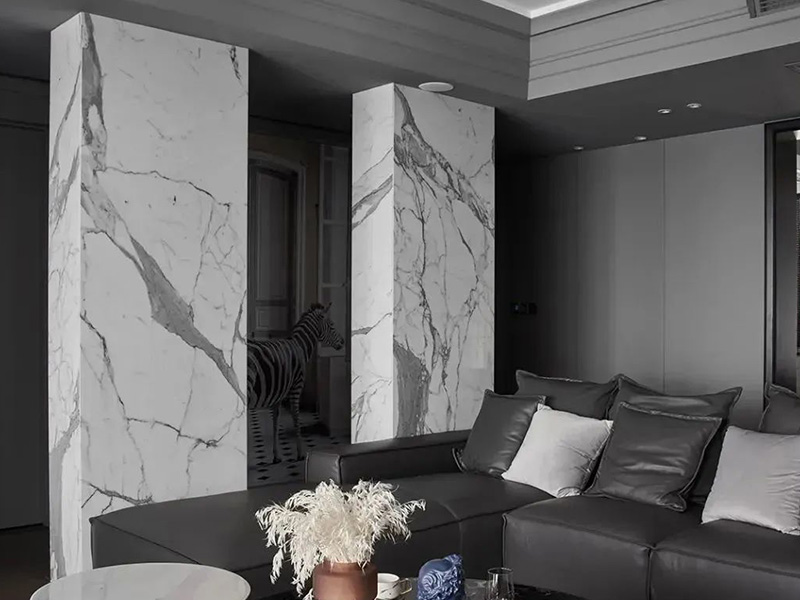
Carrara, Calacatta, Statuario, Volakas and Thassos are among the most recognized types of white marble, but they are selected for very different reasons. Carrara offers the classic Italian white marble look at a more accessible price than Calacatta and Statuario. Calacatta is chosen for bold and expressive veining, while Statuario combines a bright white background with dramatic grey movement. Vol...
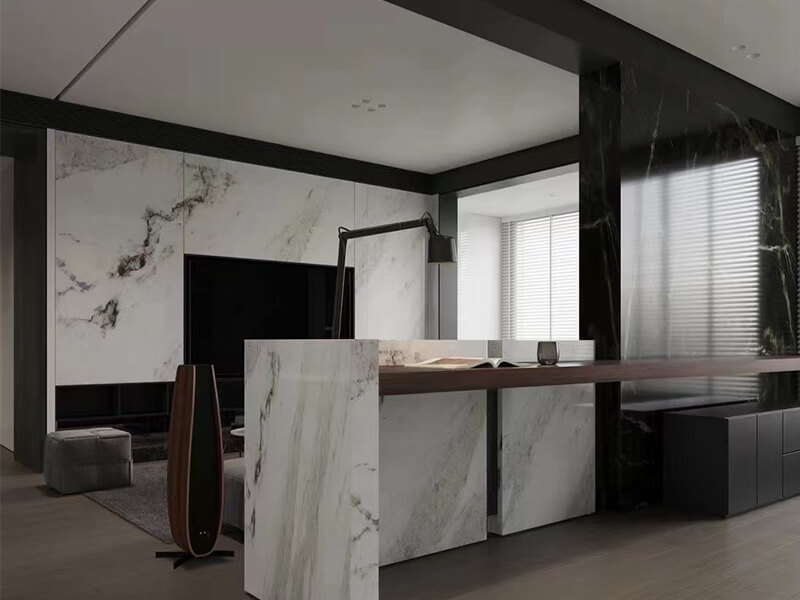
Quick answer: White marble turns yellow for five distinct reasons — iron-bearing accessory minerals oxidizing inside the stone; moisture activating and transporting iron or contaminants; setting materials and substrate showing through translucent stone; wax, coatings or dirt sitting on the surface; and external iron from metal, plumbing or water. Internal iron oxidation is the cause most peo...
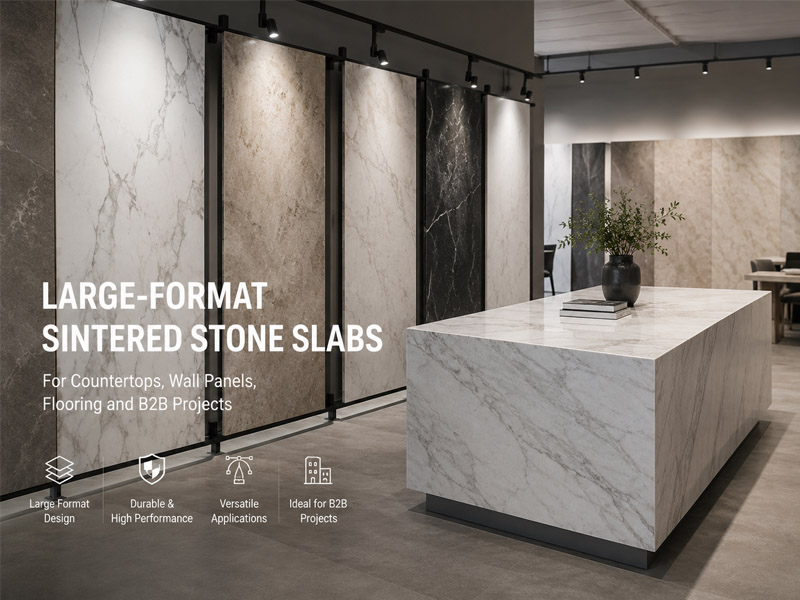
Large-format sintered stone slabs displayed in a showroom for countertops, walls and flooring Sintered Stone Slabs: Sizes, Thickness, Colors and Applications Quick Answer Sintered stone slabs are large-format engineered mineral surfaces used for countertops, wall panels, flooring, table tops, bathroom vanities, commercial counters and architectural interiors. For B2B buyers, the most important sel...
Sintered stone slabs, countertop samples and wall panel applications displayed for B2B buyers Quick Answer Sintered stone price depends on slab thickness, size, finish, color, application, fabrication, packaging, order quantity, brand level and supplier capability. Thin 3-6mm slabs may reduce material cost for wall panels, cabinet facing and renovation overlays. Countertops, flooring, table tops a...
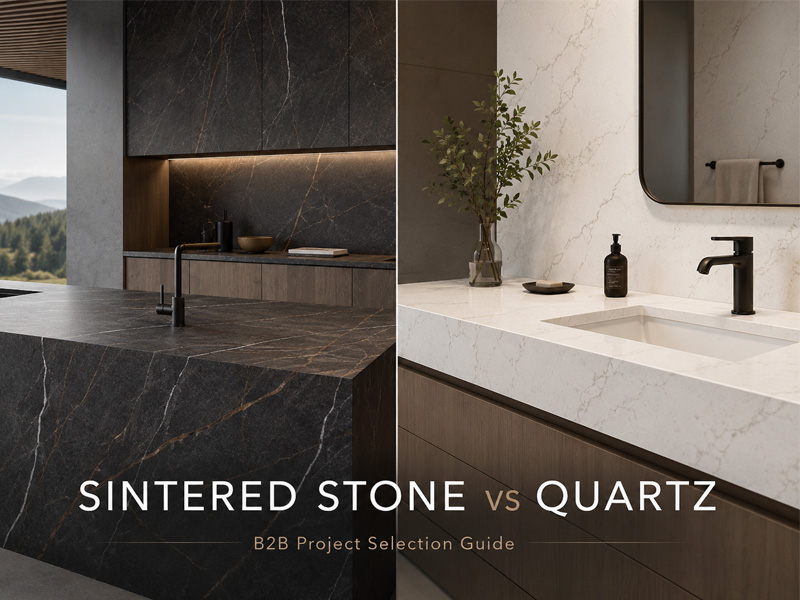
Quick Answer: Which One Should You Choose? For standard indoor countertops, both sintered stone and quartz can work, but they solve different project risks. Choose quartz when the project needs familiar fabrication, mature local installation, consistent colors, and predictable indoor countertop production. Choose sintered stone when the project needs stronger heat resistance, UV resistance,...
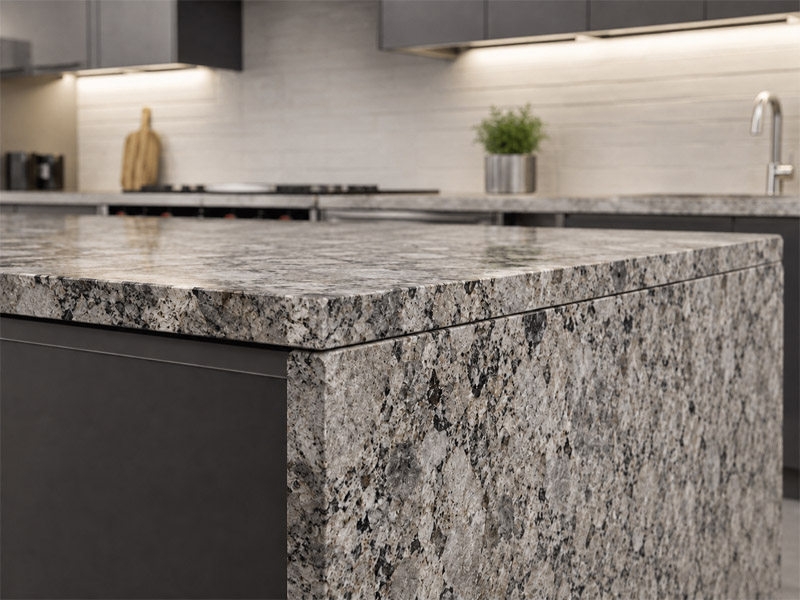
Quick Answer For most imported granite slab orders, 20mm and 30mm are the two main thicknesses to compare. We normally recommend 20mm granite slabs for standard countertop production because they use less stone, cost less and provide better container efficiency. They are suitable for regular kitchen countertops, vanity tops and local fabrication when the finished pieces have normal-sized openings ...
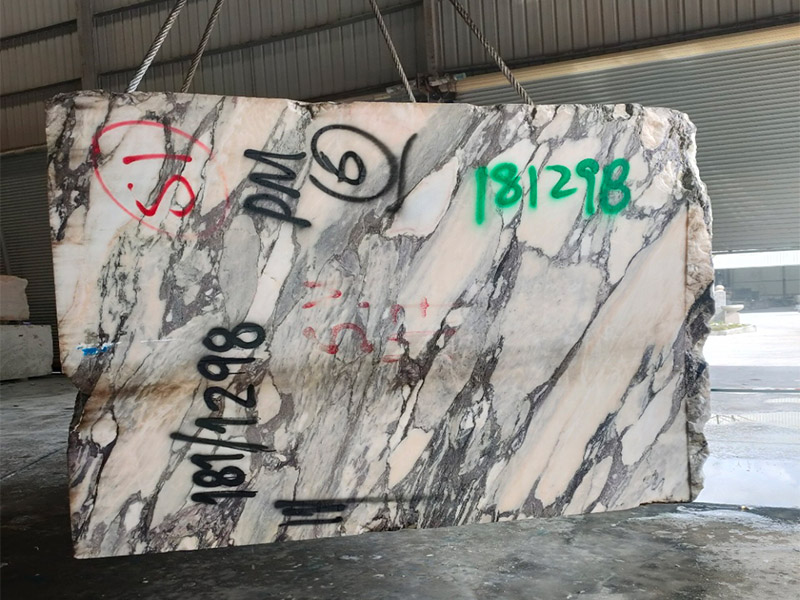
Quick Answer By price: Italian Calacatta Viola offers the richest burgundy color and is usually the most expensive. Turkish Viola has similar breccia patterns but softer color at a lower price. Chinese material is cooler and greyer and is typically the least expensive. By slab appearance: Choose bright slabs with balanced creamy-white areas, rich burgundy breccia and natural, continuous movement. ...
Quick answer: To choose white marble slabs, match three things — the look you need, the environment the stone has to survive, and your supplier's ability to keep a whole order consistent. Pick the variety by the effect you want. Choose calcite or dolomite marble based on how wet the space is, because calcite marbles yellow. Then put the grade criteria, slab size, thickness and finish in writ...
Categories
New Blog
 ROOM 205,NO.45, MIDDLE HAIJING ROAD,XIAMEN,AREA OF PILOT FREE TRADE ZONE(FUJIAN)OF CHINA
For inquiries about our products or pricelist, please leave to us and we will be in touch within 24 hours.



© Copyright: 2026 XIAMEN EXCELLENT STONE CO.,LTD. All Rights Reserved.

IPv6 network supported