English





Quick Answer
Luxury hotels use real marble on lobby floors, reception desks, feature walls and in guest bathrooms. Where people walk or the floor gets wet, the polish stays off. In a bathroom, one marble can run across the walls, floor and vanity with only the finish changing: polished on the walls, leathered underfoot.
On a 2,100 m² Hermes Grey bathroom project for a hotel in Bhutan, the veining was matched on the slabs before cutting, because a strip cut for a curved wall cannot later swap places with a full panel. The full-room dry lay before shipping was only a check: not one piece had to be moved.
Luxury hotels can use real marble on lobby floors, reception desks, feature walls, and in guest bathrooms. A broad lobby floor gives natural veining room to show. A reception desk brings the pattern up to eye level, where guests see the stone up close. In a bathroom, the same marble can tie the walls, floor, and vanity together, with a different finish on the surfaces guests walk on.
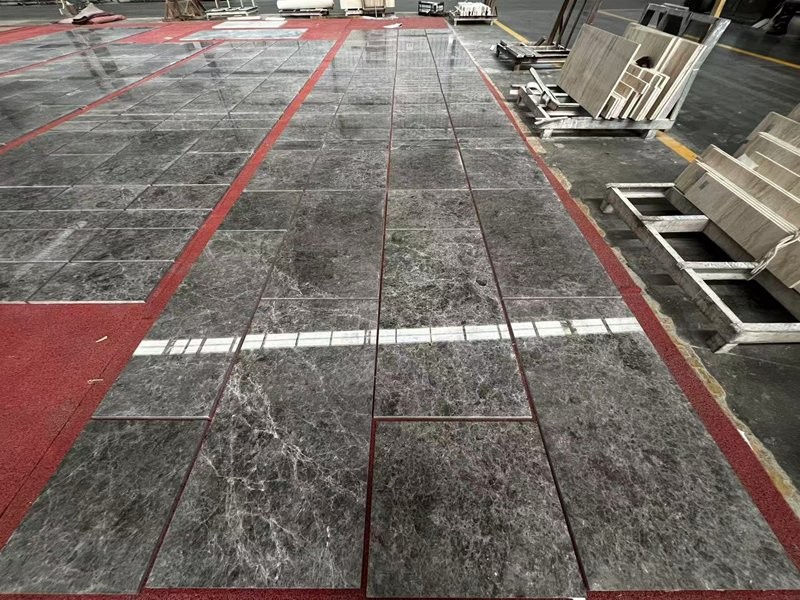
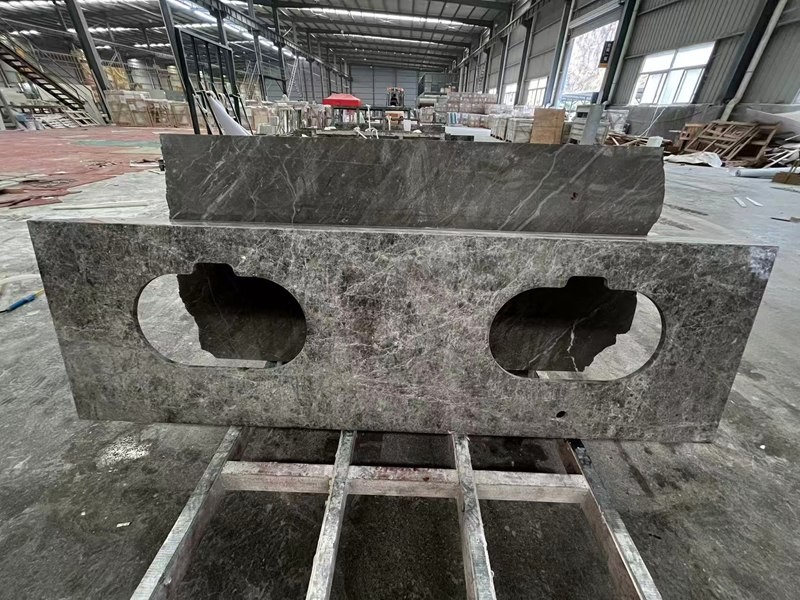
For a luxury hotel in Bhutan, Excellent Stone supplied about 2,100 m² of Hermes Grey, a dark grey marble from Turkey, shipped in November 2026. The order covered the bathrooms only. Roughly half the stone went on the floors and half on the walls, and the package included ten double-basin vanity tops. All the pieces came from one batch. The walls and vanity tops were polished, while the floors were leathered throughout, including inside the showers.
| Project at a glance | |
|---|---|
| Hotel | Luxury hotel in Bhutan, bathrooms only |
| Area | About 2,100 m², roughly half floors and half walls |
| Stone | Hermes Grey, dark grey marble from Turkey, one batch |
| Thickness | 18 mm throughout |
| Finishes | Walls and vanity tops polished; floors leathered, including showers |
| Vanity tops | 10, each with two water-jet basin openings |
| Shipped | November 2026 |
Contents
Marble suits a desk designed to show natural veining across the counter and front panels. Solid surface suits a design where a seamless curve matters more.
Yes. Marble works well on a hotel lobby floor where guests can see the natural pattern across a large area. At the entrance, rain, grit, and rolling luggage change the finish choice. We recommend a honed or textured finish for the main traffic route. A hotel can also use granite or porcelain along the busiest entrance strip and keep marble across the rest of the lobby.
In a guest bathroom, the floor gets wet and guests walk barefoot. We recommend keeping polish off the wet floor. The Bhutan order shows how that choice works when the designer wants the same marble on the floor, walls, and vanity.
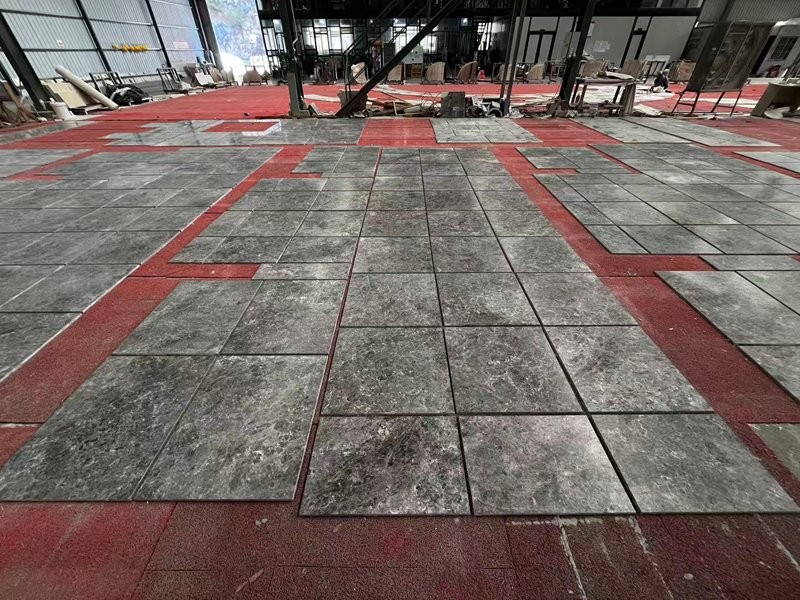
The bathrooms used one marble everywhere and changed only the finish: polished on the walls and vanity tops, leathered underfoot. All of it was 18 mm Hermes Grey. Polishing brought out the dense, web-like veining on the walls and vanity tops. On the floors, a brushed leather finish gave the same stone a texture guests could feel underfoot. That finish continued into the shower, so there was no need to introduce a second floor material.
The bathroom-floor question is usually put as honed or polished. Leathered is a third answer: honing grinds the surface flat, while leathering keeps a texture, and on a wet floor that texture is what bare feet notice.
Before packing, every floor piece was sprayed with a protective sealer. A sealer keeps water and stains from soaking in, so marble can take a wet room. It does not stop acid, which is why marble floors should be cleaned with neutral, stone-safe products.
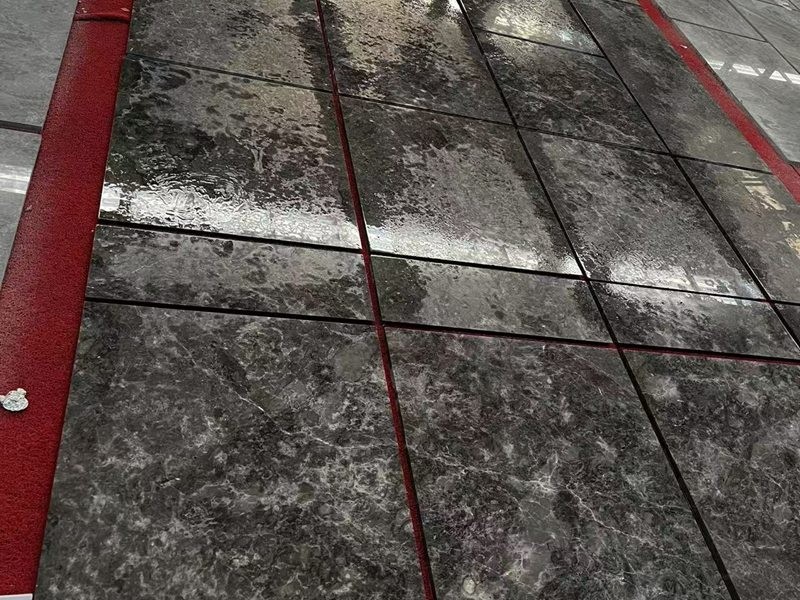
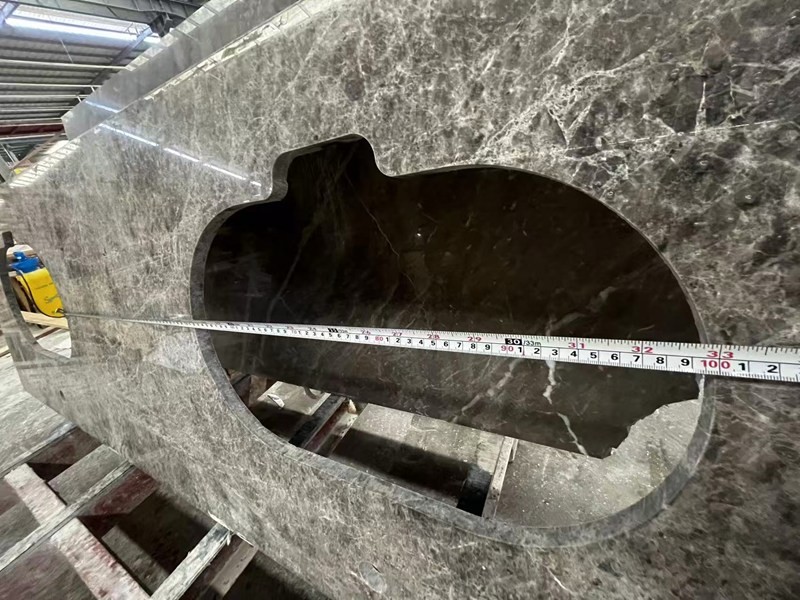
The ten vanity tops each had two waterjet-cut basin openings. We reinforced the stone underneath around the openings and joined the front apron with a mitered edge. Seen from the front, the vanity has the depth of a thicker piece of marble while using the same 18 mm material as the walls.
The drawings for one bathroom called for nearly 100 wall pieces. Broad panels covered the main elevations. Strips 210 to 310 mm wide fitted corners and niches, while a curved wall took strips only about 100 mm wide. Once cut, a piece made for the curve could not trade places with a broad panel simply because the veins looked better there.
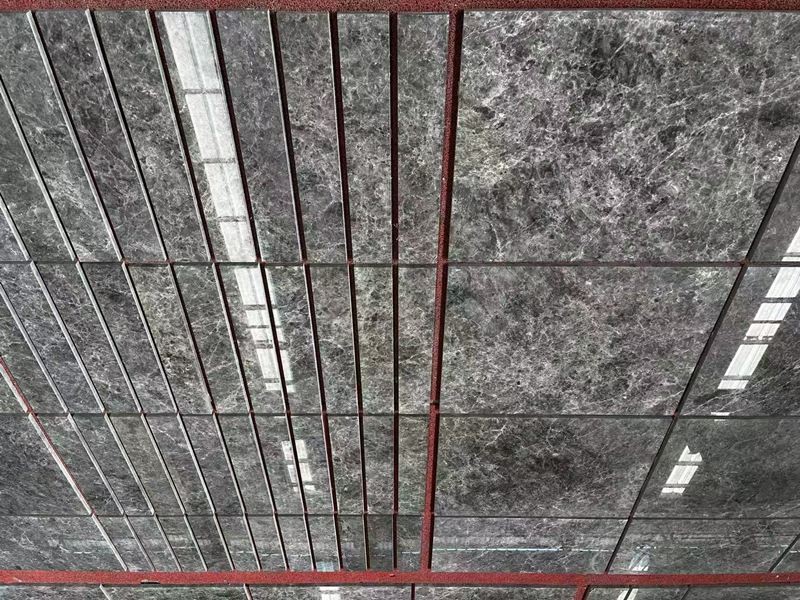
That is why we planned the match on the slabs before cutting. Using one batch helped keep the overall colour consistent. We still had to decide which part of each slab would become each part of the room.
Hermes Grey has a dense network of veins with no strong direction to mirror across a joint. For these bathrooms, we carried the veins from one piece into the next. We laid out each wall elevation and floor plan on the slabs, placing neighbouring pieces together in the stone wherever they would meet in the room. Each piece then received a number corresponding to its position on the drawing.

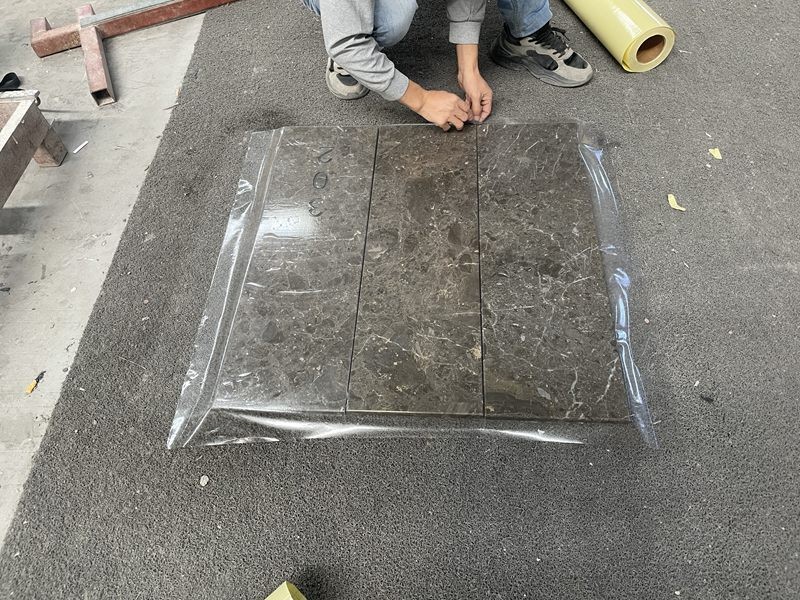
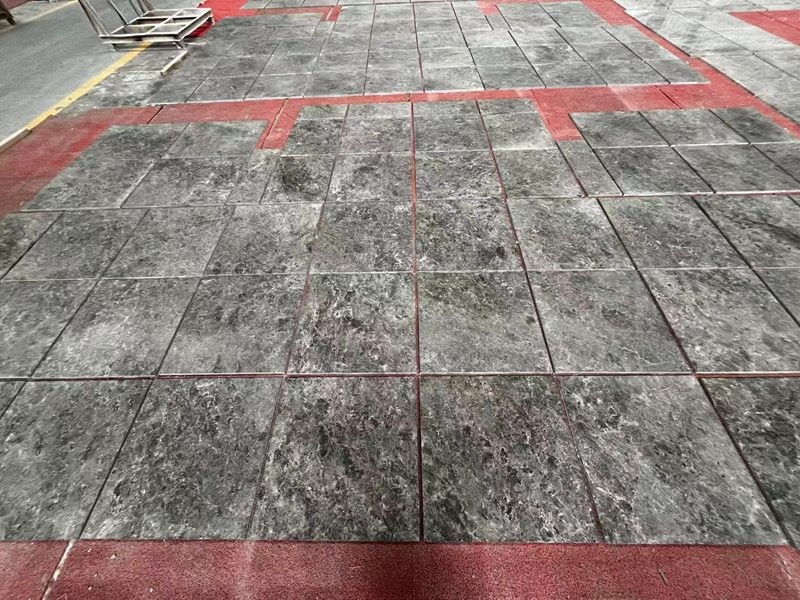
Before packing, we laid out every bathroom in full in the workshop. The floors were laid to the floor plans, and each set of wall panels to its elevation. This step checks whether the colour and veining carry across the actual cut pieces, including the joints where broad panels meet narrow strips.
A dry lay is usually where pieces get swapped until a room looks right. Here, no piece had to be exchanged or moved to a different position. The match had already been settled on the slabs, and the numbers preserved that arrangement for installation.
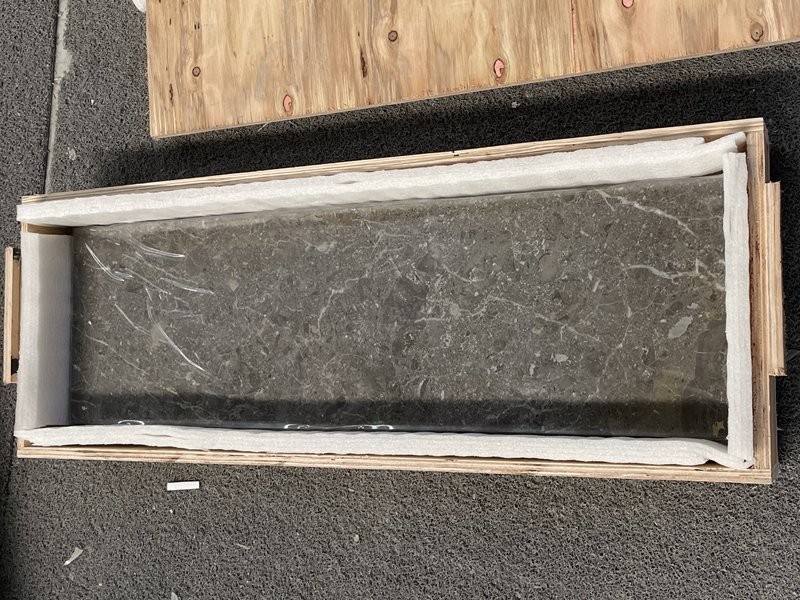
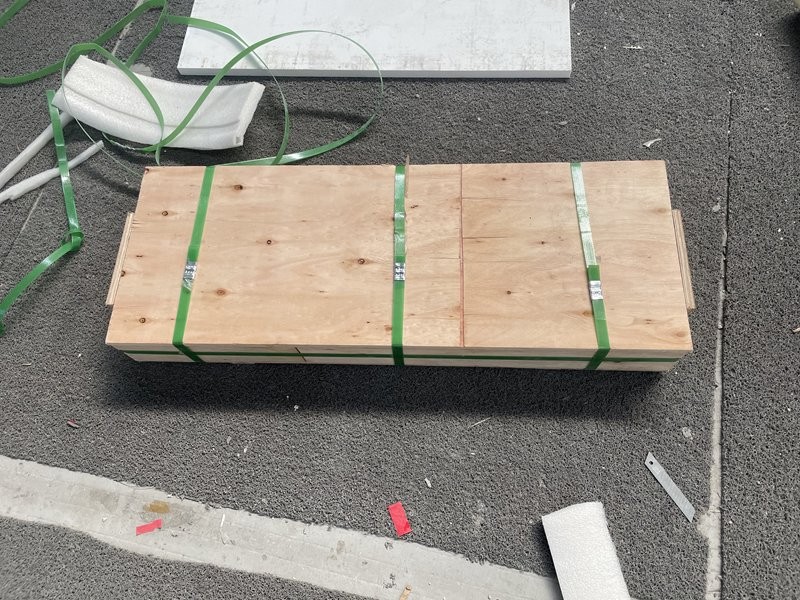
Excellent Stone supplies Hermes Grey and other marbles cut to size for hotel projects: floors, walls and vanity tops.
Planning marble for a hotel? Send us the drawings, or whatever you have so far, through the inquiry form or by email, and we'll check the options.
 ROOM 205,NO.45, MIDDLE HAIJING ROAD,XIAMEN,AREA OF PILOT FREE TRADE ZONE(FUJIAN)OF CHINA
For inquiries about our products or pricelist, please leave to us and we will be in touch within 24 hours.



© Copyright: 2026 XIAMEN EXCELLENT STONE CO.,LTD. All Rights Reserved.

IPv6 network supported