English




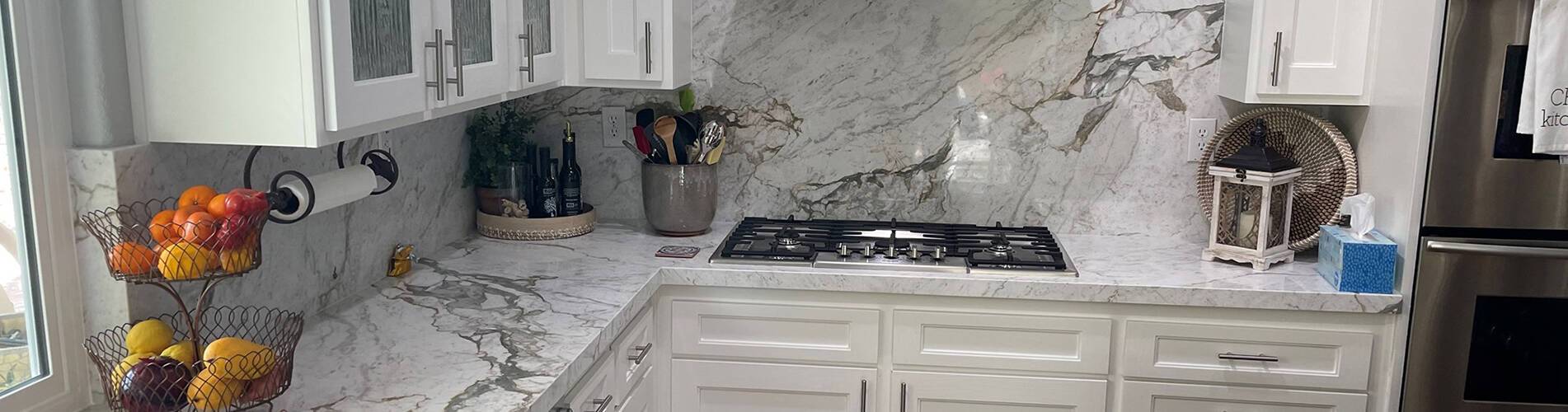
B2B Guide to Granite Selection:
How to Read Technical Specifications for Project-Based Decisions
This is usually where most buyers start:
- how can you tell good quality granite
- what level of granite is best
- how to identify high quality granite
- how to check granite quality
At first, it sounds like a straightforward question — just find the “best” material.
Usually, granite is often grouped into grades:
- Grade 1 (Commercial Grade): more variation and visible imperfections, typically used in cost-sensitive or large-scale projects
- Grade 2 (Standard Grade): more consistent appearance, widely used in residential applications
- Grade 3 (Premium Grade): higher uniformity, fewer defects, often used in high-end projects
These categories are useful as a general reference.
But they don’t answer the real question:
whether a material is suitable for your specific project.
A higher grade doesn’t automatically mean better performance in every case.
And a standard-grade material can still perform perfectly well when used appropriately.
So the real task isn’t just identifying a “better” granite. It’s understanding:
- what kind of performance your project actually requires
- which technical dimensions matter
- and how those dimensions relate to the application
Without that, decisions tend to rely on surface indicators rather than project needs—which is where mismatches and performance risks begin.
“Good quality granite” is not a fixed category.
It depends on whether the right performance dimensions are evaluated for the intended use.
That shifts the question from:
“Which granite is better?”
to a more practical set of questions:
- what to consider before selecting granite
- how to determine if granite is suitable for a project
- what should be evaluated before making a selection
1. How to Determine if Granite is Suitable for a Project?
What is often used in practice—such as granite grading—is only a surface classification.
To determine whether a material is suitable for a project, it is necessary to understand the technical parameters behind those grades.
These parameters—strength, absorption, abrasion, slip resistance, freeze–thaw behavior—describe different aspects of material performance.
They are not meant to be interpreted together as a single value.
Instead, each parameter reflects a specific type of performance that may or may not be relevant depending on the application.
This is why technical data cannot be used directly for selection.
Before it can support decisions, it must be separated according to the type of performance it represents.
Industry standards follow this same principle.
Standards such as ASTM, EN, and GB do not define a single overall quality level for granite.
They define individual test methods, each measuring a different aspect of performance:
- Compressive strength → resistance to applied load
- Water absorption → susceptibility to moisture-related deterioration
- Abrasion resistance → surface wear under use
- Slip resistance → interaction with users
- Freeze–thaw resistance → behavior under environmental stress
These results are reported separately, not combined.
This does not introduce a new structure—it reflects the same condition already present in the data:
> each technical parameter corresponds to a different type of performance,
> and must be considered independently.
As a result, technical data does not become meaningful by being aggregated,but by being interpreted in relation to the performance requirements of the application.
Granite performance is defined through physical properties, as specified in standards such as:
- ASTM C615 — Standard Specification for Granite Dimension Stone
- ASTM C97 — Absorption and Bulk Specific Gravity
- ASTM C170 — Compressive Strength
- ASTM C880 — Flexural Strength
- ASTM C241 / C1353 — Abrasion Resistance
- ASTM C1028 / ANSI A326.3 — Slip Resistance (dynamic/static friction)
- ASTM C666 — Freeze–Thaw Resistance
These standards define how granite is tested and reported.
The data they produce is not meant to be read as a single group.
It is structured into categories such as:
- Mechanical properties
- Surface performance
- Environmental response
- Physical structure
Each category corresponds to a different type of performance requirement.
These categories are not interchangeable.
If they are combined or treated as a single set of values,the evaluation can lead to incorrect conclusions about material suitability.
For example:
- Using compressive strength to justify flooring selection
→ ignores slip resistance, creating safety risk
In practice, these categories correspond to different types of technical data,each expressed in its own form:
- Mechanical data → typically expressed as strength values (e.g. MPa)
- Physical data → expressed as absorption or density (e.g. %)
- Surface data → expressed as friction coefficients
- Environmental data → expressed as performance after test cycles
This means that granite specifications are not a single dataset,but a combination of distinct data types.
These data types can be grouped into four core performance dimensions:
- Strength → mechanical performance data
- Durability → moisture and long-term stability data
- Slip resistance → surface interaction data
- Freeze–thaw → environmental response data
Each dimension corresponds to a different type of information that appears separately in technical specifications and standards.
Standards such as ASTM reflect this structure by reporting:
- strength values independently from absorption
- surface performance independently from mechanical properties
- environmental resistance independently from both
These are not variations of the same property,but different types of data used to describe material performance.
Before focusing on individual numbers, the relevant question is:
> which performance dimensions are actually relevant to this project?
This structure follows three principles:
- Separation — each dimension represents a different requirement
- Activation — relevance depends on application
- Non-substitution — one dimension cannot replace another
In selection decisions, only properties that affect performance in the intended application are relevant.
In practice, evaluation typically focuses on a core set of measurable indicators:
- Compressive strength (ASTM C170) — commonly ranges from 100–300 MPa
- Flexural strength (ASTM C880) — often between 10–25 MPa
- Water absorption (ASTM C97) — typically below 0.4–0.8% for dense granite
- Abrasion resistance (ASTM C241 / C1353) — indicates surface wear behavior
- Slip resistance (ANSI A326.3) — dynamic coefficient of friction (DCOF) typically ≥ 0.42 for wet walking surfaces
- Freeze–thaw resistance (ASTM C666) — expressed as durability factor after cycling
These values are selected based on the performance dimensions relevant to the project.
For example:
- Exterior paving → slip resistance + absorption + freeze–thaw
- Structural use → compressive and flexural strength
This step defines what data actually matters,before any evaluation begins.
Evaluation begins with filtering—determining whether a material is acceptable at all.
Each critical indicator is checked against minimum acceptable conditions:
- Low compressive or flexural strength
→ risk of cracking or structural failure under load
- High water absorption (e.g. >0.8–1%)
→ increased risk of staining, moisture ingress, and long-term degradation
- Insufficient slip resistance (DCOF < 0.42 in wet conditions)
→ safety risk in pedestrian areas
- Poor freeze–thaw performance
→ surface scaling, internal cracking, and reduced service life in cold climates
If any critical dimension fails to meet basic requirements,
the material is excluded before further comparison.
At this stage:
> technical data is used to identify failure risk, not performance ranking.
After filtering, comparison is carried out among materials that meet baseline requirements.
Comparison must remain within each performance dimension:
- materials are compared based on differences within the same indicator
- the comparison reflects relative performance among acceptable options
For example:
A granite with 180 MPa vs 140 MPa compressive strength
→ the difference only influences selection when structural load is a determining factor
→ if load is not relevant, the difference does not affect the decision
The purpose of comparison is not to identify the highest value,but to understand whether differences are meaningful within the application context.
Multiple performance dimensions must be considered simultaneously.
Trade-offs exist between dimensions.
Selection is not about maximizing all values,
but about prioritizing performance based on application conditions.
This typically involves:
- recognizing which dimensions must be satisfied as conditions for use
- distinguishing which dimensions allow variation within acceptable limits
For example:
Improving slip resistance through surface treatment
→ may introduce changes in wear behavior or maintenance requirements
Decision-making at this stage is about managing performance trade-offs,not selecting the highest-performing material in isolation.
Technical data is used to confirm suitability.
Technical data functions as evidence:
- All critical dimensions meet minimum requirements
→ no structural, safety, or environmental failure risk
- Performance within key dimensions is acceptable for the application
→ not necessarily the highest, but sufficient
- No conflicting property introduces unacceptable trade-offs
→ balanced performance across dimensions
At this point, technical data functions as evidence:
- it verifies that the material will perform under expected conditions
- it reduces uncertainty in long-term behavior
Selection is determined by how performance indicators align with the intended use.
Granite selection is not about comparing isolated properties.
It is about defining the application, identifying the relevant dimensions, and then locating the corresponding data.
For contractors and decision-makers, the practical takeaway is straightforward:
first identify the performance dimensions relevant to your application, and use them to interpret technical data.
This ensures that technical data is evaluated in the correct context, rather than as isolated values.
Categories
New Blog
 ROOM 205,NO.45, MIDDLE HAIJING ROAD,XIAMEN,AREA OF PILOT FREE TRADE ZONE(FUJIAN)OF CHINA
For inquiries about our products or pricelist, please leave to us and we will be in touch within 24 hours.



© Copyright: 2026 XIAMEN EXCELLENT STONE CO.,LTD. All Rights Reserved.

IPv6 network supported