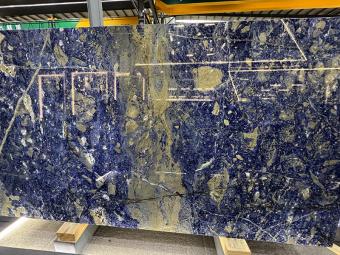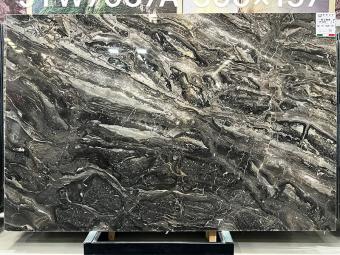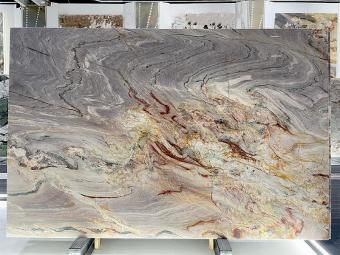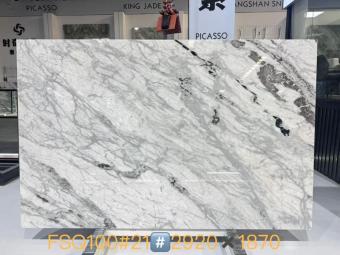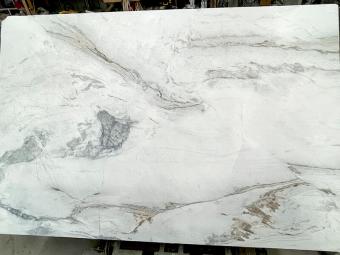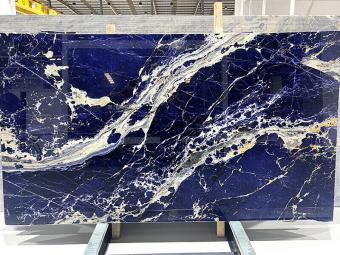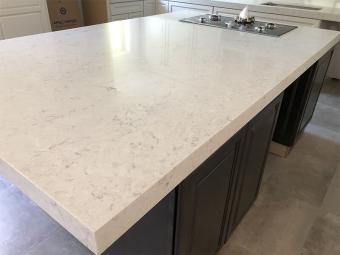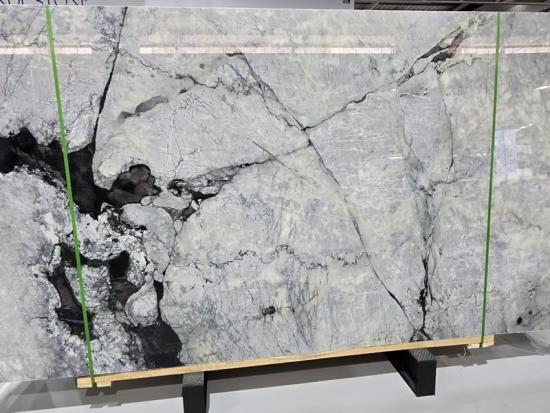
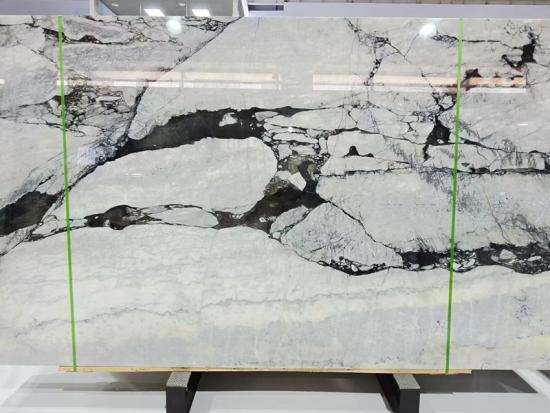
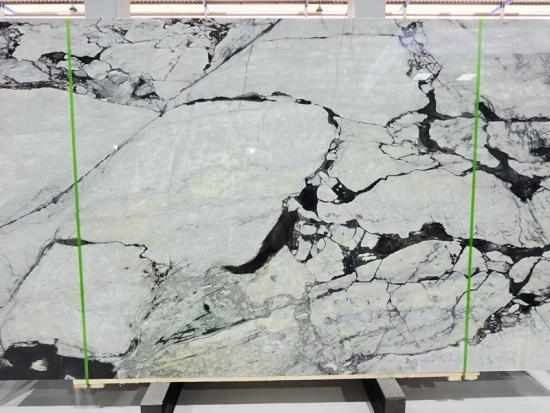
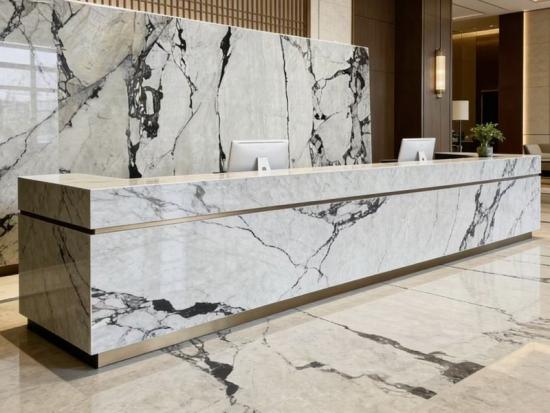
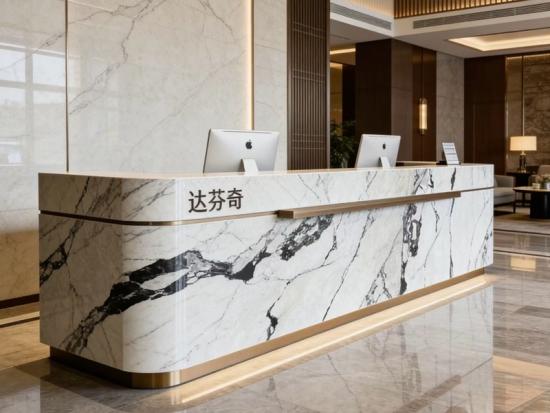
Italian Da Vinci White Marble Slabs feature a bright white background with bold charcoal-black and deep grey fractured veining, creating strong contrast and dramatic natural movement. As a professional Da Vinci White Marble supplier, Excellent Stone provides slab selection, wholesale supply and custom fabrication support for wall cladding, reception desks, kitchen islands, countertops and vanity projects. Buyers can review current slab photos, finishes and project requirements before order confirmation.
Item NO.:
Da Vinci MarblePayment:
e.g., 30% deposit, 70% before shipmentProduct Origin:
ItalyColor:
White background with bold black/grey veiningShipping Port:
Xiamen Port, ChinaLead Time:
15-30 Days (Depends on project customization requirements)Italian Da Vinci White Marble is a distinctive natural white marble characterized by broad white fields and dramatic charcoal-black to dark grey movement. Unlike white marbles with fine, evenly distributed veins, Da Vinci develops larger fractured bands, broken mineral lines and concentrated dark areas that give each slab a strong architectural composition. Excellent Stone supplies Da Vinci White Marble slabs for wholesale and project orders, with slab selection support for walls, islands, countertops, reception desks and other custom interior applications.
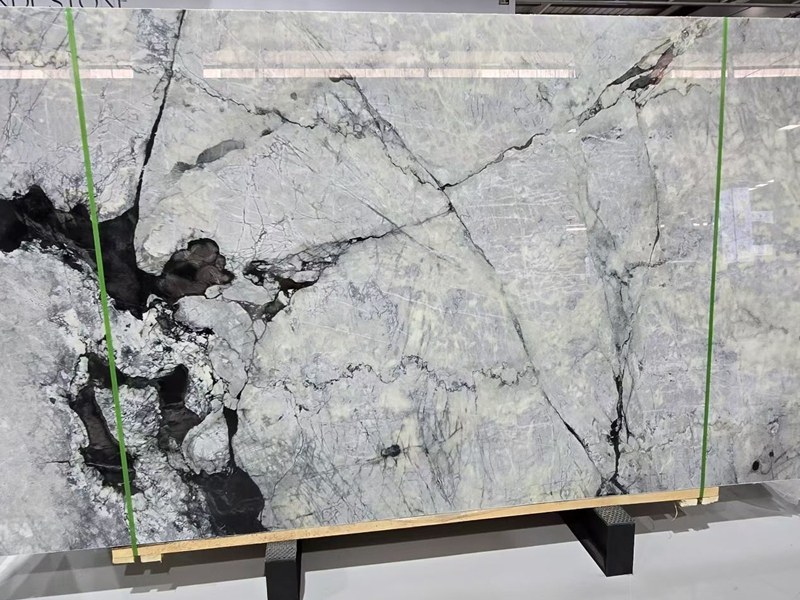
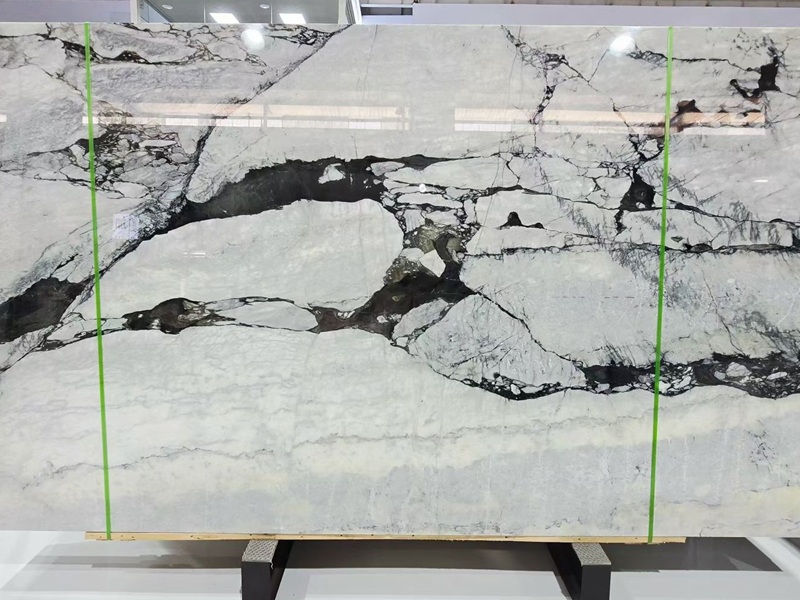
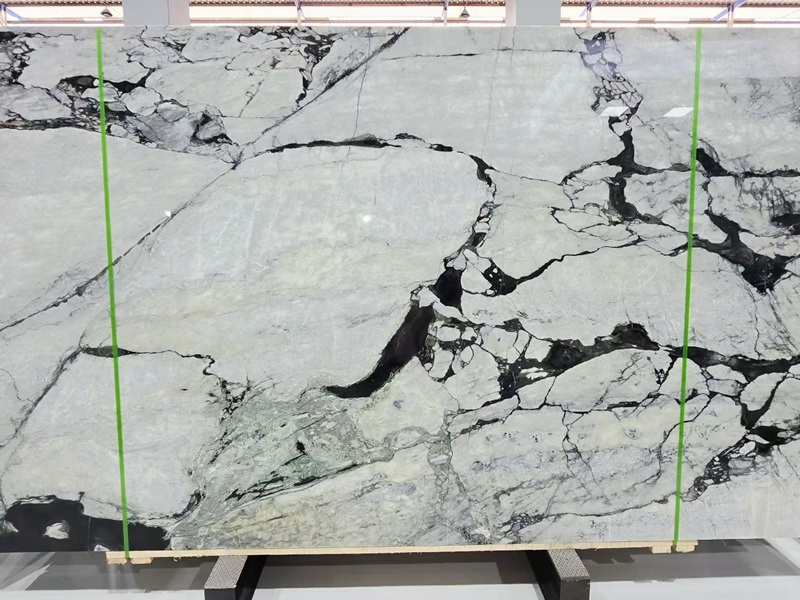
Da Vinci White Marble has a predominantly white background interrupted by bold charcoal-black and deep grey structures. The dark pattern does not appear as a uniform network of fine veins. Instead, it forms broad fractured bands, irregular mineral boundaries and smaller branching lines that break the white field into large natural sections.
The visual activity is not distributed evenly across the whole slab. Some areas remain relatively open and quiet, while stronger black movement concentrates around particular sections. Fine grey lines and softer mineral transitions appear around the main dark structures, adding depth between the white background and the strongest charcoal areas.
This combination of open white field and concentrated dark movement is one of the defining visual characteristics of Da Vinci White Marble. It creates a much stronger architectural effect than white marbles dominated by fine, evenly spaced veining.
Variation in Da Vinci White Marble is more meaningful than a simple difference in vein color. For project selection, buyers should compare the overall composition of each slab and review how the white field and dark movement are distributed.
| White-Field Proportion | Review how much open white area remains visible across the slab. |
| Dark-Vein Concentration | Compare whether charcoal movement is relatively restrained or occupies larger areas. |
| Main-Vein Position | Check whether the strongest movement falls through the center, along an edge or toward one end. |
| Pattern Structure | Compare broad connected bands with more fragmented and broken dark networks. |
| Movement Direction | Review whether the visual movement reads as horizontal, diagonal or multidirectional. |
| Slab Relationship | For multi-piece projects, compare several slabs together rather than approving only one representative slab. |
For Da Vinci White Marble, a small sample can confirm the general color and finish, but it cannot represent the scale or position of the dark movement across a full slab. Projects such as large wall panels, reception desks, waterfall islands and coordinated countertops should therefore be selected from actual slab photographs whenever the natural composition is important to the finished design.
Da Vinci White is best selected in slab form when a project requires better control over vein placement, cutting orientation or continuity between finished pieces. Excellent Stone can provide current slab photographs for selection so buyers can compare available patterns before confirming an order.
| Slab Information | What Buyers Should Confirm |
|---|---|
| Actual Slab | Current slab photographs and visible pattern |
| Dimensions | Actual usable length and width of the selected slabs |
| Thickness | Required thickness according to the project and fabrication plan |
| Finish | Polished or honed according to the required visual effect |
| Quantity | Number of slabs required for the complete project |
| Selection | Relationship between slabs that will be installed together |
| Cutting Requirement | Finished sizes, openings and preferred vein orientation |
Rather than relying only on nominal slab dimensions, project buyers should confirm the actual dimensions of the selected slabs before the final cutting plan is prepared. For multi-slab orders, reviewing the slabs as one selection also helps coordinate pattern direction and finished-piece placement.
The bold black-and-white structure makes Da Vinci White particularly effective in applications where a substantial part of the original slab remains visible. Application planning should therefore consider not only whether marble can be used, but also how the selected slab composition will appear after cutting.
Large wall panels preserve more of the original slab composition than small-format pieces. This allows the broad white areas, charcoal bands and fractured movement to remain readable across the installed surface. For multi-panel walls, panel orientation and sequence should be reviewed before cutting so the finished elevation maintains a controlled balance of light and dark areas.
Reception desks are particularly suitable for Da Vinci White because the long front elevation, worktop and end panels can use the marble as one architectural composition. Slabs with stronger charcoal concentration can create a more dramatic focal surface, while slabs with larger white fields can produce a cleaner overall effect.
On a kitchen island, the slab should be evaluated in relation to the top surface, visible long elevations and any waterfall ends. Sink or cooktop openings can remove important parts of the natural pattern, so the location of major charcoal movement should be considered before the cutting layout is confirmed.
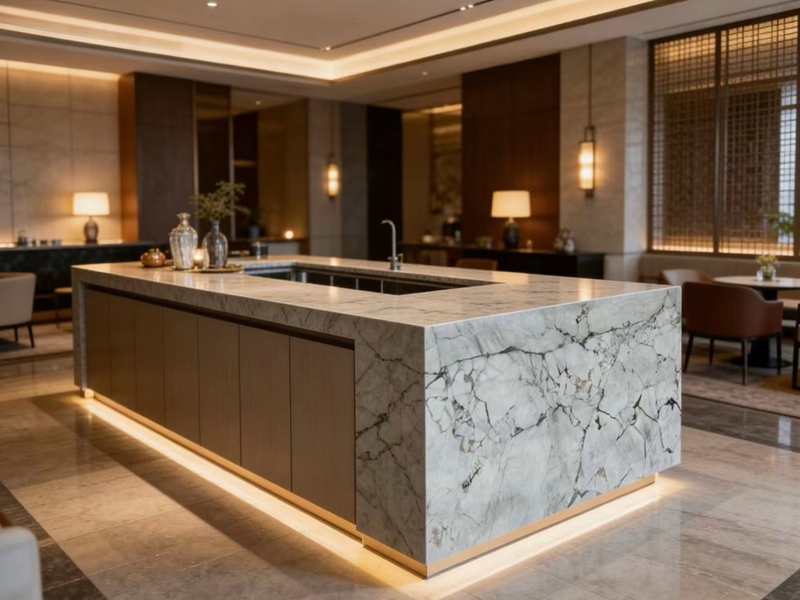
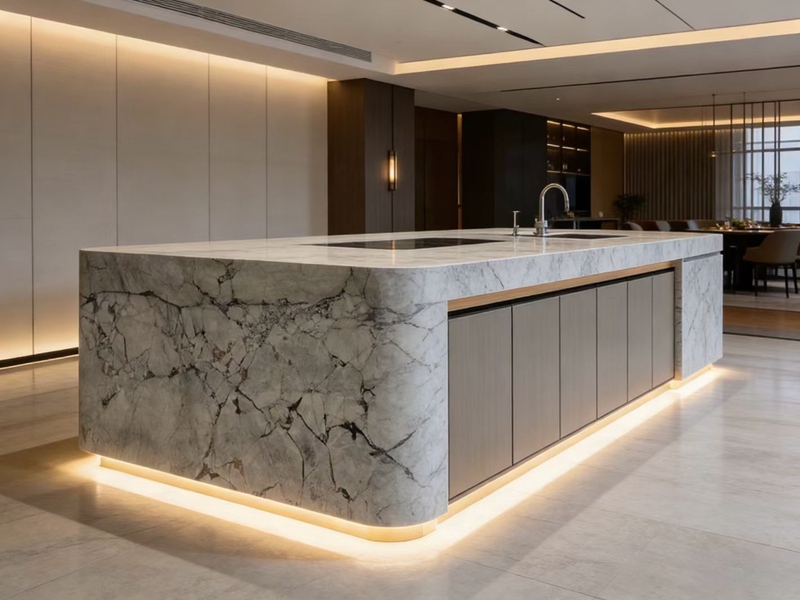
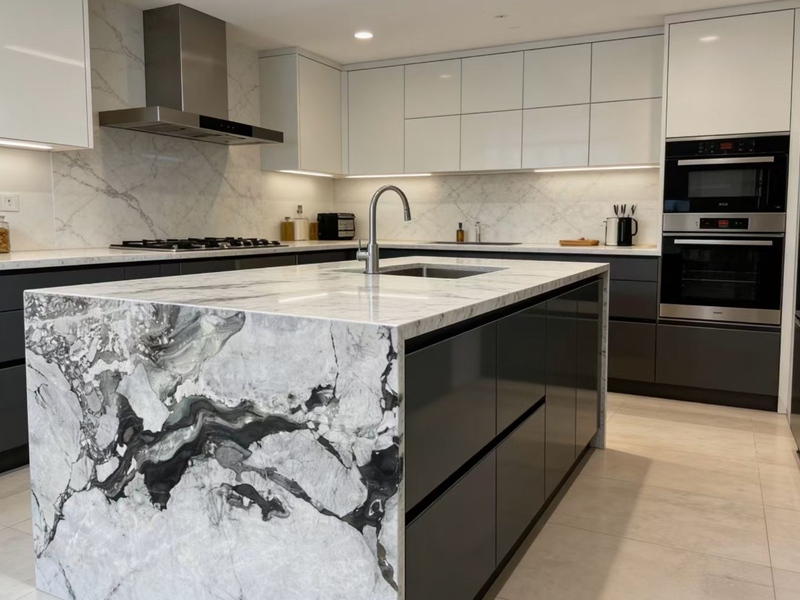
Smaller worktops show why full-slab selection matters with a strong-pattern marble. A cut piece may contain a large uninterrupted white area, one concentrated charcoal structure, a mixture of fine and broad veins, or only a quieter part of the original slab. The cutting position should therefore be chosen according to the desired finished composition rather than slab yield alone.
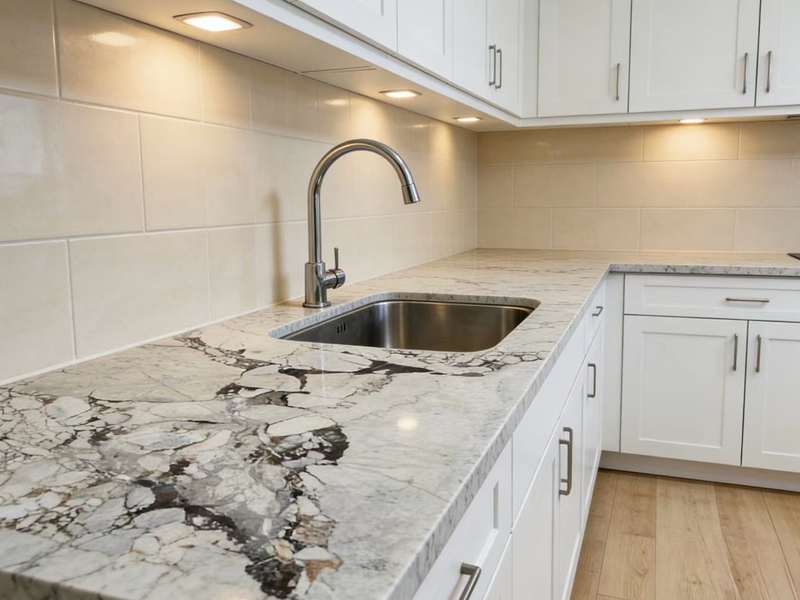
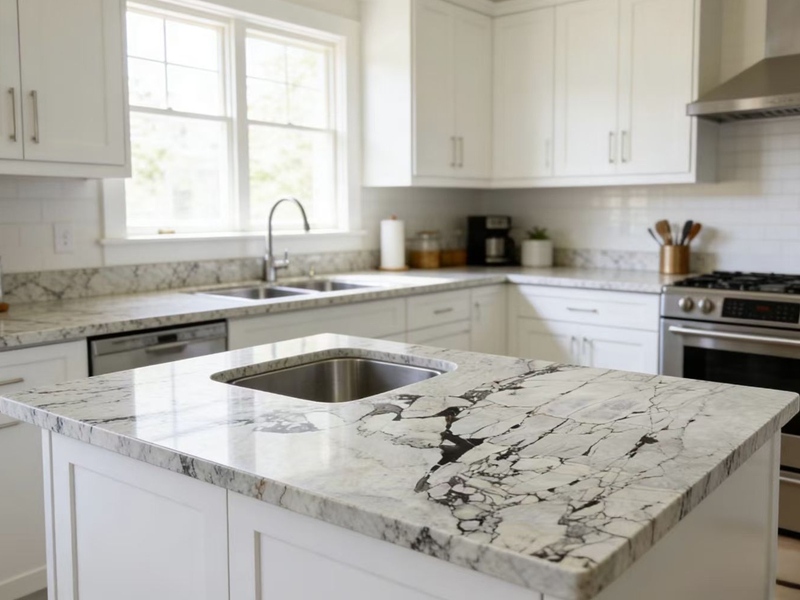
For Da Vinci White Marble, fabrication should begin with the approved slab composition rather than treating cutting as a separate production step. The objective is to preserve the most useful parts of the natural pattern on the surfaces that will remain visible after installation.
Confirm the actual slabs before preparing the final cutting layout. This establishes which white areas, charcoal bands and natural movement are available for the project.
Countertops, wall panels, reception desk elevations and other finished pieces should be positioned against the actual slab image or approved cutting drawing. Particular attention should be given to:
A sink or cooktop opening positioned through the strongest charcoal structure can remove much of the feature that originally made a slab attractive. Where dimensions allow, cutting plans should therefore consider both material yield and visual composition.
When several pieces form one visible surface, their relationship matters more than the appearance of each piece in isolation. This applies particularly to wall panels, reception counters, waterfall islands, long countertops and adjoining horizontal and vertical surfaces. Clear piece identification and layout records help preserve the approved orientation through fabrication, packing and installation.
Da Vinci White Marble can be considered for bookmatched or coordinated layouts when suitable adjacent slabs are available. The final result depends on the actual slab pair, cutting sequence, vein position, trimming loss and finished panel dimensions. For this reason, buyers planning a bookmatched wall should review the actual slabs and proposed panel sizes before production rather than selecting the stone only from a catalogue image.
A polished finish increases surface reflection and makes the contrast between the white background and charcoal movement appear stronger.
A honed finish reduces reflection and gives the surface a softer visual reading while retaining the natural pattern. Finish selection should therefore reflect the intended visual effect and application rather than being treated only as a standard production option.
Da Vinci White is natural marble and should be maintained accordingly. For countertops and vanity applications, avoid prolonged contact with acidic substances and clean the surface with products suitable for natural marble.
Sealing can help reduce absorption and staining risk, but it does not make marble resistant to acid etching. For commercial and hospitality projects, the maintenance method should be selected according to the finish, application and expected level of use.
Excellent Stone supplies Italian Da Vinci White Marble for slab purchasing and custom project fabrication. Buyers can request current slab photos and compare available selections before order confirmation. Finished sizes and fabrication requirements can then be reviewed against the selected slab composition.
For quotation and slab selection, please provide:
This allows material selection, slab allocation and fabrication planning to be considered together before production begins.
If you are interested in our products and want to know more details,please leave a message here,we will reply you as soon as we can.
Categories
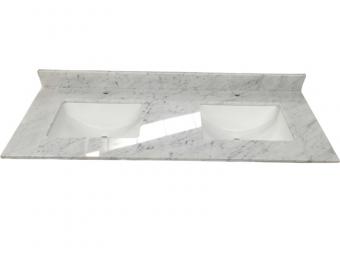
About this item White on White 61" x 22" Carrara Marble Vanity Top Update your master bathroom, powder room or guest bath with this integrated top with a classic square bowl Three pre-drilled holes make installing a 4” centerset faucet easy; Single mount with deck plate also works with this top Integrated 4-inch backsplash Reinforced packaging
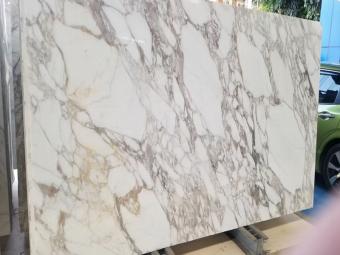
Calacatta Gold is one of the most prestigious stones in the world. This marble features a white background with dramatic veins in gray and golden tones. Its natural variation creates a luxurious artwork in every piece. .
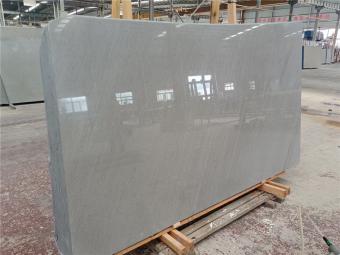
Cinderella Grey Marble is a China-origin grey natural stone for wholesale importers, stone distributors and contractor-led cut-to-size projects. It has lighter and deeper grey selections, fine natural movement and occasional fossil speckling. A practical slab reference range is about 2400–2850 × 1200–1800 mm in 18 / 20 / 30 mm, with common 300 × 300, 300 × 600 and 600 × 600 mm tile modules plus custom cut-to-size pieces.
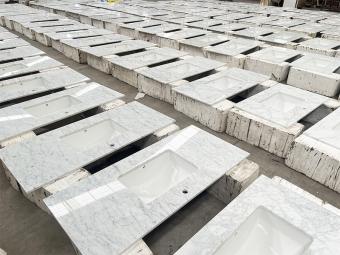
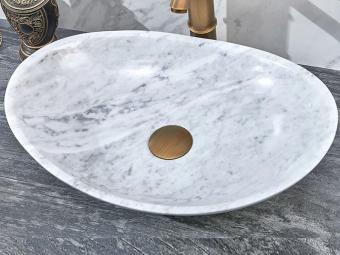
White Carrara Marble Bathroom Vanity Top Carrara White Marble is an exclusive white marble with gray veining. Its sophisticated and elegant appearance has graced beautiful homes for centuries.White Carrara Marble Vanity Top can be a good solution for your bathroom.
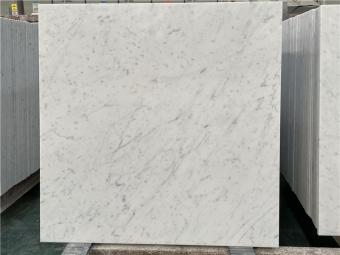
Carrara White is one of the most famous stones in the world. This marble has been quarried for centuries, due to its elegetant white-gray background and soft gray veins. Carrara White is a timeless stone perfect for any traditional or contemporary design.
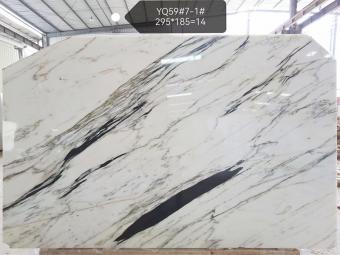
Chinese Calacatta Marble is very close to Italian Calacatta,has fine grains and soft white colors with grey and gold veining on the surface.It has great hardness and texture, which is widely used for countertops,bath tops, island tops, floor tiles&wall tiles, as well as thin tiles and mosaic tiles.
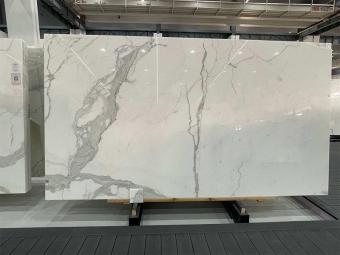
Italian Calacatta White Marble Slabs feature a clean white to creamy background with bold grey and occasional warm gold veining. Available in 2800×1500mm up and 3000×1600mm up, with 18mm and 20mm thicknesses, polished or honed finishes, and custom gloss levels. Suitable for wholesale supply, slab selection, bookmatched walls, islands, countertops and high-end commercial or villa projects.
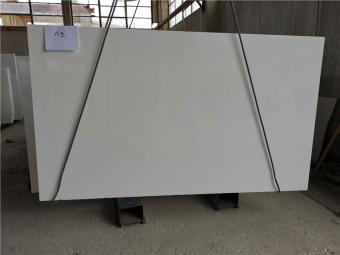
Thassos White Marble Slabs from Greece feature a snow-white background and distinctive crystalline texture. Excellent Stone supplies polished and honed slabs in 18mm and 20mm thicknesses, with selection by whiteness, crystal appearance, and color consistency. We offer wholesale slabs and custom fabrication for bathrooms, interior walls, countertops, and architectural projects.
 ROOM 205,NO.45, MIDDLE HAIJING ROAD,XIAMEN,AREA OF PILOT FREE TRADE ZONE(FUJIAN)OF CHINA
For inquiries about our products or pricelist, please leave to us and we will be in touch within 24 hours.



© Copyright: 2026 XIAMEN EXCELLENT STONE CO.,LTD. All Rights Reserved.

IPv6 network supported
 English