English





We delivered 8 containers of Tema Grey granite—also known as Ghana G603 and Ghana Salt & Pepper granite—to North America, with the shipment arriving in New York and Boston in early April after orders placed in March. The material is now on site, and the client has received and checked it.
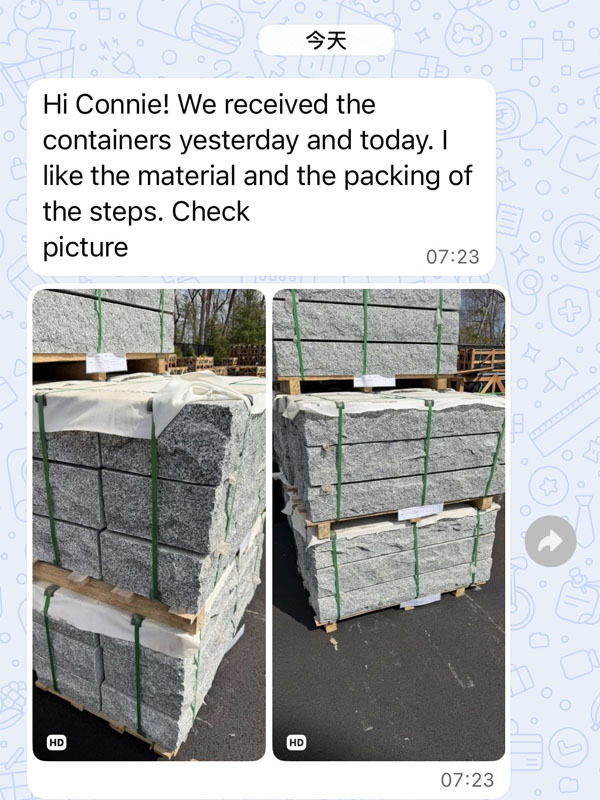
After receiving the containers, the client confirmed that the material meets their expectations. This kind of feedback, coming right after delivery, shows that the stone works in real project conditions—not just in samples or specifications.
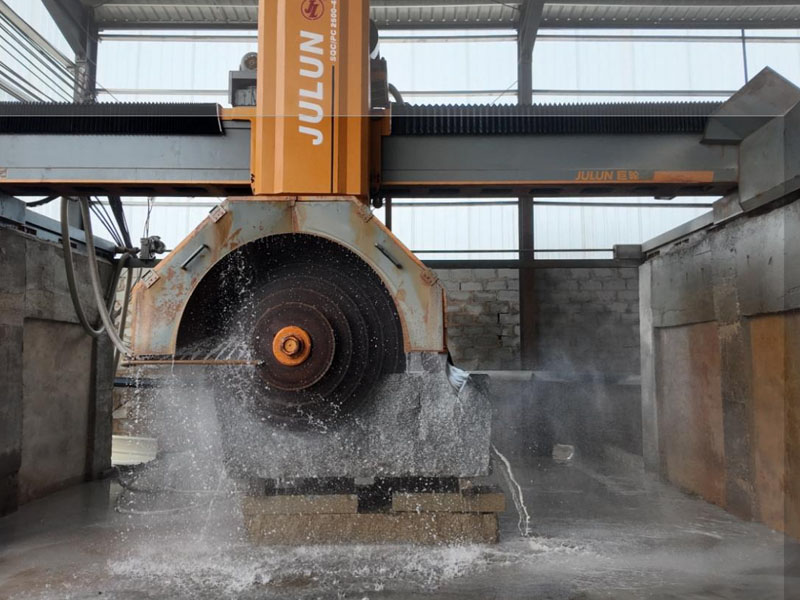
From our side, the shipment moved directly from our own quarry to Tema Port and then to the U.S. East Coast. As seen in the loading and dispatch process, the containers were prepared and shipped under a controlled workflow. This supports repeatable exports rather than a one-off delivery. We currently run around 1000㎡ per day with 10 cutting machines, and with available stock in place, we are able to keep shipments moving at scale.
What stands out here is not just the delivery itself, but how the route performs. From Tema Port to the U.S. East Coast, transit takes about 25 days, which is shorter than many typical Asian routes. At the same time, compared with some high-tariff sourcing regions, this supply path offers a more stable cost structure. For buyers, this means fewer surprises when planning procurement.
In practical use, Tema Grey is being supplied for projects that require consistent output and steady volume. Within the broader granite category, this kind of setup allows it to be considered alongside more traditional sources, especially in applications where scale and continuity matter. Further discussions on granite technical characteristics and sourcing comparisons can be explored separately.
At the same time, the broader supply landscape for granite has been changing. In recent years, some traditional sourcing regions—particularly in parts of Asia—have faced increasing compliance and environmental pressures. This has affected the stability and predictability of supply in certain cases, leading buyers to look more closely at alternative sourcing options that can offer both consistency and scale.
In that context, shipments like this one are not just isolated transactions. They show that a non-traditional sourcing route—outside the conventional Asian supply structure—can already operate in a stable and repeatable way. For the granite trade, this points to a supply chain that is not only available, but already working under real project conditions.
Looking at this shipment as a whole, it does more than complete a transaction. It reflects a supply route that has been tested, delivered, and confirmed—and one that can continue to support ongoing demand in a changing market.
 ROOM 205,NO.45, MIDDLE HAIJING ROAD,XIAMEN,AREA OF PILOT FREE TRADE ZONE(FUJIAN)OF CHINA
For inquiries about our products or pricelist, please leave to us and we will be in touch within 24 hours.



© Copyright: 2026 XIAMEN EXCELLENT STONE CO.,LTD. All Rights Reserved.

IPv6 network supported